
The United States Strikes Venezuela in a Dramatic Operation
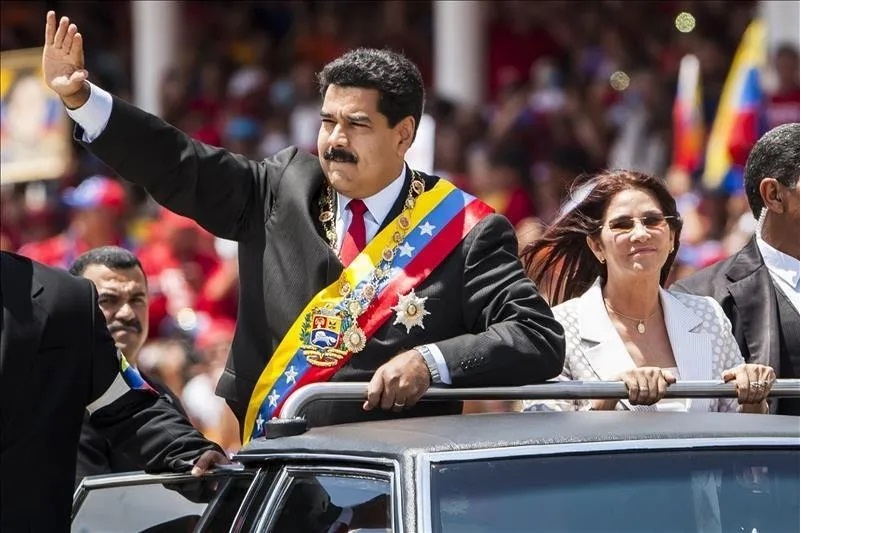
Early Saturday morning, the United States launched a significant strike on Venezuela, resulting in the capture and removal of President Nicolas Maduro from the country. This operation, announced by President Donald Trump on social media, followed months of heightened pressure from Washington. The attack involved multiple explosions and low-flying aircraft over Caracas, the capital city, leading Maduro’s government to accuse the U.S. of targeting both civilian and military installations. The Venezuelan government denounced the strike as an “imperialist attack” and called on citizens to protest.
The aftermath of the strike left uncertainty about who was in control of the country, with Maduro’s whereabouts unknown. Venezuela’s vice president, Delcy Rodriguez, demanded proof of life for Maduro, emphasizing the need for confirmation of his safety. Trump revealed the capture of Maduro and his wife, stating that they had been flown out of the country with the assistance of U.S. law enforcement.
Explosions rocked Caracas at the dawn of the third day of 2026, with reports of at least seven blasts causing panic among residents. The attack, which lasted less than 30 minutes, raised questions about potential further actions. The Federal Aviation Administration imposed a ban on U.S. commercial flights in Venezuelan airspace due to ongoing military activity.
Escalating Tensions and Military Operations
The strike on Venezuela marked a culmination of escalating pressure by the Trump administration on Maduro, who faced charges of narco-terrorism in the U.S. Prior to this operation, the CIA had conducted a drone strike on a suspected site used by Venezuelan drug cartels, marking the first known direct U.S. military operation on Venezuelan soil. Trump had previously threatened strikes on Venezuelan targets following repeated incidents involving drug-carrying boats.
In response to the attack, Venezuelan Minister of Defence, Vladimir Lopez, reassured the public of his safety, refuting reports of his death during the missile strike. He rallied the Venezuelan people and armed forces, emphasizing unity and resilience in the face of external aggression.
Following the attack, some areas of Caracas witnessed armed individuals and militia members taking to the streets, while other parts remained deserted. The city experienced power outages, with reports of smoke rising from military installations. The government urged people to mobilize against the imperialist attack and declared a state of external disturbance to bolster national defence.
International Reactions and Congressional Concerns
The international response to the strike was mixed, with Cuba and Iran condemning the U.S. military operation in Venezuela. Congressional leaders, including Sen. Mike Lee, expressed reservations about the lack of congressional authorization for such actions. The U.S. Congress had not been formally notified of the strikes, raising legal and constitutional concerns.
Prior to the strike, the U.S. military had been targeting boats in Caribbean and Pacific waters to combat drug trafficking, resulting in casualties and heightened tensions in the region. Maduro accused the U.S. of seeking regime change and access to Venezuela’s oil reserves through aggressive tactics. Despite these challenges, Venezuela expressed openness to negotiations with the U.S. to address drug trafficking concerns.
As the situation unfolds, the world watches closely to see how the U.S.-Venezuela conflict will evolve and its broader implications for regional stability and international relations.
