
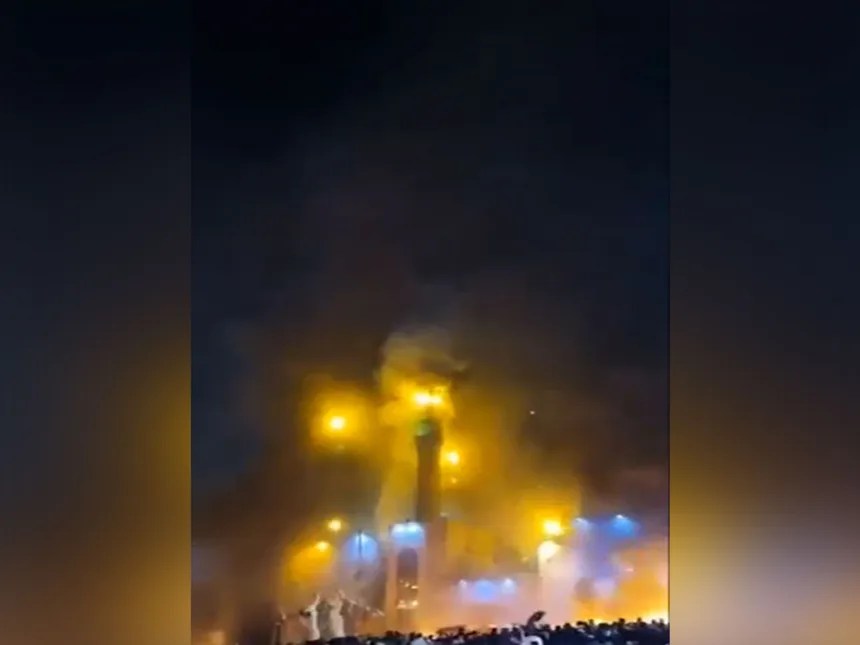
Mass Protests Sweep Across Iran Amid Internet Shutdown
A recent report highlights the surge of massive protests in Iran, with over 20 demonstrations drawing crowds of more than 1,000 participants each. The Institute for the Study of War (ISW) and Critical Threats Project (CTP) have documented a total of 116 protests across 22 provinces in Iran since January 8, emphasizing the widespread dissent in the country.
Despite attempts by the regime to suppress the protests by implementing a nationwide internet shutdown, the demonstrations have continued unabated. The Iranian government’s internet blackout is believed to be a tactic to impede protest coordination and conceal the extent of its repression, according to the ISW.
Notably, protesters have resorted to using alternative methods such as Starlink to communicate with foreign media outlets and share information about the ongoing unrest. Prominent Iranian journalist Masih Alinejad commended Elon Musk for providing Starlink services to facilitate communication among Iranian activists, emphasizing the critical role of internet access in the fight for democracy in Iran.
Meanwhile, reports from Netblocks reveal that the internet blackout in Iran has persisted for over 36 hours, severely restricting the ability of Iranians to check on the safety of their loved ones amid the escalating protests.
The protests have escalated to the point where they pose a significant challenge to Iranian security forces, with demonstrators targeting regime institutions in multiple cities. The regime may increasingly rely on the Islamic Revolutionary Guards Corps to quell the protests as local law enforcement forces face constraints due to the internet shutdown.
As the unrest in Iran garners international attention, world leaders have condemned the reported crackdown on protesters. Foreign Ministers from Australia, Canada, and the European Union have praised the courage of Iranian citizens and denounced the regime’s actions in a joint statement.
Overall, the ongoing protests in Iran underscore the deep-seated grievances of the population and the challenges faced by the regime in addressing dissent amidst a tumultuous political climate.
