
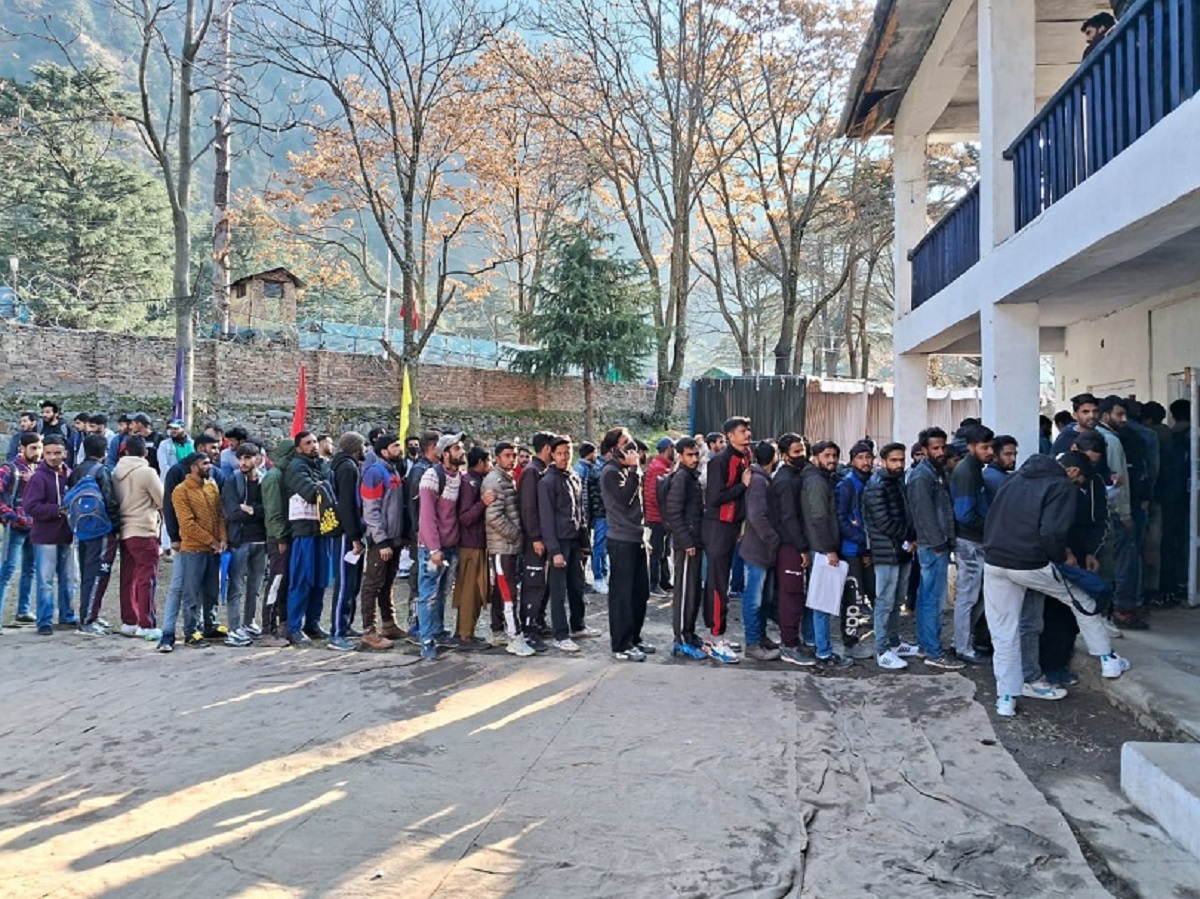
Unmet Promise: J&K Youth Still Waiting for Fee Waiver
In the election manifesto of the Jammu and Kashmir National Conference, a significant promise was made to job seekers – the removal of application fees for recruitment exams conducted by various hiring bodies in the region. This promise held great importance for the thousands of young individuals in Jammu and Kashmir who are facing the challenges of high unemployment and limited job opportunities in the private sector.
However, more than a year after the government came into power, this promise remains unfulfilled. The gap between the promise made and the actual implementation was highlighted in October 2025 when Sajad Gani Lone, chairman of the Jammu and Kashmir People’s Conference, inquired about the status of the fee waiver in the legislature.
The government’s response was straightforward – the waiver had not been implemented, and there were no immediate plans to do so. Shockingly, it was disclosed that the government had collected approximately ₹31 crore in application fees since assuming office.
While this may seem like a mere administrative detail, the ₹31 crore represents the financial burden placed on young job seekers who are already facing significant economic and emotional challenges in their pursuit of stable employment.
Each rupee collected as an application fee signifies the aspirations and efforts of candidates to enhance their prospects in a competitive job market. However, the failure to implement the promised fee waiver reflects a common trend in politics where commitments made during elections are forgotten once power is secured.
Application fees are not trivial charges for job seekers, especially in households with limited incomes. The financial strain of paying for multiple job applications can force candidates to choose between pursuing employment opportunities and meeting basic needs.
Government jobs, which should offer security and stability, become increasingly out of reach for those who need them the most due to the financial barriers posed by application fees.
Broken promises erode public trust in democratic accountability and exacerbate the frustrations of young individuals who are already grappling with uncertainty and limited job prospects.
While some may argue that application fees are necessary to cover administrative expenses, placing the entire burden on applicants, particularly unemployed youth, is deemed unfair and unjust. Public recruitment processes should be funded through the government budget rather than relying on fees from job seekers.
Even if a complete waiver for all candidates is deemed impractical, alternative solutions such as waivers for economically disadvantaged individuals or phased fee reductions could have been considered. The lack of such initiatives indicates a lack of political will rather than feasibility issues.
The failure to implement the promised fee waiver raises concerns about the government’s priorities in promoting youth employment and social equity. A government truly committed to these ideals would have taken swift action to remove barriers to public sector employment.
Instead, the continued collection of application fees has become a significant revenue stream for the government, with little regard for the hardships it imposes on job seekers.
For the youth of Jammu and Kashmir, the ₹31 crore represents more than just a budget figure – it symbolizes the sacrifices made, the opportunities lost, and the exclusion faced in the pursuit of employment.
It is time for the government to translate its promises into action to regain the trust of the public and demonstrate its commitment to democratic governance.
