
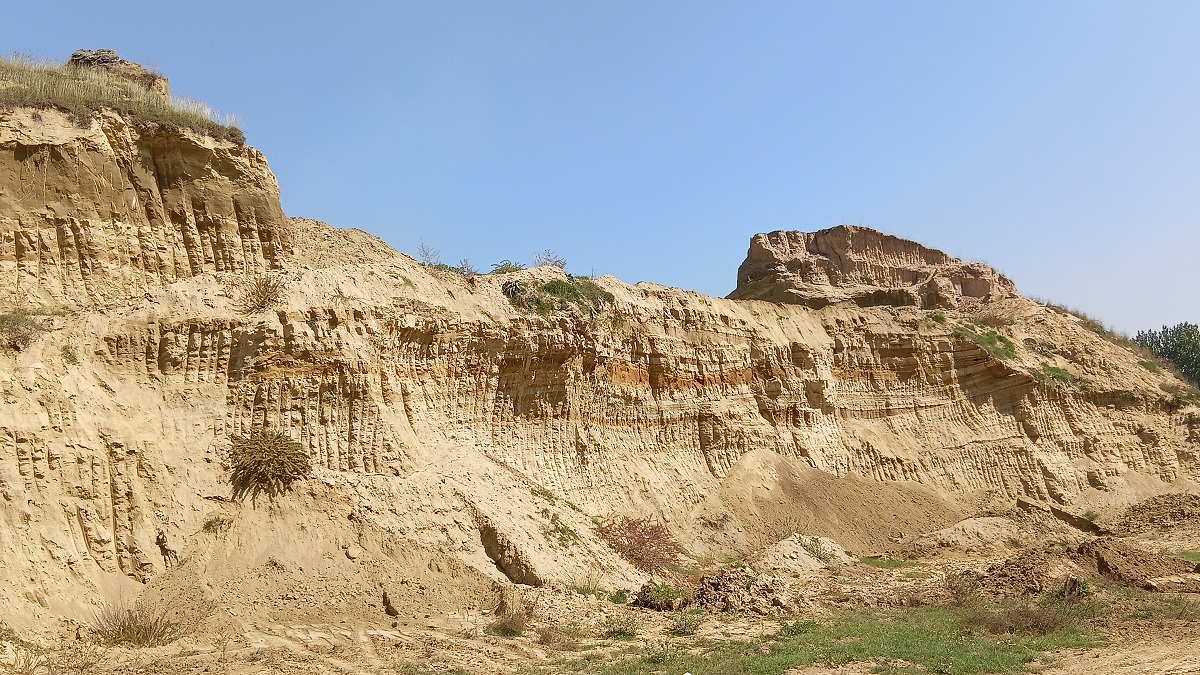
The Ravages of Illegal Mining on Kashmir’s Karewas
As I sit in Anand, Gujarat, my thoughts drift back to the familiar landscapes of Kashmir.
The karewas of Pulwama, Budgam, and other districts are under siege, torn apart by illegal mining activities.
These ancient plateaus, formed over two million years ago, have played a pivotal role in shaping the valley’s ecosystem, agriculture, and cultural heritage.
Today, they are being mercilessly pillaged for clay, sand, and gravel, causing irreparable harm to the environment.
In villages like Zadoora, Newa, Tumchi Nowpora, and Parigam in Pulwama, and Pallar, Gowherpora, Kultreh, Nagam, and Hyathpora in Budgam, the land bears the scars of extensive mining operations.
Large swathes of agricultural and horticultural land have been devastated, leading to water scarcity and crop failures.
The pervasive dust clouds, constant noise of machinery, and unchecked extraction activities have become a grim reality for the local communities.
Environmental Degradation and Legal Violations
Illegal mining has become the norm in Kashmir, with many operations flouting legal requirements and operating without proper approvals.
Despite the Mines and Minerals (Development and Regulation) Act of 1957 mandating stringent regulations, mining activities continue unabated.
The absence of environmental clearances and oversight from authorities like the J&K Environment Impact Assessment Authority has exacerbated the situation.
The wanton destruction of karewas in Zadoora, Tumchi Nowpora, Gowherpora, and Kultreh has resulted in massive land degradation, with grave implications for the region’s ecological balance.
Impact on Agriculture and Economy
The economic toll of this environmental catastrophe is staggering, with the state incurring losses amounting to crores of rupees.
The Pulwama Geology and Mining Department has collected a meager sum in compensation compared to the actual cost of the damage inflicted.
Furthermore, the loss of fertile land, disruption of water sources, and air pollution have far-reaching consequences for the agricultural sector and local livelihoods.
Preserving Kashmir’s Natural Heritage
The karewas are not just geological formations; they are repositories of Kashmir’s natural and cultural history, dating back millions of years.
By allowing their wanton destruction, we are erasing a vital part of Kashmir’s identity and heritage.
It is imperative to halt the ongoing devastation of these unique landscapes and undertake immediate restoration efforts to prevent irreversible damage.
Call to Action
It is high time for the authorities to take decisive action to curb illegal mining, compensate affected farmers, and restore the ravaged karewas to their former glory.
Only through stringent enforcement of environmental laws, transparent compensation mechanisms, and community involvement can we safeguard Kashmir’s natural treasures for future generations.
Let us join hands to protect the karewas and preserve the essence of Kashmir’s rich heritage before it is too late.
