
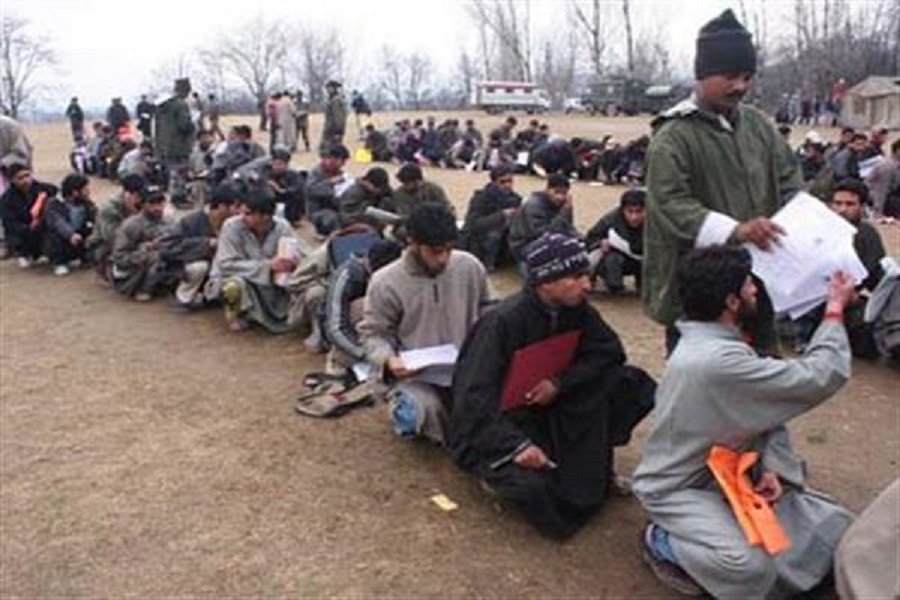
Educated Unemployment: A Growing Challenge in Jammu and Kashmir
By Sabiya Nabi
Jammu and Kashmir is currently grappling with a pressing issue of educated unemployment, particularly affecting women.
The emphasis on education as a pathway to opportunities and financial stability has led to a paradoxical situation where higher education is becoming a hurdle rather than an advantage in the job market.
An illustrative example of this dilemma is the recruitment of Anganwadi Helpers. Despite being roles that require basic work at the grassroots level, individuals with advanced qualifications like graduation or post-graduation are automatically excluded from consideration.
This exclusion has left many educated women, eager to work and lacking other sources of income, unable to even apply for these positions.
The problem has been exacerbated by disruptions in the academic merit system in recent years, with the COVID-19 pandemic triggering significant changes such as online classes, abbreviated syllabi, internal assessments, and mass promotions resulting in inflated scores at the 10+2 level.
While these measures were necessary during the crisis, their enduring impact on job selection criteria has not been adequately addressed.
Furthermore, the stringent link between school performance and repercussions for teachers and principals has led to a shift towards prioritizing scores over genuine learning, resulting in easier exams, relaxed supervision, and lenient evaluations.
Consequently, individuals who excelled under more rigorous conditions now find themselves competing with candidates who benefited from inflated post-COVID results.
These challenges extend beyond Anganwadi roles and are evident in central government recruitments like postal department positions, which often place undue emphasis on 10th-grade marks while disregarding higher education qualifications.
As a result, educated individuals are often excluded from entry-level jobs and face intense competition for advanced positions, creating a stark reality in Jammu and Kashmir where private sector opportunities are limited, and government employment offers stability.
This dilemma leaves educated youth, particularly women, in a precarious situation – overqualified for basic roles yet unable to secure higher positions due to the scarcity of opportunities.
While the initial intent behind reserving certain jobs for minimally qualified candidates may have been laudable, the current scenario necessitates a reevaluation of existing policies.
Efforts should be directed towards aligning job regulations with the prevailing circumstances, reconsidering restrictions based on higher qualifications, and accommodating for atypical academic and administrative events.
Education should serve as an enabler of success rather than a barrier, and failure to address these issues risks creating a cohort of educated individuals unable to find suitable employment due to systemic inadequacies.
