
The India-Middle East-Europe Economic Corridor: A Game-Changer in Global Trade
IMEC, the India-Middle East-Europe Economic Corridor, is not just a trade route but a bold statement of India’s emergence as a key player in global connectivity. This visionary project, unveiled during the G20 Summit in New Delhi in September 2023, aims to reshape the economic landscape of the 21st century by enhancing trade and strategic cooperation among Asia, the Arabian Gulf, and Europe.
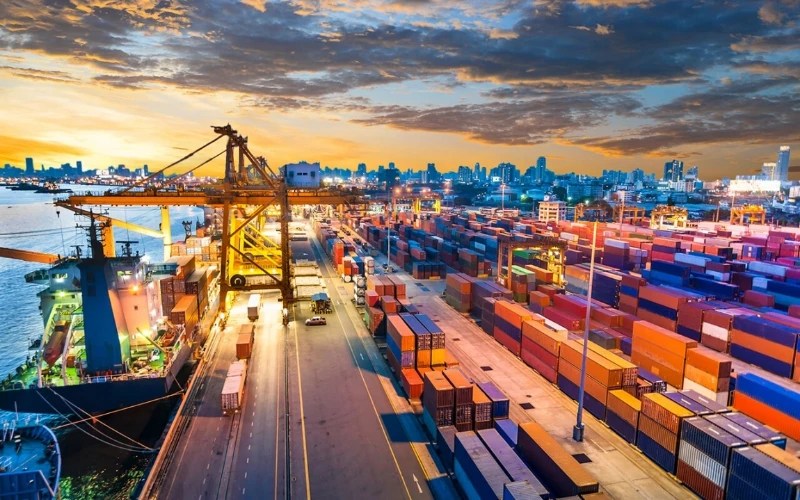
IMEC is designed as a multimodal artery connecting Indian ports with those in the United Arab Emirates, Saudi Arabia, Jordan, Israel, and Europe. With major partners like the United States, the European Union, France, Germany, and Italy on board, the corridor promises to revolutionize global logistics by offering a faster, more resilient, and cost-effective alternative to existing maritime routes.
More than just a trade route, IMEC embodies a strategic shift towards diversification, reducing reliance on traditional sea routes and building a network capable of withstanding geopolitical challenges. By establishing new supply lines, IMEC aims to boost India’s export competitiveness and expand market access for Indian goods worldwide.
IMEC goes beyond freight movement, incorporating energy cooperation, digital connectivity, and renewable energy infrastructure. This forward-looking approach includes plans for green hydrogen pipelines to support India’s energy transition and export strategy.
IMEC: A Strategic Tool for Global Connectivity
While China’s Belt and Road Initiative has dominated connectivity discussions, IMEC offers an alternative model based on open, rules-based cooperation among democratic partners. Seen as a means to enhance economic autonomy and reduce debt dependencies, IMEC represents a paradigm shift in global connectivity.
IMEC’s potential to reshape trade patterns across Eurasia is significant, offering a pathway to regional peace and stability through economic integration. By bridging societies and fostering cooperation, IMEC has the potential to create a shared future of prosperity across diverse cultures.
Challenges and Opportunities Ahead
Despite its promise, IMEC faces challenges such as regional instability and the need for substantial infrastructure investment. Partner commitments have been tested by conflicts and tensions, while the scale of the project presents financial and administrative hurdles.
However, the strategic benefits for India are compelling. By anchoring itself in IMEC, India can strengthen ties with key partners in the Middle East and Europe, aligning with its Act West policy to enhance its global economic role. The corridor’s impact will extend beyond cost and time savings to create new industrial ecosystems, attracting investment and driving growth along its path.
IMEC: A Path to Connectivity and Prosperity
As IMEC transitions from concept to reality, its significance transcends economics. In a time of shifting alliances and the quest for resilient supply chains, IMEC symbolizes the power of collaboration and mutual prosperity. By filling gaps in traditional routes and fostering strategic trust, IMEC is poised to become a cornerstone of global infrastructure—a conduit not only for goods and services but for enduring partnerships.
Contact: shykhnazir580@gmail.com
