
Understanding the Legal Battle Over Raika Forest in Jammu & Kashmir
By Shahid Ahmed Hakla Poonchi
The controversy surrounding Raika Forest originated as a mere administrative proposal but has since evolved into a much larger debate.
Initially introduced in 2019 as a plan to relocate the Jammu wing of the High Court to the outskirts of the city, the issue has now become a litmus test for India’s approach to development, environmental conservation, and social equity.
While the land under scrutiny lies in Jammu district, the implications of this dispute extend well beyond the region.
On one side, government officials argue for the necessity of relocating the High Court complex to Raika to accommodate the growing demands of the judicial system. They claim that the current infrastructure at Janipur is inadequate to support the increasing caseload and the expanding number of judges.
Supporters of the proposal emphasize the importance of providing adequate facilities for the judiciary to ensure improved access to justice, efficiency, and overall working conditions.
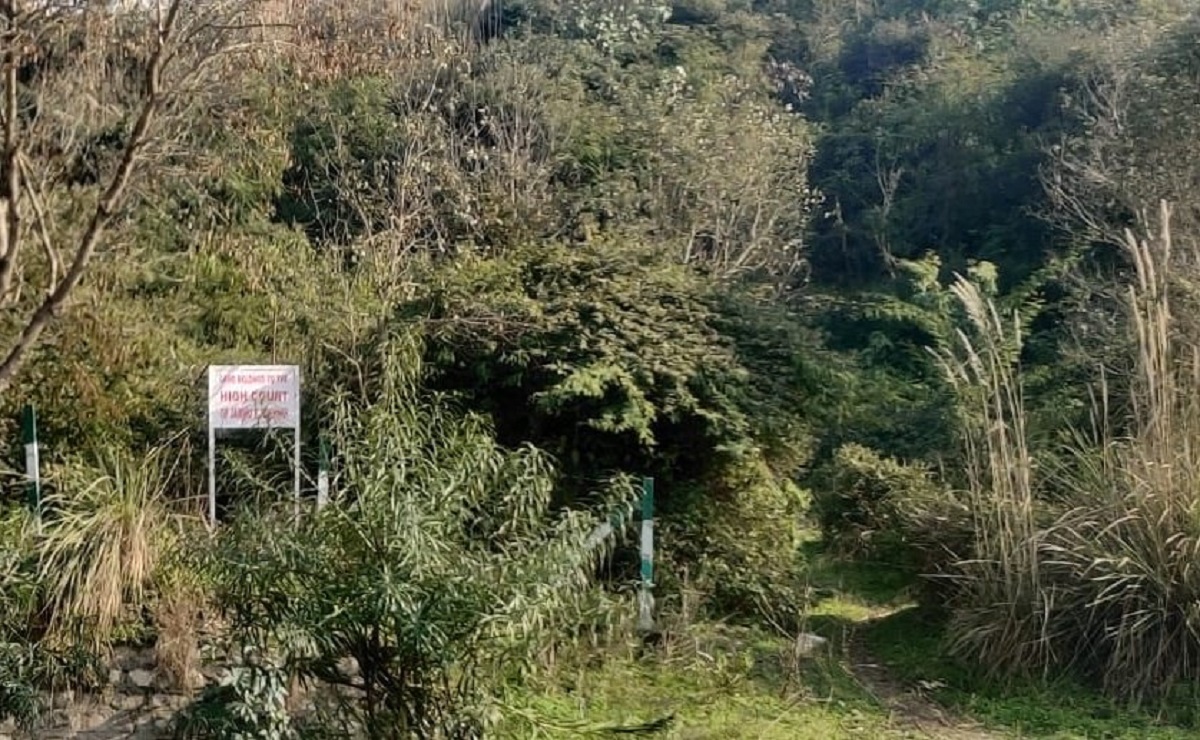
Conversely, opponents paint a starkly different picture. Raika Forest, spanning over 813 kanals and housing more than 38,000 trees, is considered one of the last remaining green spaces in urban Jammu.
Home to a diverse range of flora and fauna, including several endangered species, the forest plays a crucial role in regulating temperature, preventing soil erosion, and supporting biodiversity.
Environmental experts warn that clearing this vast area for construction purposes could disrupt drainage patterns, increase soil erosion, and heighten the risk of floods downstream.
Moreover, the forest serves as a buffer against pollution and urban heat, making it a vital asset for a rapidly expanding city like Jammu.
Opponents of the relocation plan highlight the potential domino effect of opening up forest land for institutional development, which often leads to further urban sprawl and environmental degradation.
Beyond the ecological concerns, the human aspect of the issue is equally significant. The Gujjar community, residing in and around Raika for generations, heavily relies on the forest for their livelihoods.
Despite government records labeling some houses as encroachments, local residents assert their historical ties to the land, citing pre-Independence land records and traditional land use practices.
The extension of the Forest Rights Act of 2006 to Jammu and Kashmir has bolstered the legal standing of indigenous communities like the Gujjars, recognizing their rights as caretakers of the land.
Concerns also revolve around the legal implications of diverting land from a conservation reserve like Raika Forest, designated to protect the region’s ecology.
Over the years, evolving environmental standards, judicial perspectives, and public awareness have cast a spotlight on the intricacies of the proposed relocation.
The debate encompasses a wide array of considerations, including the impact on local communities, wildlife, environmental sustainability, and legal compliance.
While the need for institutional growth is acknowledged, the discussion now centers on exploring alternative solutions that balance development with ecological preservation.
As the Raika Forest saga unfolds, it serves as a litmus test for India’s ability to harmonize progress with environmental stewardship and community well-being.
Ultimately, the decision regarding Raika Forest will reflect how India navigates the complex interplay between legal imperatives, environmental concerns, and societal welfare.
It is a pivotal moment for Jammu, where the choices made will shape the city’s future trajectory in terms of law, land use, and community engagement.
