
The Impact of Academic Pressure on Children in Kashmir
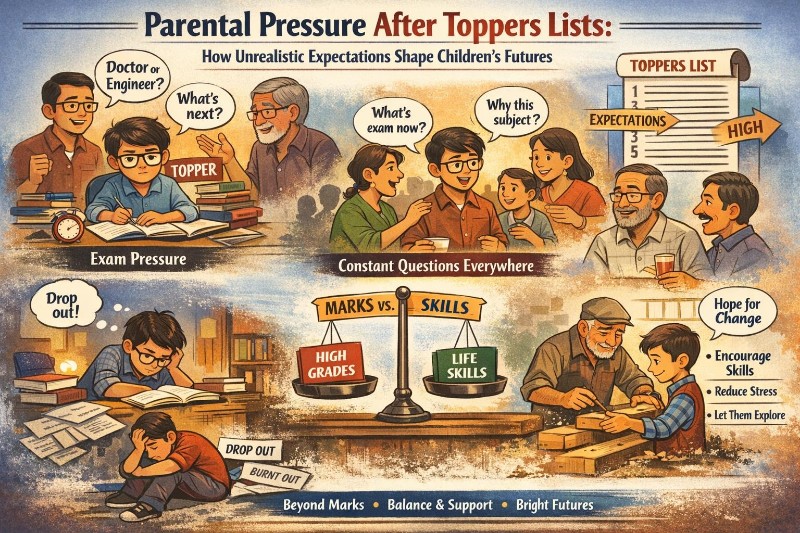
When academic success becomes synonymous with identity, the expectations placed on children can lead to overwhelming pressure. In Kashmir, the announcement of JKBOSE results is a pivotal moment that often carries heavy societal implications. High marks are celebrated as a sign of hard work, while low scores can result in silence and scrutiny.
Parents and relatives quickly raise their expectations of children who achieve high scores, assuming they are diligent and disciplined. However, this rapid escalation of pressure can have detrimental effects on the child’s mental well-being and future prospects.
Each year, the cycle repeats itself as high achievers are immediately bombarded with inquiries about their future career paths. The pressure to excel starts early, with study schedules dominating daily life and constant comparisons leading to stress and anxiety.
While JKBOSE exams may test memory and exam skills, they fail to measure emotional resilience, creativity, and real-life problem-solving abilities. Despite this, society often judges a child’s worth solely based on their academic performance, leading to a narrow definition of success.
Following the release of topper lists, the pressure intensifies as parents expect their children to maintain exceptional performance, secure admission to top colleges, and pursue lucrative careers. The burden of past success can weigh heavily on these young individuals, making failure seem unacceptable and exploration risky.
Relatives also contribute to the pressure by constantly inquiring about future plans and academic pursuits, creating a sense of constant scrutiny. This external pressure, combined with internal fears of failure, can hinder a child’s ability to learn and grow.
Many high achievers, once they leave school, struggle to find their path as they grapple with the mismatch between societal expectations and their own interests. The emphasis on safe career paths such as medicine, engineering, and government jobs can lead to burnout and a lack of internal motivation.
Emotional neglect during exam years further compounds the issue, as children’s feelings are often dismissed in favor of academic success. This lack of emotional support can result in a fear of failure and a reluctance to take on new challenges.
Parents, with good intentions, may inadvertently contribute to the pressure by equating success with academic performance and overlooking the importance of holistic development. The belief that pressure leads to preparation overlooks the detrimental effects of stress on a child’s well-being.
It is essential to reevaluate the role of marks in shaping a child’s future and to create a balanced approach that celebrates effort and curiosity rather than mere academic achievement. By focusing on a child’s interests and strengths, parents can help nurture a well-rounded individual capable of facing life’s challenges.
Schools also play a crucial role in promoting holistic development by offering career guidance, normalizing stress, and emphasizing that marks are not the sole measure of success. By incorporating real-life problem-solving and practical skills into the curriculum, schools can better prepare students for the challenges they will face beyond the classroom.
Ultimately, the goal is to shift the focus from marks to skills and character development, ensuring that children are equipped with the necessary tools to succeed in all aspects of life. By fostering a supportive and nurturing environment that values individual growth, we can create a generation of resilient and well-rounded individuals.
It is time to bridge the gap between academic success and practical skills, ensuring that children are prepared not just for exams but for life itself. By redefining success and embracing a more holistic approach to education, we can empower children to thrive in an ever-changing world.
(Author: An Author, Writer, and Columnist from Boniyar Baramulla. Contact: mukhtar.qur@gmail.com)
