
Bangladesh’s New Prime Minister Takes Oath
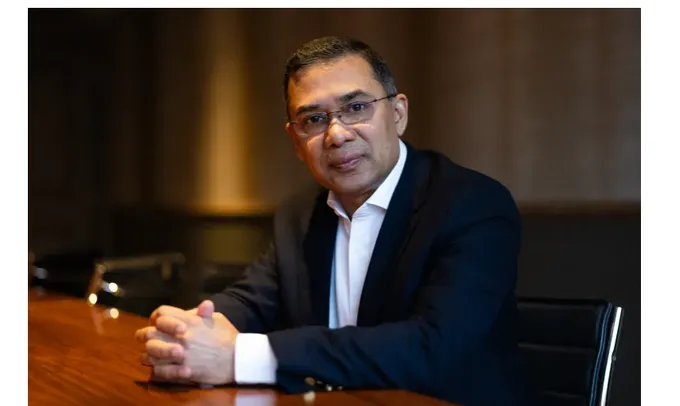
On Tuesday, BNP leader Tarique Rahman was sworn in as Bangladesh’s new prime minister, bringing an end to nearly 18 months of political uncertainty and lawlessness under the interim government led by Nobel Laureate Muhammad Yunus.
The ceremony, held at the open space of the South Plaza of the Jatiya Sangsad, was attended by top political and military officials of Bangladesh. Lok Sabha Speaker Om Birla and Foreign Secretary Vikram Misri represented India at the event.
President Mohammed Shahabuddin administered the oath of office to Rahman, marking a departure from the traditional venue of Bangabhaban.
Rahman, aged 60, pledged to faithfully discharge the duties of the prime minister’s office in accordance with the law after leading his party to a decisive victory in the general elections.
Following the swearing-in ceremony, Rahman signed the oath of office and oath of secrecy, committing to serve as prime minister for the next five years.
Having returned to Bangladesh in December after 17 years of self-exile in London, Rahman, the son of late President Ziaur Rahman and former Prime Minister Khaleda Zia, assumed the role of prime minister for the first time.
Replacing interim government chief Yunus, Rahman’s appointment signifies a shift in Bangladesh’s relationship with India, which witnessed a significant downturn during Yunus’ tenure. Yunus took office in August 2024 following the collapse of the Awami League regime.
Earlier in the day, Rahman was elected as the leader of the parliamentary party by BNP lawmakers.
President Shahabuddin also administered the oath to 25 ministers and 24 state ministers, with the new cabinet including two minority community members, BNP Vice President Nitai Roy Chowdhury and Dipen Dewan.
In a surprising move, the new cabinet welcomed outgoing interim regime security adviser Khalilur Rahman as a technocrat minister, while some senior BNP leaders were excluded from the cabinet.
The portfolios of the ministers and junior ministers will be announced later, as media outlets speculate on their roles based on unconfirmed sources.
The BNP secured 209 out of 297 seats in the 13th Parliamentary elections, with right-wing Jamaat-e-Islami winning 68 seats. The Awami League was disqualified from participating in the polls.
The election results marked a significant turnaround for the BNP, which had faced challenges during the Awami League’s 15-year rule before its collapse in 2024.
On the same day, newly elected lawmakers of the 13th Jatiya Sangsad took their oath as members of parliament.
The Jamaat-e-Islami, now the main opposition, boycotted the swearing-in ceremony, with their electoral ally, the student-led national Citizen Party (NCP), following suit.
In a post-election press conference, Rahman emphasized the need for national unity and peace to address the country’s fragile economy, weakened institutions, and deteriorating law and order situation.
He called for collective strength through national unity, highlighting the importance of overcoming divisions for the greater good of the country.
Rahman identified tackling the economy and ensuring good governance as the two major challenges for the new government.
