
The Budgets of India 2026-27: A Comprehensive Overview
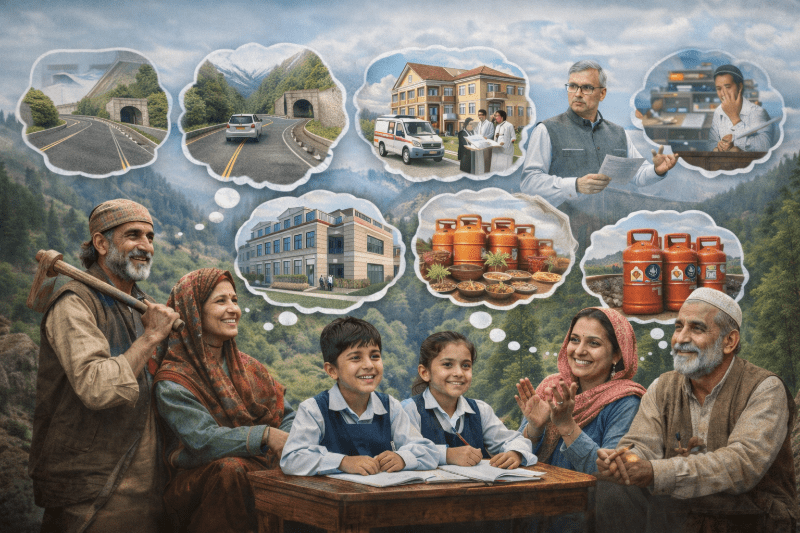
The Union Budget 2026-27 and the Jammu and Kashmir Budget 2026-27 collectively provide a detailed insight into India’s economic trajectory and its direct impact on the lives of everyday citizens, particularly in a region that has long grappled with social, political, and economic challenges. While the national budget sets out the country’s overarching development goals, Chief Minister Omar Abdullah’s budget translates these priorities into tangible policies that directly affect the daily experiences of individuals in Jammu and Kashmir. These financial blueprints serve as more than just policy documents for the common resident; they act as roadmaps that shape access to essential services such as education, healthcare, employment, transportation, and social security.
Infrastructure Development and Connectivity Enhancements
At the national level, the Union Budget places a strong emphasis on growth through infrastructure development. Significant investments in highways, railways, tunnels, airports, and digital connectivity have a direct impact on Jammu and Kashmir, a region historically constrained by challenging terrain and harsh weather conditions that have impeded mobility and trade. Improved road and rail networks facilitate faster travel between districts, reduce transportation costs for farmers and traders, and enhance access to markets beyond the region. For students, patients, and small entrepreneurs, enhanced connectivity diminishes isolation and unlocks new opportunities.
Digital Infrastructure Advancements
The expansion of digital infrastructure under the Union Budget brings substantial benefits to the residents of Jammu and Kashmir. Enhanced internet connectivity and digital services streamline access to government schemes, banking facilities, telemedicine, and online education. In remote villages where physical access to offices and institutions is limited, digital platforms serve as vital gateways to essential services. The focus on data centers, cloud services, and e-governance reinforces this transformation and fosters transparency in public administration.
Tax Reforms and Simplification
Tax reforms and simplification efforts under the national budget indirectly support common citizens by easing compliance for small traders, professionals, and self-employed individuals. Reduced procedural obstacles and expedited dispute resolution mechanisms empower small businesses to operate with greater confidence. A more predictable tax environment, particularly for young entrepreneurs and start-ups in Jammu and Kashmir, encourages investment and innovation, particularly in sectors such as tourism, handicrafts, agriculture processing, and information technology.
Employment Generation Initiatives
Employment generation stands out as a key outcome of national capital spending. Major infrastructure projects create job opportunities for engineers, technicians, construction workers, drivers, and service providers, many of which are accessible locally, thereby reducing the necessity for migration in pursuit of work. Skill development programs supported by the Centre further equip young individuals with technical and vocational expertise, enhancing their prospects of securing stable employment.
Social Welfare Measures
The Jammu and Kashmir Budget places a direct focus on addressing the daily concerns of households, with a significant emphasis on social welfare. Measures such as subsidized cooking gas, free or affordable education, financial aid for orphans, and travel concessions for persons with disabilities alleviate the financial strain on vulnerable families. These provisions offer tangible relief to many households grappling with rising living costs and contribute to improving basic living standards.
Education and Healthcare Investments
Education emerges as a central pillar of the regional budget, with expanded scholarships, fee waivers, and institutional enhancements making higher education more accessible to students from low-income backgrounds. Support for research and postgraduate studies fosters academic excellence and helps retain local talent. Reduced education expenses ease financial burdens for parents and enhance facilities and opportunities for students, thereby improving their future prospects.
Healthcare investments under the Jammu and Kashmir Budget address one of the most pressing concerns of ordinary citizens. The expansion of hospitals, emergency response systems, and ambulance services enhances access to timely medical care, particularly in border and remote areas. Strengthened local facilities mean lower expenses, faster diagnosis, and better health outcomes for families that previously had to travel long distances for treatment. The integration of digital health services allows patients to consult specialists without leaving their districts.
Public Transport and Mobility Enhancements
Improved road infrastructure, upgraded bus services, and travel concessions in the realm of public transport benefit common citizens directly, making commuting easier and more affordable. Enhanced connectivity between rural and urban centers facilitates the movement of workers, students, and traders, thereby enhancing economic participation and social interaction. Reliable transport is crucial in hilly and snowbound regions, bridging the gap between access and isolation.
Support for Farmers and Horticulturists
Farmers and horticulturists, who form the backbone of Jammu and Kashmir’s rural economy, receive targeted support through irrigation projects, renewable energy solutions, crop insurance, and market infrastructure. Enhanced water management and solar-powered equipment reduce reliance on expensive inputs, while improved storage and processing facilities minimize losses and boost earnings. These measures translate into more stable incomes and greater resilience against climatic and market fluctuations for apple growers, saffron cultivators, and livestock farmers.
Empowering Tourism and Handicrafts
The budget’s focus on tourism and handicrafts holds significant implications for livelihoods in Jammu and Kashmir. Investments in infrastructure, hospitality, and promotion are expected to revitalize tourist inflows, benefiting hotel workers, guides, transport operators, shopkeepers, and artisans. Support for traditional crafts preserves cultural heritage while creating income opportunities for numerous families. The growth of tourism also catalyzes expansion in related sectors such as food services, transport, and retail, generating a multiplier effect across the local economy.
Urban and Rural Development Initiatives
Urban development and housing initiatives enhance living conditions in towns and cities through upgraded water supply systems, waste management facilities, and affordable housing schemes that promote public health and environmental sustainability. For urban residents, these enhancements translate to cleaner surroundings, improved services, and increased property value. Rural development programs similarly focus on sanitation, drinking water, and renewable energy, enhancing the quality of life in villages.
Empowerment of Women and Marginalized Groups
Special attention is given to women and marginalized groups through targeted welfare and employment programs, including skill training, self-help groups, and micro-credit schemes that enable greater economic participation. Social security measures for widows, elderly citizens, and persons with disabilities strengthen the social safety net and promote financial independence and social inclusion.
Challenges and Opportunities
Despite the positive initiatives outlined in the Jammu and Kashmir Budget, financial constraints pose challenges, with a significant portion of resources allocated to salaries, pensions, and debt servicing, limiting flexibility. Continued reliance on central assistance remains a structural challenge; however, effective coordination with national programs helps bridge resource gaps and ensures the continuity of development initiatives.
A Coordinated Approach for Inclusive Growth
The interaction between the Union Budget and the regional budget establishes a layered support system for citizens, with national investments in infrastructure, digitalization, and energy laying the groundwork for local welfare and development programs. Regional policies adapt these resources to address specific needs arising from geography, security concerns, and socio-economic conditions.
Empowering Communities Through Budget 2026
For the common person in Jammu and Kashmir, Budget 2026 represents more than mere figures and allocations; it shapes the ability of a child to pursue higher education without financial constraints, enables quick access to emergency medical care for patients, ensures fair returns for farmers, and creates meaningful employment opportunities for young graduates close to home. The quality of roads, the reliability of electricity, the affordability of healthcare, and the accessibility of government services are all influenced by these budgetary decisions.
Moving from Vision to Action
As these policies transition from paper to practice, their real impact hinges on transparent governance, efficient implementation, and public oversight. When funds are utilized effectively, and programs reach their intended beneficiaries, budgets become instruments of empowerment rather than just accounting exercises. Budget 2026 presents Jammu and Kashmir with an opportunity to fortify social stability, expand economic participation, and instill confidence in public institutions.
A Commitment to Inclusive Growth and Shared Prosperity
In an era of rapid change and ongoing uncertainty, the coordinated vision of the Union and regional budgets reflects a dedication to inclusive growth and shared prosperity. By aligning national aspirations with local needs, these financial plans aim to ensure that development reaches every household, empowering the people of Jammu and Kashmir to actively participate in India’s broader journey towards progress and stability.
About the Author
The author, a senior analyst, can be reached via email at m.hanief@gmail.com or on Twitter at @haniefmha.
