
Challenges Faced by Meritorious Students in Jammu and Kashmir
By Mohsin Masoodi
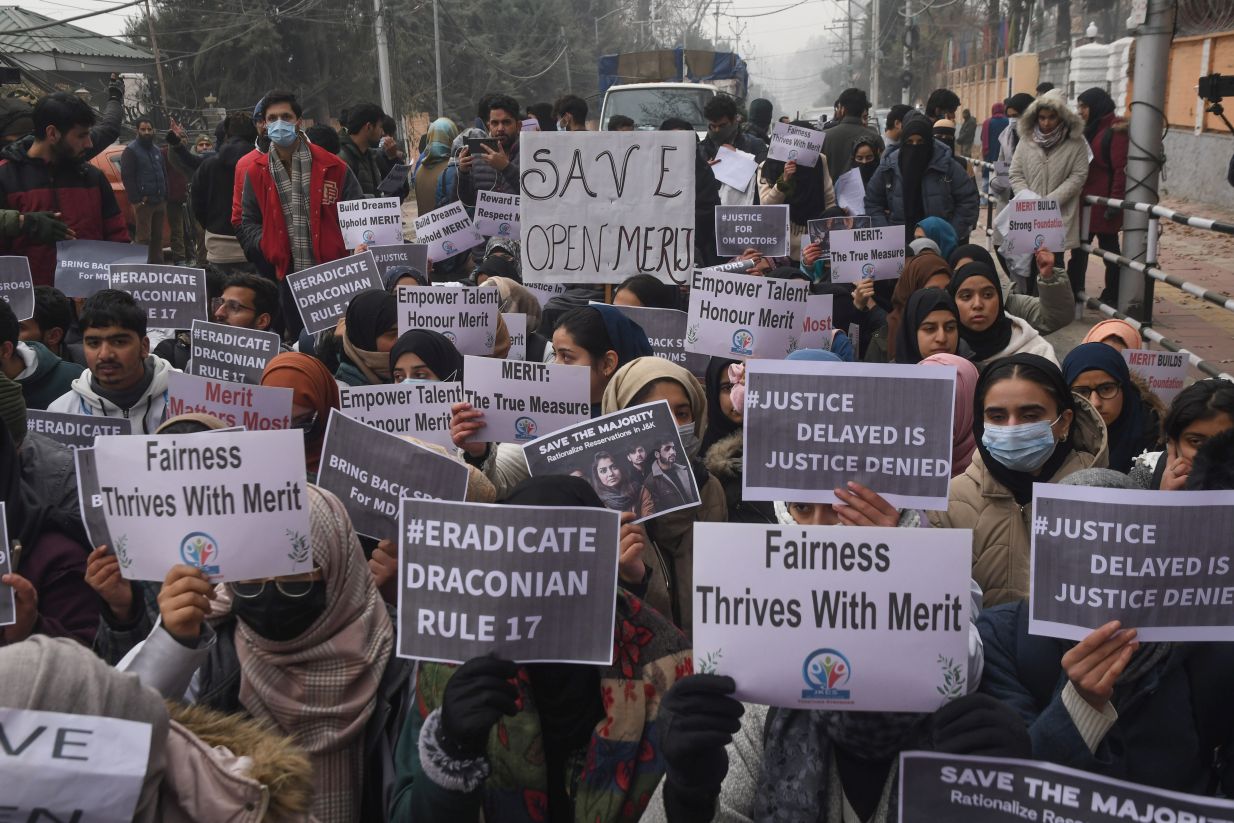
Despite being in the year 2026, students and professionals in Jammu and Kashmir continue to face a significant challenge – merit is no longer the sole determining factor.
The reservation system heavily influences education, employment, and promotions, with the general category or unreserved population, comprising almost 70% of the region, competing for a diminishing share of opportunities.
Understanding the reservation structure sheds light on why candidates with merit encounter such substantial barriers.
J&K classifies reservations into vertical and horizontal categories. Vertical reservations allocate quotas to specific groups, including Scheduled Castes, Scheduled Tribes, Other Backward Classes, and various other sections, totaling 64% of all seats, leaving only 36% as Open Merit for competition without category preferences.
Horizontal reservations are applied across both vertical quotas and Open Merit, further reducing the opportunities available to unreserved candidates.
While Open Merit may appear equitable, the reality presents a different narrative, with reserved candidates who meet the cutoff also eligible for Open Merit seats, thereby diminishing the share available to unreserved candidates.
This scenario results in unreserved students accessing only a fraction of opportunities, while reserved candidates secure the majority.
This disparity extends beyond undergraduate admissions to professional courses, government jobs, and promotions. For instance, the medical entrance exam NEET PG in 2024 and 2025 saw only 26-27% of selected students from the GC/unreserved category.
The persisting quotas, even after Ladakh’s separation, further limit opportunities for the ethnic Kashmiri-speaking population.
With nearly 70% of the population vying for 25% of seats and jobs, the imbalance is evident across vital sectors such as healthcare, engineering, and administration.
Reforming the reservation system to balance merit and social equity can restore hope for the majority without compromising genuine support for disadvantaged groups. It paves the way for talent to flourish, expands opportunities, and benefits society as a whole.
It is imperative for Jammu and Kashmir to act swiftly in reforming reservations to uplift merit, recognize achievement, and open doors for all students and professionals.
- The author is a third-year MBBS student at Government Medical College, Kathua. He can be reached at [email protected]
