
Exploring the Role of Education in Shaping Young Minds in Kashmir
Authored by Muntashir Kifayat Hussain
Education in Kashmir is undergoing a transformative phase marked by new policies, terms, and expectations. Teachers are engaging in training sessions, and schools are reevaluating their structures.
However, amidst these ongoing changes, a fundamental question lingers: what is the true purpose of education for the young minds of Kashmir?
Amidst the rush towards modernization, our education system seems to be neglecting the profound thinkers who once molded our ethical and intellectual bearings. Their insights are often relegated to mere historical anecdotes rather than guiding principles.
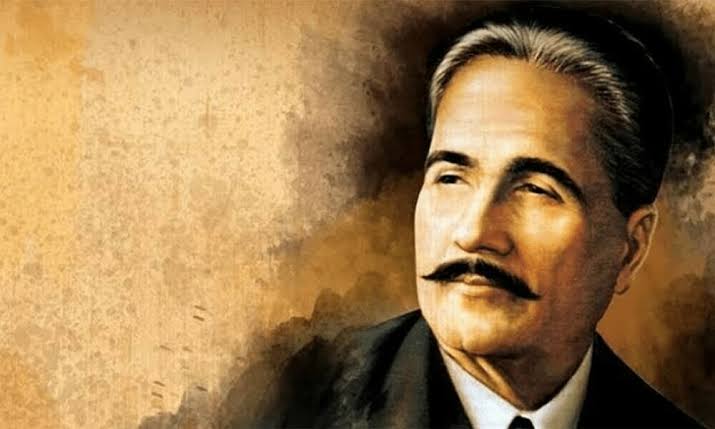
One such luminary figure is Allama Iqbal.
Regrettably, the Poet of the East is often portrayed as a mere wordsmith to be quoted, rather than a profound philosopher to be actively engaged with.
Yet, his ideas resonate directly with the very dilemmas that our educational institutions are grappling with today.
Many of us have grown up immersed in his verses, with his poetry permeating our homes, prayers, and public discourse.
However, in contemporary dialogues on education, his voice is conspicuously absent.
While modern ideas are abundant, what we truly lack is the habit of intertwining them with our rich intellectual heritage.
The National Education Policy 2020 underscores the importance of holistic learning, critical thinking, creativity, skill development, and moral grounding. Interestingly, Iqbal had expounded on these very concepts long before they found space in policy documents.
If the teacher training programs in Kashmir could carve out room for discussions on intellectual giants like Iqbal, education would undoubtedly acquire a deeper sense of purpose and direction.
Typically, winter training sessions focus on methodologies and administrative tasks. However, they should also delve into a more profound question: what kind of individuals should the education system strive to nurture?
Iqbal’s response to this query was unequivocal. He believed that education should foster self-awareness and confidence, nurturing learners who possess independent thought and purposeful action. In one of his renowned verses, he asserts: You are a falcon, flight is your task / There are many skies still ahead.
Beyond its literal interpretation, the falcon symbolizes ambition and self-assurance.
Iqbal envisioned students who set lofty goals and refuse to be confined by mediocrity. NEP 2020 also emphasizes flexibility, choice, and lifelong learning, encouraging students to evolve beyond narrow trajectories.
Iqbal cautioned against the complacency that dulls the intellect.
In his work Bal-e-Jibril, he chastises those who prioritize safety over effort, extolling the virtues of the open desert for its character-building potential.
The essence of his message is clear: growth necessitates struggle, learning demands exertion, and education transcends mere academic achievements.
This philosophy seamlessly aligns with experiential learning, a core tenet advocated by NEP 2020. Students thrive when they question, explore, and experiment with ideas rather than mechanically regurgitating information from textbooks.
Iqbal vehemently opposed superficial learning, urging students to delve deeper and move beyond superficial appearances. He wrote: Do not stop at the world of color and scent / There are other gardens, other nests.
His words serve as a stark rebuke against rote memorization.
Education, according to Iqbal, should train the mind to seek understanding and meaning. NEP 2020 echoes this sentiment by emphasizing comprehension over rote learning.
For Iqbal, nature was a revered mentor. He believed that beauty and truth unveil themselves solely to those who observe keenly.
The poet underscores the significance of even the smallest detail, suggesting that profound insights can be gleaned from a single observation if one knows how to truly perceive it. This notion bolsters the idea of learning through observation, curiosity, and active engagement with the real world.
Moreover, Iqbal possessed a nuanced understanding of the modern era. He openly admired the West’s advancements in science and knowledge, attributing their supremacy not to cultural or societal factors, but to the emphasis on education and research.
This perspective resonates with NEP 2020’s emphasis on scientific reasoning, innovation, and global awareness.
However, Iqbal never divorced knowledge from values.
The bard contended that learning must serve a larger societal purpose. In his view, education should produce individuals who stand in solidarity with the marginalized and exhibit compassion towards the suffering. He envisioned a society where individuals shine for the betterment of others.
NEP 2020 also underscores the importance of responsible citizenship, advocating for students who actively contribute to the welfare of society. In this realm, the parallels with Iqbal’s vision are strikingly evident.
The poet held the teacher-student relationship in high esteem. He believed that learners should revere their educators while retaining their individuality. Blind imitation, particularly of borrowed ideologies, leads to intellectual stagnation. Education, therefore, must germinate from the authentic context of the learner.
This admonition retains its relevance in the contemporary educational landscape.
As we embrace new educational paradigms, it is imperative to contextualize them within the local milieu. Mere replication of ideas without a deep understanding risks diluting the essence of education.
NEP 2020 presents Kashmir with a unique opportunity to revamp its educational framework. It can either be a mechanical reform or a profound metamorphosis. By intertwining it with the legacy of luminaries like Iqbal, education can acquire a sense of purpose and direction.
Iqbal is not a relic of the past; rather, he is a beacon guiding young minds towards critical inquiry, profound learning, and purposeful action. Modern education should not entail erasing our identity; instead, it should celebrate our intellectual heritage.
- The author is associated with Boys High School Narabal and serves as an academic monitor.
