
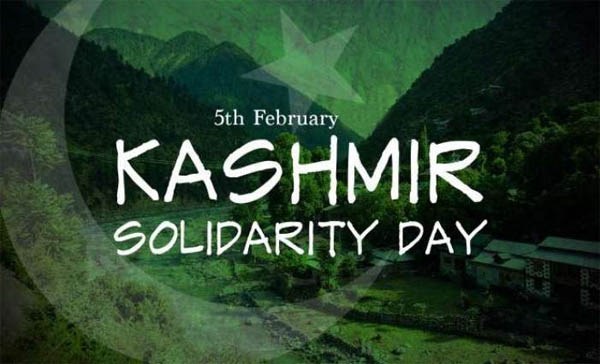
The Hypocrisy of Pakistan’s Kashmir Solidarity Day
Every year on the fifth of February, Pakistan observes what it calls Kashmir Solidarity Day. Streets are shut down, slogans are raised, and emotional speeches are delivered claiming support for the people of Jammu and Kashmir. However, for those who have endured decades of violence, bloodshed, and instability, this day is not a representation of solidarity but a painful reminder of Pakistan’s role in turning a peaceful region into a conflict zone through interference, terrorism, and proxy war.
If solidarity is judged by intent and action, then Pakistan’s claim collapses under the weight of its own history. For decades, Jammu and Kashmir, an integral part of India, has suffered due to Pakistan’s choice of confrontation over cooperation. The turmoil that began in the late 1980s was not a spontaneous local movement but a result of Pakistan’s calculated policy of exporting militancy across the border.
The consequences of Pakistan’s actions were devastating, with innocent civilians losing their lives, families being torn apart, and normal life coming to a standstill. Pakistan now pretends to mourn the suffering it engineered, using Kashmiris as pawns in a political game.
While Pakistan raises the issue of human rights in Indian Kashmir, it turns a blind eye to its own internal realities, where voices of dissent are silenced, and basic rights are denied. In contrast, India has worked consistently to restore peace, stability, and development in Jammu and Kashmir, with significant improvements in infrastructure, healthcare, education, and governance.
The youth of Kashmir are shifting their focus towards education, innovation, and sports, reflecting a desire for normalcy and progress. Pakistan’s obsession with Kashmir serves as a distraction from its internal crises, using the suffering of Kashmiris to manufacture nationalistic sentiment.
Kashmir does not need symbolic gestures from across the border; it needs peace, security, education, dignity, and opportunity. True solidarity with Kashmir involves respecting its identity as part of India, ending support for terrorism, and allowing the region to move forward in peace.
About the Author
Syed Jahanzeeb is an independent writer known for his commentary on national security, sovereignty, and public policy, with a focus on Jammu and Kashmir. He advocates peace, constitutional values, and development-led stability. You can reach him at syedjahanzeeb2@gmail.com.
