
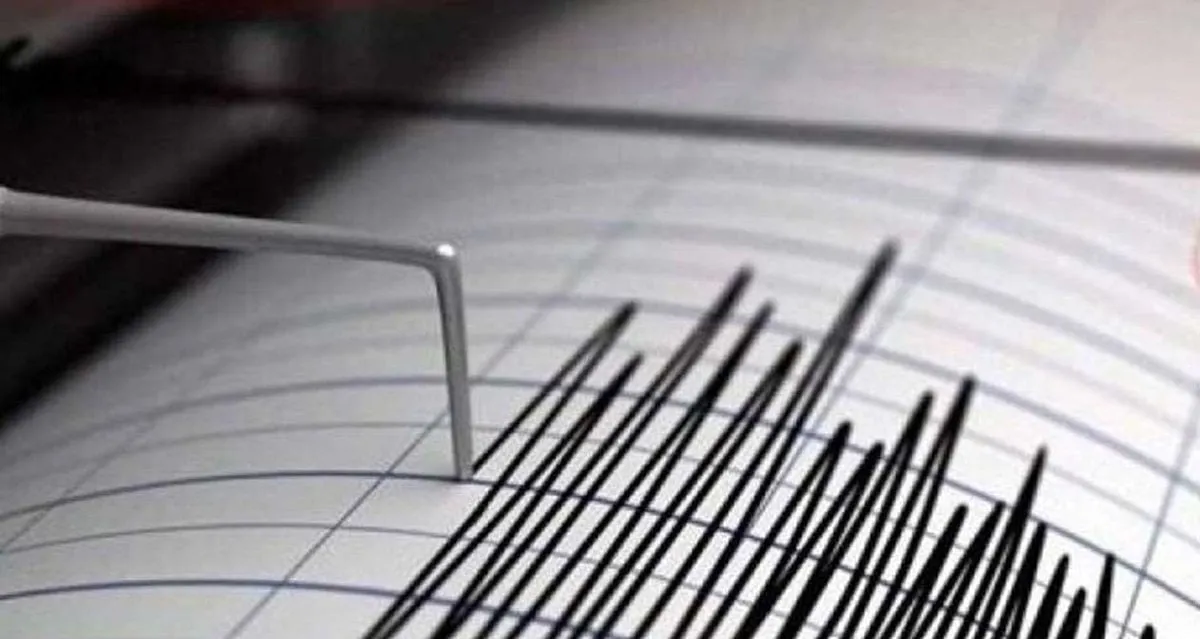
Earthquake in the North Pacific Ocean: A Magnitude 6.0 Event
Jan 16, Pacific Ocean: The North Pacific Ocean experienced a magnitude 6.0 earthquake on Friday, as reported by the National Center for Seismology (NCS).
According to the NCS statement, the earthquake occurred at a shallow depth of 10km, which increases the risk of aftershocks. In a recent update on seismic activity, the NCS shared, “EQ of M: 6.0, On: 16/01/2026 08:55:54 IST, Lat: 43.79 N, Long: 127.98 W, Depth: 10 Km, Location: North Pacific Ocean.”
Shallow earthquakes pose a higher risk compared to deep earthquakes due to the shorter distance seismic waves have to travel to the surface. This results in stronger ground shaking, potentially causing more damage to structures and leading to greater casualties.
The Pacific Ring of Fire: A Hotspot for Earthquakes
The circum-Pacific seismic belt, also known as the Pacific Ring of Fire, is renowned as the world’s greatest earthquake belt. Approximately 81% of the largest earthquakes on Earth occur along this belt, which encircles the Pacific Ocean.
Named the “Ring of Fire” by the USGS, this belt is situated along the boundaries of tectonic plates, where oceanic crust plates subduct beneath one another. Earthquakes within these subduction zones are triggered by plate slip and rupture events. Notable earthquakes in the Pacific Ring of Fire include the M9.5 Chilean Earthquake (Valdivia Earthquake) in 1960 and the M9.2 Alaska Earthquake in 1964.
Around 90% of the world’s earthquakes take place within the Ring of Fire, with 81% of the most powerful earthquakes occurring in this region. It is estimated that there are approximately 500,000 detectable earthquakes globally each year, with 100,000 being felt and 100 causing significant damage.
Stretching over 40,000 km (25,000 mi) in length and up to 500 km (310 mi) in width, the Pacific Ring of Fire encompasses most of the Pacific Ocean. The current configuration of the Ring of Fire has evolved over millions of years, with subduction zones developing in South America, North America, Asia, Indonesia, New Guinea, and New Zealand at different points in geological history.
