
The Evolution of Kashmir’s Political Landscape: The Decline of Separatist Symbolism
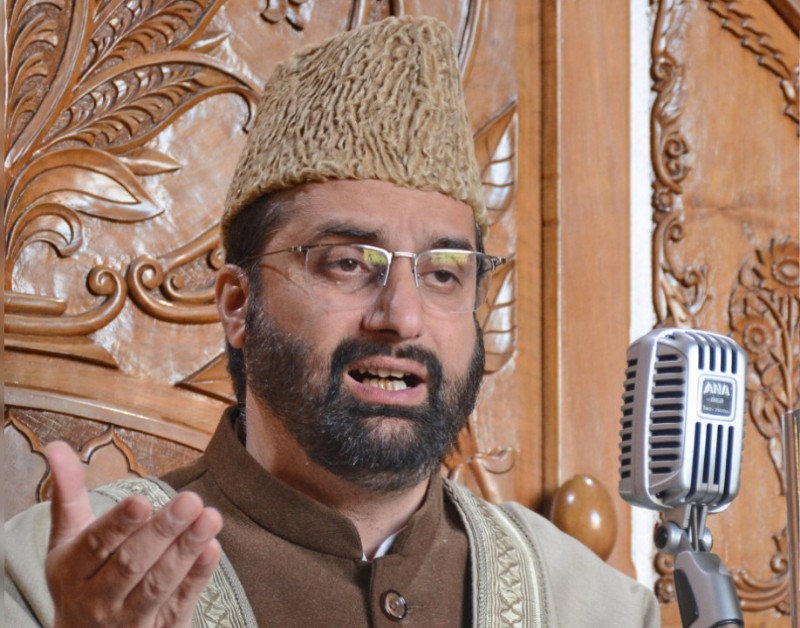
The recent decision by Mirwaiz Umar Farooq to remove the designation of Hurriyat Chairman from his social media profiles signifies a significant moment in the political evolution of Kashmir. For decades, the Hurriyat Conference, an alliance of separatist groups, stood as a representative platform advocating for separatism in the region. Mirwaiz, a prominent religious cleric, lent symbolic weight to this narrative. However, his choice to strip this title from his online presence highlights a broader collapse of separatist symbolism and a shift in Kashmir’s political arena.
Mirwaiz Umar Farooq, known as the chief cleric of the Valley and historically associated with moderate separatist views, recently edited his verified social media handle, removing the designation “Chairman, All Parties Hurriyat Conference”. This move, once seen as a symbol of leadership and ideological commitment, now leaves only his name and location. The decision came after pressure from authorities, warning of potential consequences for non-compliance with updated regulations banning Hurriyat and its constituent bodies under national security laws.
The All Parties Hurriyat Conference, formed in the early 1990s, served as an umbrella organization for various separatist actors in Jammu and Kashmir. Over time, internal divisions, legal actions, and changing realities led to a loss of coherence, influence, and organizational unity within the Hurriyat. Many constituent groups have been proscribed, rendering the institution effectively inactive in public political life. Mirwaiz’s decision to remove the Chairman designation followed legal restrictions and declining public support for the Hurriyat.
Mirwaiz clarified that his personal beliefs and convictions remained unchanged despite the removal of the title. He highlighted the importance of social media as a platform to address unresolved regional issues. However, the absence of the Hurriyat identifier on his profile symbolizes a broader decline in the political relevance of separatist identities. Factors such as leadership disputes, lack of strategy, legal proscription, and reduced mobilization have contributed to the diminishing influence of the Hurriyat.
The removal of the Hurriyat designation holds psychological and political implications, reflecting a shift towards governance, development, and issue-based advocacy in Kashmir. The era of romanticized separatist rhetoric seems to be giving way to a pragmatic approach driven by practical concerns. This change underscores the evolving nature of political legitimacy, emphasizing the importance of operating within established legal frameworks.
While Mirwaiz’s role as a religious leader remains intact, the absence of the Hurriyat identifier signals a shrinking of separatist politics as a recognized label, even among traditional supporters. This shift marks a symbolic closure of a chapter that has long dominated Kashmir’s political landscape, pointing towards a broader transformation where separatist symbolism is replaced by legal, civic, and developmental priorities.
In conclusion, Mirwaiz’s decision to remove the Hurriyat Chairman tag from his social media profile signifies more than just an administrative change. It represents a symbolic shift in Kashmir’s political dynamics, where separatist symbolism gives way to more immediate concerns that resonate with the daily lives of the people.
