
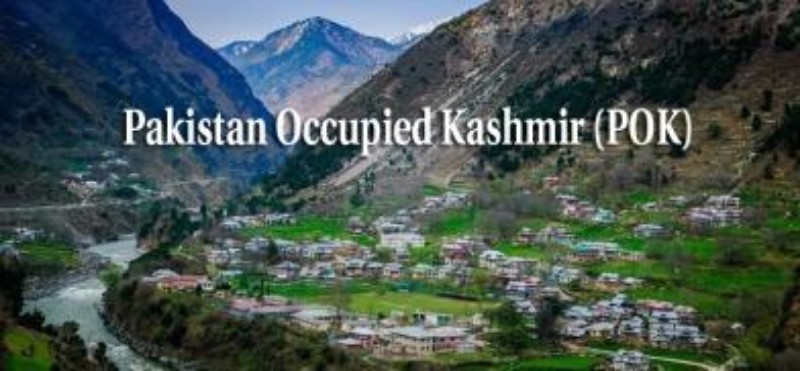
The concept of Sindoor-2 goes beyond being merely a military slogan; it represents a symbolic and strategic expression of unresolved history. It signifies a persistent stance on Pakistan-occupied Kashmir, emphasizing the legal, political, and moral position regarding the territory’s association with the former princely state of Jammu and Kashmir. Sindoor-2 is not just about the present moment but about the determination to address a historical anomaly created through force and deception.
The origin of Pakistan-occupied Kashmir dates back to 1947 when armed intrusions led to its establishment, contrary to the will of its residents. The legal status of the entire region, including the areas now under Pakistani control, was established through the Instrument of Accession signed by the princely state’s ruler. Despite the passage of time and various narratives surrounding it, this legal reality remains unchanged. Sindoor-2 draws strength from this legal foundation, asserting that decades of occupation cannot dilute the region’s rightful territorial integrity.
Pakistan has long tried to justify its control over PoK while denying the region genuine political autonomy. Governance in PoK is characterized by external influence, lack of self-rule, suppression of dissent, and exploitation of local resources, leading to growing discontent among the local population. Recent protests in PoK have shed light on the dissatisfaction with Pakistan’s rule, highlighting the need for genuine representation and autonomy.
Sindoor-2 aligns with the aspirations of the people in PoK who seek dignity, accountability, and self-determination. It signifies a shift towards assertive diplomacy backed by national consensus, moving away from passive approaches that have yielded little progress in resolving the territorial issue. By emphasizing lawful reclamation through political will and international engagement, Sindoor-2 aims to expose human rights abuses and bring about meaningful change in the region.
The psychological and symbolic significance of Sindoor-2 cannot be overlooked. By reaffirming PoK as an integral part of Jammu and Kashmir, it challenges attempts to normalize division and injustice. The economic dimension of Sindoor-2 highlights the exploitation of natural resources in PoK for external interests, underscoring the need for governance that prioritizes development over extraction.
In a changing regional landscape characterized by geopolitical shifts and increased scrutiny of human rights, Sindoor-2 repositions the issue of PoK as a matter of legality and justice rather than rhetoric. It underscores the importance of addressing longstanding injustices and restoring a legal and moral balance disrupted in 1947.
Ultimately, Sindoor-2 represents a commitment to seeking closure on a historical process marred by violence and denial. It serves as a reminder that unresolved injustices demand resolution and that the suffering of the people in PoK should not be disregarded in the pursuit of geopolitical interests.
