
Lifeline by Necessity
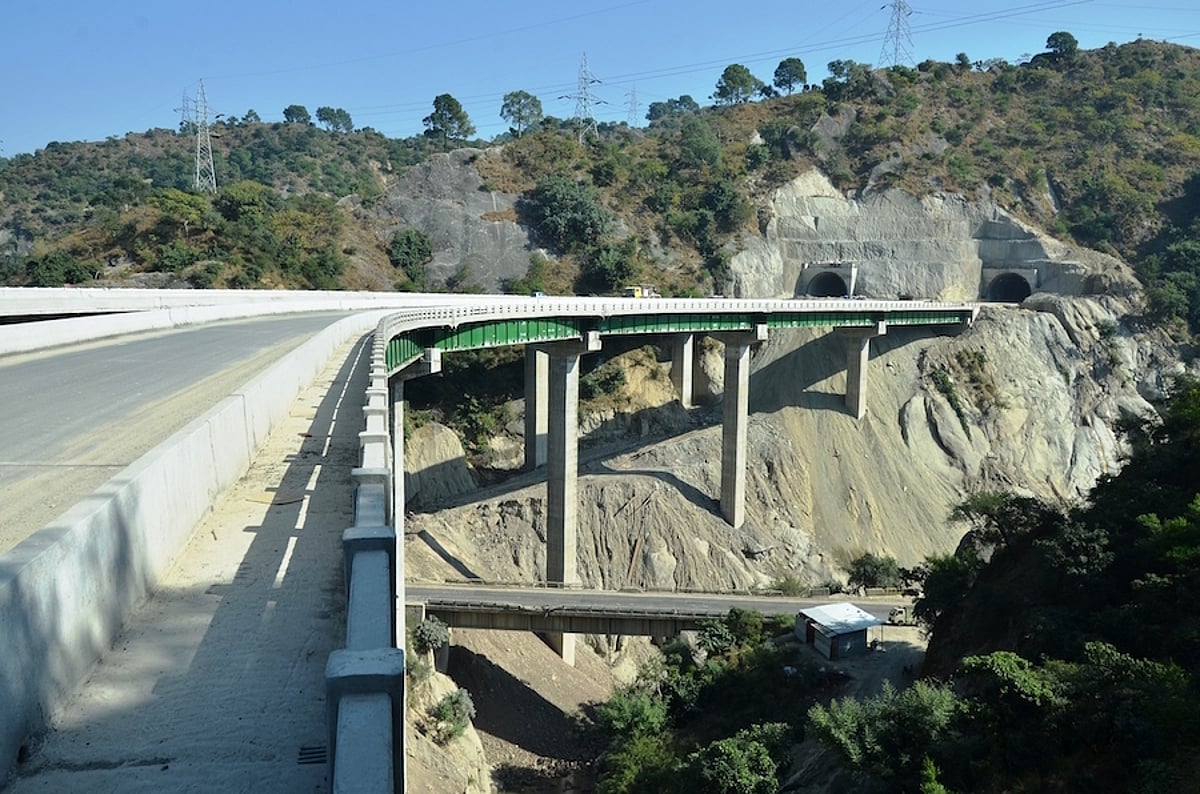
The vulnerabilities of the Jammu–Srinagar highway are often viewed as challenges in engineering. The common approach is to increase the number of tunnels, lanes, and investments to enhance resilience. However, it is essential to acknowledge that geography cannot be easily overridden. A snowbound, steep route through delicate terrain cannot fully replace pathways that have naturally evolved with the landscape.
For the business community in Kashmir, the dependency on this highway is not merely abstract. Every closure results in delayed deliveries, increased expenses, disrupted supply chains, and unpredictability for producers and traders. Economic activities are constantly at the mercy of weather conditions and security concerns.
The core issue does not lie in the existence of the Jammu–Srinagar highway but in its exclusivity. This is why the limited opening of Cross-Line of Control trade along parts of the old Jhelum alignment sparked cautious hope within Kashmir’s trading sector. The positive response was driven by economic necessity rather than sentiment.
Even with a restricted barter system and no formal banking channels, trade quickly resumed. Historical trade routes tend to revive economic ties by reconnecting markets that were previously separated by political boundaries rather than logical reasons.
While regional connectivity projects like the China–Pakistan Economic Corridor have been reshaping trade patterns, it is crucial to recognize that these corridors do not bypass Kashmir but pass through it, particularly via Gilgit-Baltistan.
Projects that transit through regions without involving the local community risk perpetuating exclusion rather than fostering development. When a region is treated solely as a passageway, connectivity becomes exploitative, with benefits passing through without significant impact.
The closure of historic routes, the temporary opening of cross-LoC trade, and the construction of major corridors through Kashmir all highlight the ongoing conflict between geography and politics in the region.
While Kashmir historically served as a crossroads, it now functions as a bottleneck. Reimagining Kashmir as an economic entity, rather than a strategic dilemma, can complement political resolutions. Implementing special economic agreements, shared trading spaces, and multiple corridors aligned with geography can serve as confidence-building measures rather than threats to sovereignty.
