
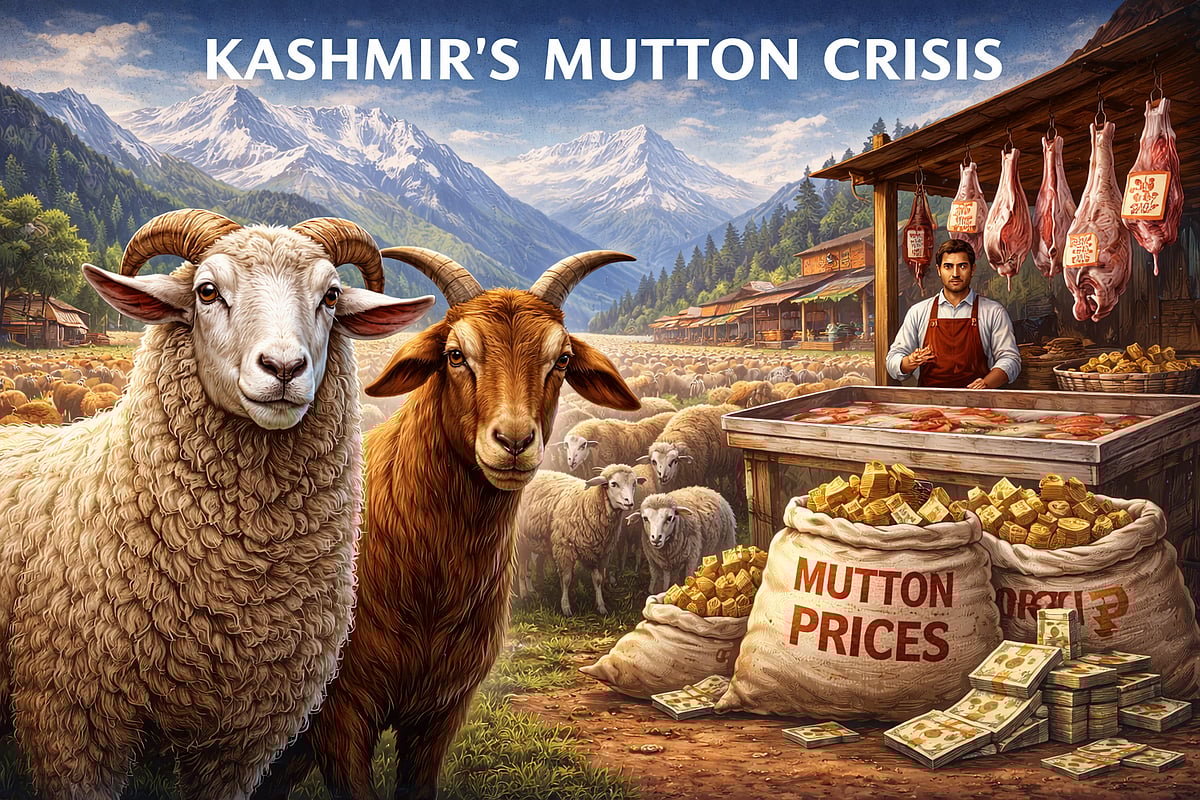
Unpacking the Challenges of a Systemic Crisis
The current situation we face today is a culmination of years of systemic neglect, where short-sighted solutions have overshadowed long-term strategic planning.
This crisis is complex, intertwining environmental degradation, economic myopia, and emerging health issues that demand immediate attention from healthcare institutions in Jammu and Kashmir.
Vanishing Pastures and Genetic Stagnation
The foundation of sheep-rearing is under threat. The once abundant natural grazing lands, such as margs, alpine pastures, and village Kacharai, essential for feeding large flocks, are vanishing rapidly.
Urban expansion, infrastructure development, and changes in land use have led to the destruction of these commons. The remaining lands are degraded, overgrazed, and incapable of supporting a healthy livestock population.
The traditional migratory routes and diminishing pastures have put the nomadic Gujjar and Bakerwal communities’ way of life at risk.
Adding to this ecological crisis is a genetic stagnation issue. Local breeds like the resilient Kashmir Merino and the fine-wooled Gaddi, well-suited for the harsh mountain climate in J&K, have low meat production capabilities.
While international sheep breeds offer higher yields, with carcasses averaging 12 kilograms, the focus has historically been on wool production and survival rather than systematic genetic enhancement for meat output.
The sheep-rearing industry in Jammu and Kashmir consists of a scattered network of smallholders lacking access to modern fodder management systems, quality breeding rams, and professional veterinary care. Operating below capacity, it struggles to meet the rising domestic demand.
