
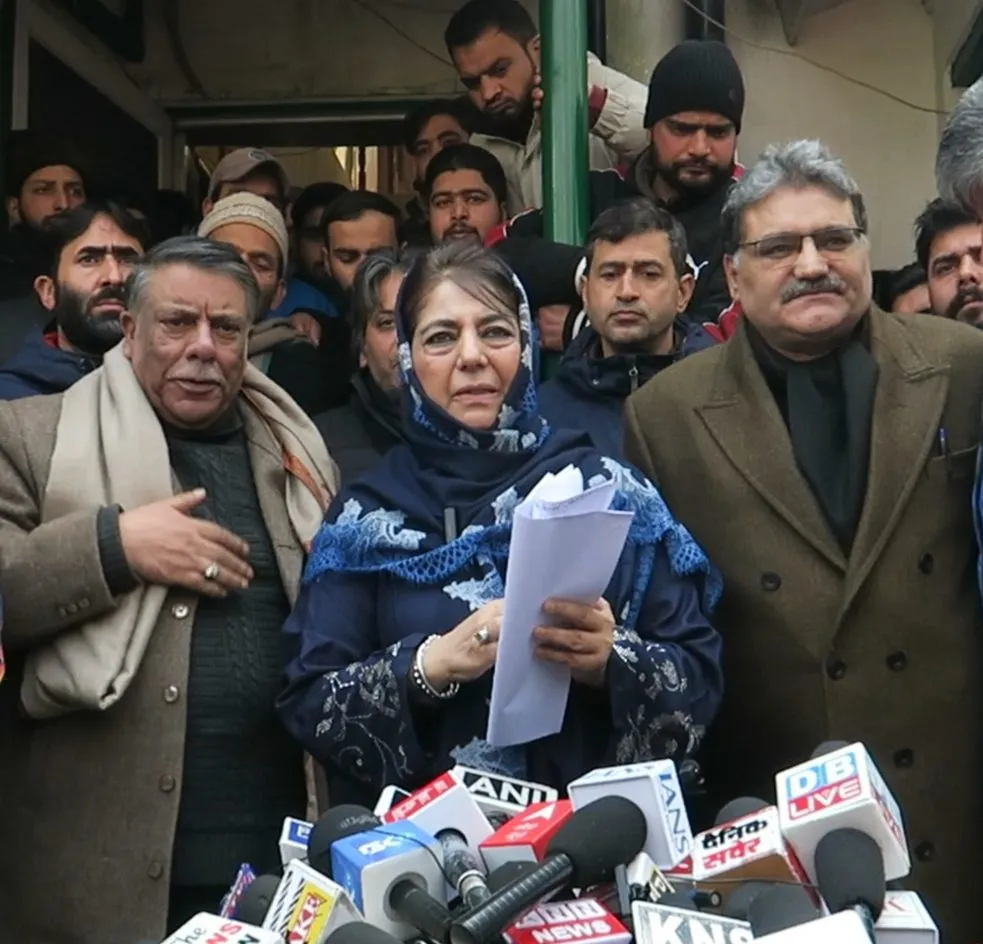
PDP President Mehbooba Mufti Criticizes Profiling of Mosques and Imams in Kashmir
Mehbooba Mufti, the president of the People’s Democratic Party (PDP), recently expressed her disapproval of the profiling of mosques and imams in Kashmir, stating that it amounts to interference in the religious matters of Muslims. She emphasized that if such profiling is deemed necessary, it should begin with temples across the country.
According to Mufti, the latest order targeting mosques constitutes unwarranted interference in the religious affairs of Muslims. She argued that if the authorities feel the need to conduct such profiling, they should also consider obtaining details about priests in temples, including information on which temples are accessible to individuals from different social backgrounds.
Furthermore, Mufti criticized the extensive profiling requirements imposed on mosques, which include collecting information about maulvis, imams, their photographs, and Aadhar cards. She asserted that such measures could be perceived as attempts to intimidate and distance Muslims from practicing their religion in Kashmir. The president of the PDP highlighted the apprehension felt by imams and mosque management committees due to the profiling exercise, likening the process to the harassment experienced by over ground workers (OGWs) during police interrogations.
Mufti challenged the government to extend similar profiling measures to gurudwaras and churches, expressing concerns that the practice might be replicated in mosques nationwide. She raised objections to the authorities seeking details about sects associated with mosques, emphasizing that mosques are inclusive spaces open to individuals of all sects.
Addressing the silence of the government on the issue, Mufti criticized their lack of response and speculated on potential motivations behind the profiling initiative. She condemned the dismissal of five government employees based solely on accusations, questioning the fairness of such actions without due process or legal validation.
Responding to demands for a separate Jammu state, Mufti cautioned that the region could face adverse consequences if such a separation were to occur. She highlighted the potential challenges that Jammu might encounter if isolated from the rest of the state.
Regarding the controversy surrounding the establishment of the National Law University, Mufti suggested that Chief Minister Omar Abdullah should address the matter. She also criticized Abdullah’s stance on the Indus Water Treaty, characterizing it as aligning with the BJP’s agenda and potentially harmful to the region’s interests.
In conclusion, Mufti called for accountability regarding power projects in Jammu and Kashmir, questioning the government’s responsibility for losses incurred due to agreements with entities like the National Hydroelectric Power Corporation (NHPC). She urged for transparency and compensation for the economic repercussions faced by the region.
