
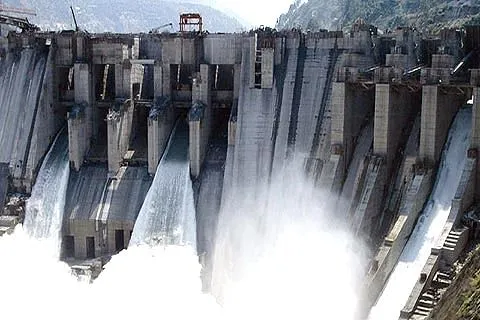
624 MW Kiru Hydroelectric Power Project Faces Delays and Cost Escalation
The 624 MW Kiru Hydroelectric Power Project on the Chenab River has encountered further delays, with completion now projected for December 2026. This represents a significant setback from its original schedule, with costs soaring to Rs 5409 crore from the initial estimate of Rs 4287 crore. These details were revealed in official documents obtained by Greater Kashmir.
Power Minister Manohar Lal recently conducted a comprehensive review of the project, setting a new deadline in response to mounting concerns over the persistent delays that have plagued the strategically important initiative since construction commenced in February 2020.
Initially planned for commissioning in September 2023, the project underwent its first revision to July 2025 before being further postponed to the end of 2026, as outlined in the documents.
The delays have resulted in a 39-month slip from the original projections, raising questions about the project’s management and execution challenges, particularly in the challenging Himalayan terrain.
The cost escalation of over Rs 1121 crore, representing a 26 percent increase, has been attributed to geological complexities, adverse weather conditions, and logistical hurdles typical of high-altitude construction in the remote Kishtwar district of the Chenab Valley, according to project officials.
Despite the setbacks, the documents indicate that 73 percent of the physical progress has been achieved, with cumulative expenditure reaching Rs 3186.98 crore.
However, there is still a significant gap between physical completion and financial outlay, indicating that the most expensive phase – electromechanical installations – is yet to be completed.
Key Features of the Kiru Hydroelectric Power Project
The run-of-river scheme is being developed by Chenab Valley Power Projects Private Limited, a joint venture between National Hydroelectric Power Corporation (51 percent) and J&K State Power Development Corporation (49 percent). Once operational, the project is designed to generate 2272 million units annually.
The project includes a 135-meter concrete gravity dam, an underground powerhouse with four vertical Francis turbines of 156 MW each, and associated infrastructure such as diversion tunnels and pressure shafts. Situated between the Kirthai II and Kwar hydroelectric projects, Kiru is part of an integrated development plan for the Chenab River basin.
Expected to play a crucial role in bolstering northern India’s power grid while providing clean, renewable energy, the project’s foundation stone was laid in March 2019 following environmental clearance in 2016 and Cabinet approval the same year.
However, the widening gap between approval and completion mirrors a trend seen across several hydroelectric projects in the region, highlighting the challenges faced in executing such ambitious undertakings.
Overall, the Kiru Hydroelectric Power Project’s progress and challenges underscore the complexities involved in developing infrastructure in challenging terrains and the critical role such projects play in meeting India’s growing energy demands while promoting sustainability.
