
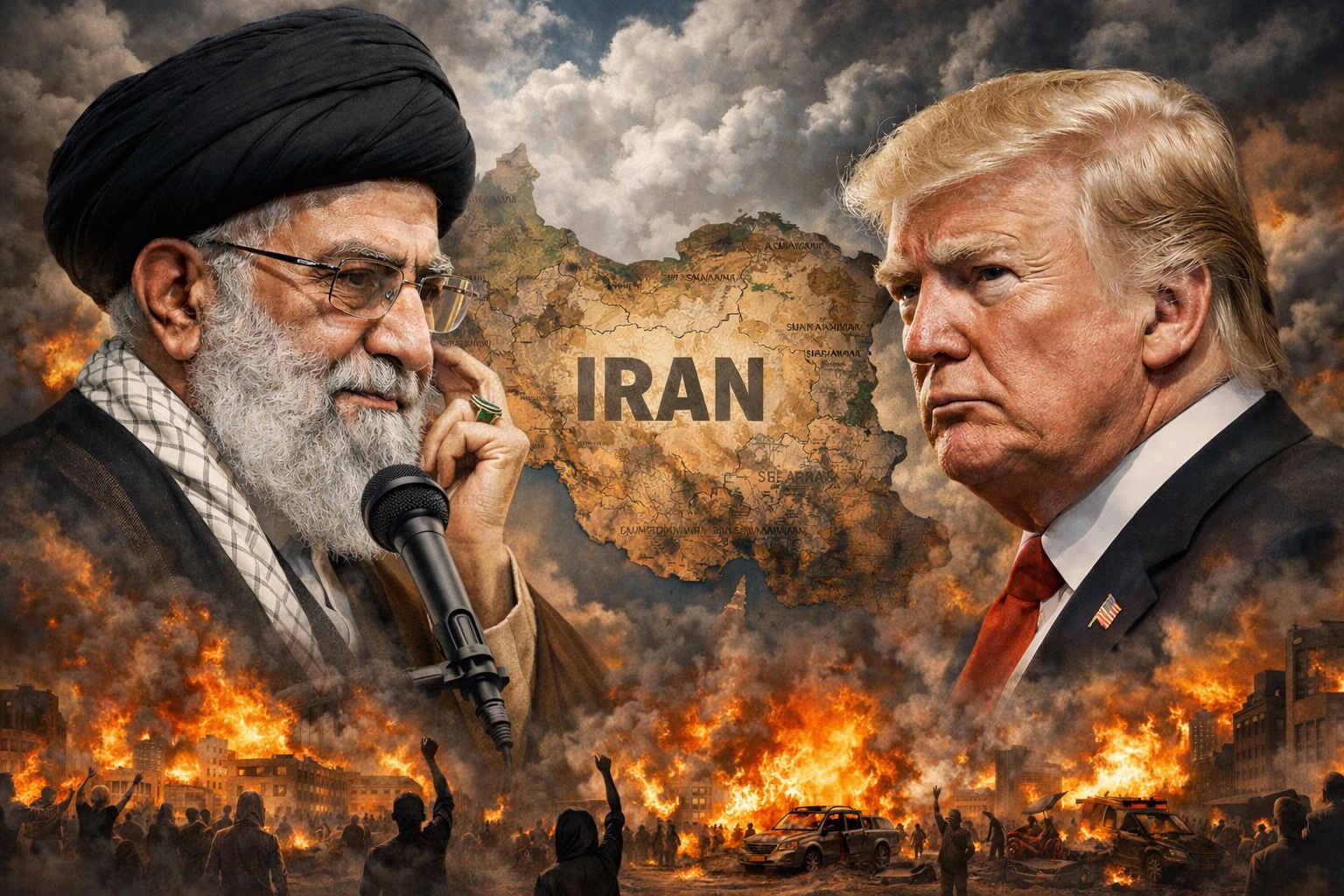
Unrest in Iran: A Complex Narrative
By- Hamid Ansari
Starting from December 28, 2025, protests erupted in various Iranian cities due to economic pressures and public discontent. The initial triggers were rising inflation, high food prices, and a sharp decline in the national currency. What began as economic dissatisfaction quickly evolved into political unrest, garnering global attention and media focus.
The protests, which spread to all 31 provinces by early January, were considered the largest wave of demonstrations since the 1979 Islamic Revolution. Initial participants included shopkeepers in Tehran’s Grand Bazaar, university students, and workers, with the movement later encompassing smaller towns. While many protesters expressed legitimate economic concerns, the swift turn to violence raised concerns about the underlying forces behind the unrest.
Iranian authorities alleged that foreign-backed elements exploited and fueled the protests. They accused the United States and Israel of instigating instability, citing Iran’s history of external pressure, sanctions, and covert actions. From Tehran’s perspective, the unrest followed a familiar pattern: economic warfare leading to internal turmoil aimed at weakening the state.
Iranian Foreign Minister Abbas Araghchi characterized the situation as a “terrorist war,” claiming that armed groups targeted police stations, mosques, government buildings, and commercial properties in a coordinated manner.
Official reports indicated that 53 mosques were set on fire, and images of Supreme Leader Ayatollah Syed Ali Khamenei were burned. Iranian officials argued that these actions went beyond peaceful protest, reflecting an organized campaign of chaos.
Araghchi further alleged that individuals were offered significant sums of money to engage in violent acts, including attacking security personnel, civilians, and even children, as well as destroying public property. Despite protests and rights organizations refuting these claims, Tehran insisted that evidence pointed to foreign interference.
The response of Iran’s security forces drew international criticism, particularly concerning reports of gunfire and mass arrests. Hospitals in Tehran and Shiraz were reportedly overwhelmed by injured protesters, some sustaining gunshot wounds. The Iranian foreign ministry acknowledged security forces firing during clashes but maintained that the state was combating armed violence rather than peaceful dissent.
Simultaneously, Iranian officials aimed to counter narratives portraying the country on the verge of collapse. On January 12, millions of pro-government supporters gathered across Iran, especially in Tehran’s Enghelab Square, denouncing the United States and Israel and expressing loyalty to the Islamic Republic. State television broadcasted images of large crowds, emphasizing that the unrest did not represent a unified national stance.
Iran’s leadership also emphasized restraint in its actions. Araghchi clarified in an interview with Fox News that there were no plans for executing individuals in response to the protests, emphasizing a stance against hanging. This message sought to alleviate international concerns and project a balanced image of authority rather than unrestrained repression.
Externally, the unrest heightened regional tensions. Araghchi accused Israel of consistently trying to draw the United States into conflicts serving Israeli interests and cautioned US President Donald Trump against repeating past mistakes of military confrontations. He underscored Iran’s readiness for diplomacy while the Islamic Revolutionary Guard Corps (IRGC) declared peak defensive readiness, reflecting Tehran’s serious stance on external threats.
Iran attributed its economic woes to years of debilitating sanctions that crippled the economy, restricting access to international markets and essential goods. Iranian officials argued that the economic hardships cited by protesters were a direct result of US-led pressures, dismissing Washington’s expressions of concern as insincere. In their view, sanctions and destabilization were part of the same strategy.
While acknowledging governance issues, lack of transparency, and economic challenges within Iran, critics of the government cautioned against oversimplifying the crisis as a mere people versus state conflict, emphasizing the complex geopolitical factors at play. The Middle East’s history of externally driven regime changes in countries like Iraq and Libya, leading to fractured societies, served as a backdrop to Iran’s narrative.
Iran’s leadership framed its stance as one of sovereignty and resistance, rejecting what they perceived as deliberate attempts by the United States and Israel to plunge the country into chaos and desperation. Tehran viewed the recent events not just as protests but as part of a broader struggle for Iran’s independence and regional influence.
Reports of advising some American personnel to leave Al Udeid Air Base in Qatar due to escalating tensions with Iran sparked alarm across US military installations in the Gulf. While Washington issued warnings and increased military presence, Tehran maintained a firm yet measured approach.
Iran reiterated its commitment to regional stability, diplomacy, and self-defense, emphasizing that its security preparedness aimed at protecting sovereignty rather than provoking conflict. This highlighted Iran’s strategic restraint and emphasis on dialogue amidst growing foreign military presence in the region.
As tensions persisted, the future remained uncertain. However, a thorough assessment of the unrest needed to consider both domestic grievances and foreign intervention’s enduring impact. Failing to acknowledge these aspects risked misinterpreting not only Iran’s crisis but also the broader regional dynamics.
– The author is a senior editor at a Gulf-based newspaper.
