
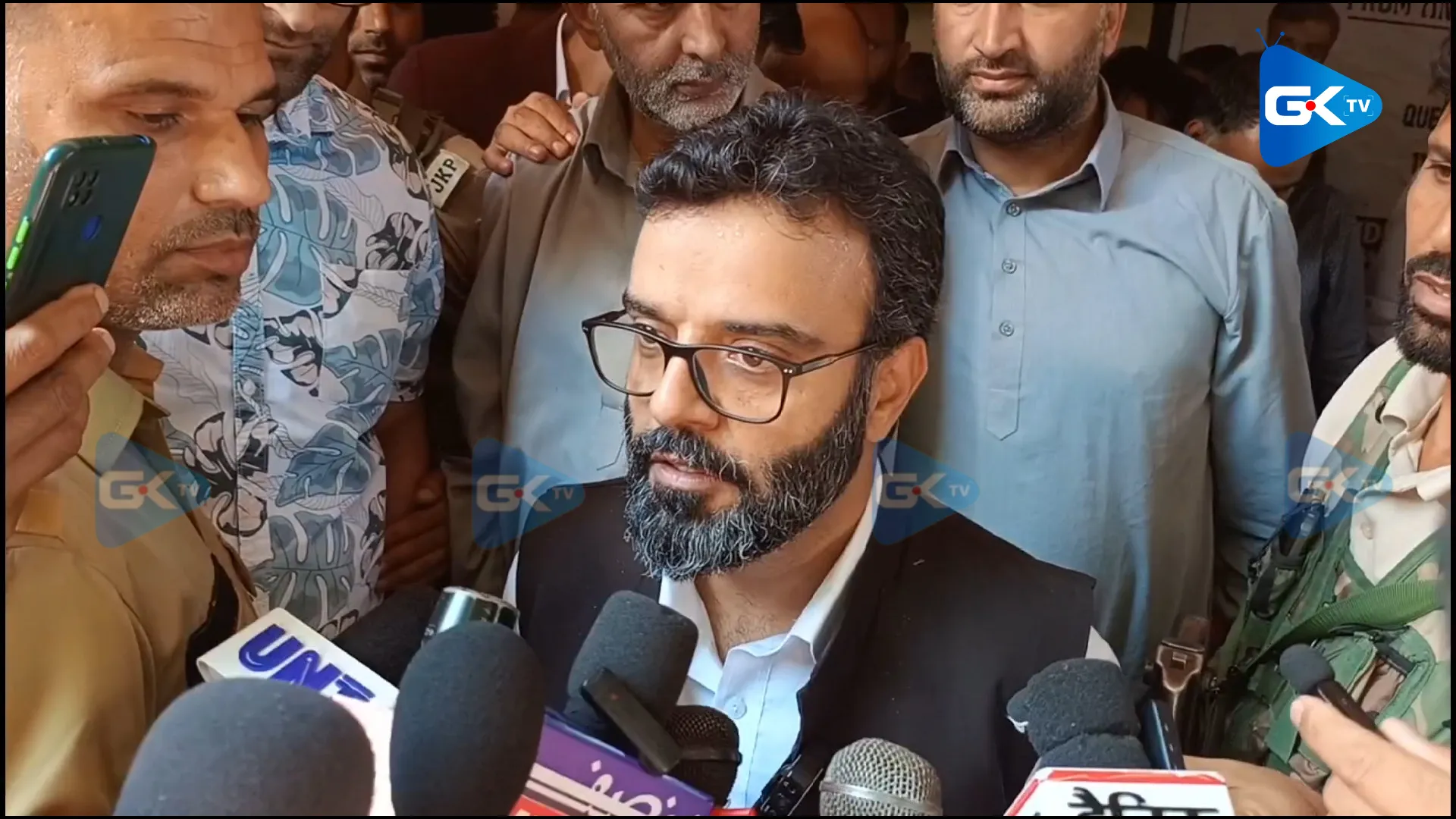
Member of Parliament Criticizes Government Over Power Tariff Hike and Reservation Delays
On January 12, Aga Syed Ruhullah, the Member of Parliament from Srinagar, expressed strong criticism towards the government for the recent increase in power tariffs, delays in reservation rationalization, and what he described as the “communalization of Jammu” by fringe elements.
During the foundation stone laying ceremony for various centrally funded road projects under the Pradhan Mantri Gram Sadak Yojana (PMGSY) in Kangan, Ruhullah highlighted the government’s arbitrary decision to raise electricity tariffs, causing distress to consumers, especially those below the poverty line.
Ruhullah emphasized the need for sensitivity in imposing burdens on individuals who are already facing financial struggles. He urged the government to consider the impact on economically weaker sections and ensure they are not disproportionately affected.
Addressing the issue of reservation rationalization, Ruhullah raised concerns about the prolonged delay in obtaining approval from the Lieutenant Governor. He questioned the government’s inaction, stating that the continuous delay is unacceptable to students and affected communities.
Seeking a clear timeline for approval, Ruhullah challenged the government to define their threshold for decision-making. He warned that if a definite timeline is not provided, elected representatives should support public protests.
Accusing a vocal fringe group associated with the RSS of fueling communal tensions in Jammu, Ruhullah condemned their actions in disrupting admissions based on merit at a prominent medical institution. He criticized the group for communalizing the region and targeting educational opportunities for non-Hindu students.
Ruhullah questioned the moral integrity of those opposing the temple trust that funds the medical college, emphasizing the values of humanity, justice, and development in education. He stressed that the majority of the population in Jammu does not support the closure of academic institutions or the communalization efforts.
Emphasizing the importance of regional unity, Ruhullah expressed pride in Kashmiris, Dogras, and the diverse communities in Jammu. He rejected the idea that a fringe group spreading hatred could represent the entire region, advocating for inclusive decision-making processes in Jammu and Kashmir.
Ruhullah concluded by stating that decisions impacting Jammu and Kashmir should involve the active participation of all individuals, ensuring a fair and inclusive approach to governance.
