
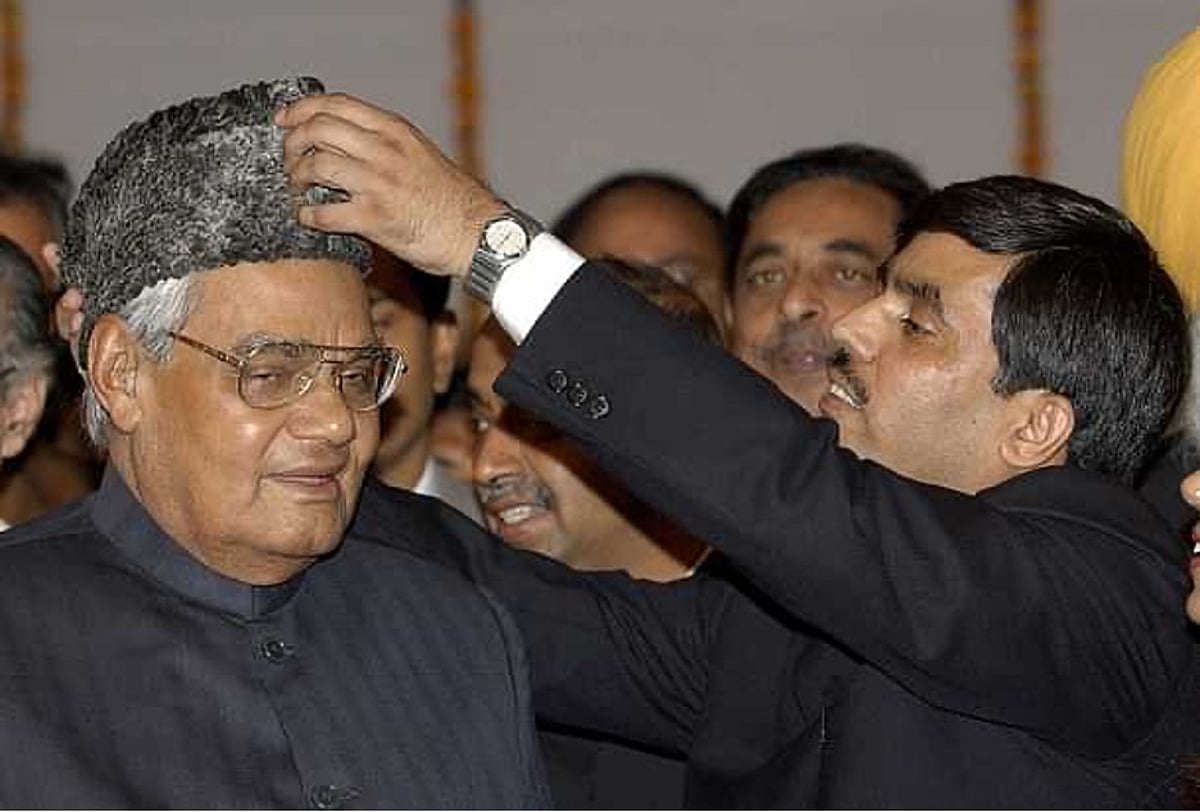
The Political Legacy of Atal Bihari Vajpayee: A Deep Dive
In his insightful documentation, Choudhary delves into the early career of Atal Bihari Vajpayee, highlighting his controversial decisions as foreign minister, including his push to promote Hindi within the ministry. A significant milestone in Vajpayee’s career was his historic delivery of the first Hindi speech at the UN General Assembly.
The narrative then shifts to Vajpayee’s tenure as the Prime Minister of India. One of the darkest moments during this period was the Godhra tragedy in 2002, resulting in the loss of 59 lives and triggering widespread violence against Muslims. The book vividly portrays the political turmoil of that time, showcasing Vajpayee’s leadership as both shrewd and enigmatic.
Choudhary also recounts the tumultuous events leading up to the demolition of the mosque in Ayodhya, shedding light on Vajpayee’s ambiguous stance on the issue. In a public gathering on December 5, 1992, Vajpayee, along with Advani and Joshi, expressed hope and apprehension about the security of the Babri Masjid.
When the mosque was eventually demolished, Vajpayee downplayed the incident, attributing the outrage to the left-liberal press and intelligentsia. He emphasized that the structure was disputed and not solely a mosque, a sentiment that stirred controversy.
Choudhary skillfully narrates the transformation of moderates into facilitators of extremism, tracing Vajpayee’s journey through these tumultuous times. Despite the grim subject matter, the book offers valuable insights and is a compelling read for those interested in Indian political history.
