
The Historical Significance of Kashmir in South Asia’s Military Landscape
From the battlefield skirmishes of 1965 to the high-altitude conflict of Kargil and the nuclear brinkmanship that followed, Kashmir has played a pivotal role in shaping the military dynamics of the subcontinent, influencing alliances and deepening strategic divides, states Humaira Nabi.
May 6–7, an Eventful Night
On the fateful night of May 6–7, Kashmiri residents were startled awake by the sound of aircraft engines cutting through the silence. India executed a series of targeted missile strikes on nine locations within and outside Pakistan in retaliation for the massacre of 26 tourists in Pahalgam on April 22. This marked the third cross-border operation under Prime Minister Narendra Modi’s administration, with the first two responses being to the Uri town attack in 2016 and the Pulwama attack in 2019.
Historical Context: The First War (1947–48)

The Kashmir conflict traces back to the partition of India and Pakistan in 1947 when the princely state of Kashmir chose to remain independent. However, it soon became a disputed territory, with Pakistan aiming to annex it due to its Muslim majority population, while India argued for its historical and strategic significance.
1965: The Second War

The 1965 Indo-Pak War was fueled by Pakistan’s desire to gain control over Kashmir, leading to a 17-day conflict that significantly altered the strategic landscape of South Asia. The war began with Pakistan’s Operation Gibraltar, followed by India’s swift response under Prime Minister Lal Bahadur Shastri. Tank battles and aerial combat marked this full-scale war, culminating in the Tashkent Agreement in 1966.
The Kargil War (1999)

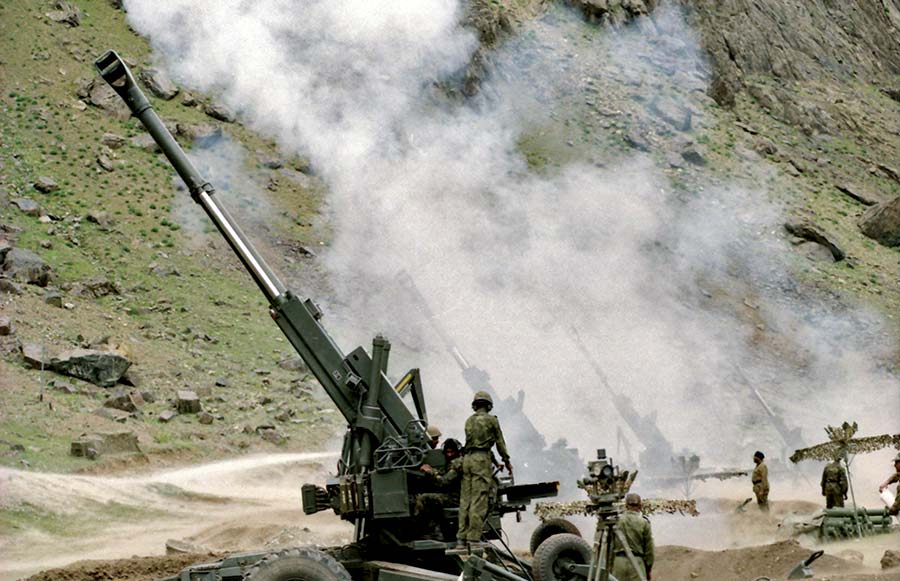
The 1999 Kargil War in Ladakh highlighted the intense fighting between India and Pakistan, drawing global attention to the region. Despite the Lahore Declaration signed earlier that year, the conflict erupted due to Pakistani forces and militants occupying strategic peaks along the Line of Control. India’s Operation Vijay aimed to dislodge the intruders, leading to a diplomatic resolution under mounting pressure.
Nuclear Arsenals and Conventional Military Balance
Both India and Pakistan maintain nuclear arsenals and possess significant conventional military capabilities. India’s No First Use doctrine contrasts with Pakistan’s asymmetric escalation strategy. The two countries’ defense budgets and military strengths reflect their strategic priorities and regional influence.

Alliance Dynamics
The rivalry over Kashmir continues to influence regional geopolitics, with India fostering a robust network of alliances, including the United States, Russia, France, and Israel. In contrast, Pakistan’s dependency on China has grown, while its traditional alliances have weakened. The shifting dynamics in South Asia underscore the strategic importance of Kashmir in shaping regional power balances.
