
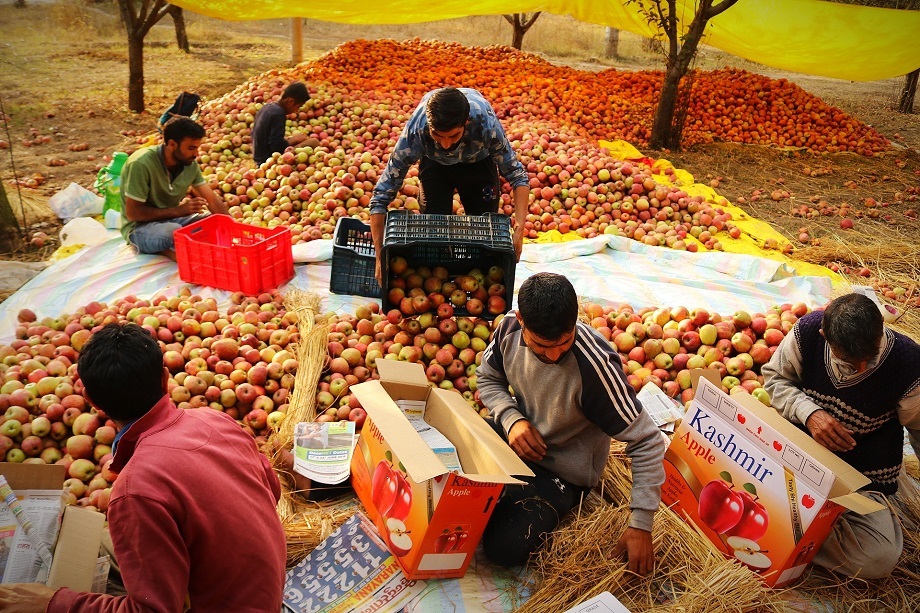
Indo-US Trade Deal: Impact on Kashmir Fruit Growers
The recent India-US trade deal has sparked a wave of concern among fruit growers and dealers in Kashmir. While some see potential benefits in terms of price stabilization and quality improvement for local produce, others fear a detrimental impact on the region’s economy.
Javaid Ahmad Lone, a walnut farmer and dealer from Shopian district, believes that the influx of imported goods from the US could compel local farmers to enhance the quality of their products to remain competitive in the market.
Lone expressed, “Protectionism may not always be in the best interest of farmers. Competition can drive them to strive for better quality and consistency in their produce. With imported walnuts and almonds setting a new standard, local farmers will have to up their game.”
On the contrary, the overall sentiment within the fruit growers and dealers community leans towards apprehension regarding the trade deal’s repercussions on Kashmir’s horticulture-dependent economy.
Bashir Ahmad Bashir, President of the fruit growers and dealers union, voiced concerns in a letter to Prime Minister Narendra Modi, emphasizing that reduced tariffs on imported apples would severely disadvantage local apple producers in Kashmir and Himachal Pradesh.
He further stated, “The horticulture sector is already grappling with challenges such as rising input costs, unpredictable weather patterns, and pest outbreaks. Lower duties on foreign apples could exacerbate the financial strain on marginal farmers.”
Chief Minister Omar Abdullah also raised alarms regarding the potential adverse effects of the trade deal on Kashmir’s dry fruit and horticulture economy. He highlighted the risks posed by duty-free imports of tree nuts like walnuts and almonds.
The opposition party, PDP, echoed similar concerns, warning that the absence of tariffs on agricultural imports from the US could spell disaster for Jammu and Kashmir’s horticulture sector.
In conclusion, the India-US trade deal has evoked a mix of hope and fear among Kashmir’s fruit growers and dealers, emphasizing the need for a balanced approach to safeguard the interests of local farmers and sustain the region’s horticultural economy.
