
The Governance Divide: Contrasting Realities in Pakistan Occupied Kashmir and Jammu and Kashmir
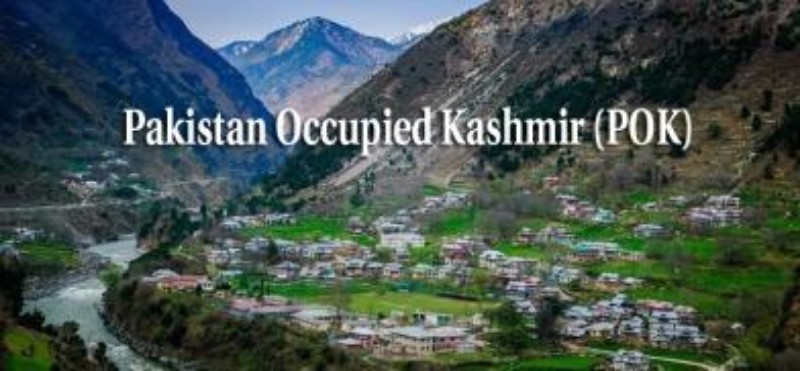
In the realm of political empowerment and investment, Pakistan Occupied Kashmir (POK) stands starkly contrasted against our own Jammu and Kashmir. The disparity is most evident in the sphere of governance, where neglect and systemic deprivation plague one region while the other flourishes under institutional support, public investment, and democratic integration. This governance dichotomy is reflected in the state of basic facilities, which remain underdeveloped in POK, leading to the marginalization of communities.
Infrastructure Woes in Pakistan Occupied Kashmir
The lack of reliable infrastructure in POK is a recurring challenge that hampers the daily lives of its residents. Access to safe drinking water is a luxury in many areas, with residents having to rely on natural streams or poorly maintained supply lines. Despite the presence of hydropower projects, electricity supply remains erratic, leaving many in darkness for extended periods. The state of roads in rural and mountainous regions further isolates communities, hindering access to essential services and perpetuating cycles of poverty.
Healthcare in POK mirrors this neglect, with limited medical facilities and inadequate resources. Many hospitals lack essential staff and equipment, forcing patients to travel long distances for treatment. Education also suffers from structural deficiencies, with schools lacking proper infrastructure and qualified teachers. Higher education opportunities are scarce, leading to a brain drain as students seek better prospects outside the region.
The Political Realities of Pakistan Occupied Kashmir
Underlying these challenges is a deeper political reality in POK. The region lacks genuine autonomy, with key decisions often made outside its borders. Local institutions lack authority and resources, leading to poor planning and widespread dissatisfaction among the populace. Protests over basic services and governance issues are on the rise, reflecting growing frustration.
Contrasting Progress in Jammu and Kashmir
In contrast, Jammu and Kashmir presents a different narrative of sustained investment and development. Despite the challenges of conflict and terrain, the region has seen significant improvements in infrastructure and public services. Roads and highways have expanded connectivity, healthcare infrastructure has been bolstered, and education opportunities have increased.
Government initiatives have focused on improving access to healthcare and education, leading to a brighter future for residents of Jammu and Kashmir. The region also benefits from diverse economic activities, tourism, and government support for local industries.
India’s Development-Oriented Approach
The contrast between POK and Jammu and Kashmir underscores the importance of governance and intent in driving development. India’s approach to Jammu and Kashmir prioritizes integration, rights, and development, leading to structured and inclusive progress. In contrast, the absence of political empowerment and sustained investment in POK has left communities marginalized and basic facilities underdeveloped.
Ultimately, the comparison between POK and Jammu and Kashmir highlights the critical role of political will and institutional strength in fostering development. Access to essential services determines dignity and opportunity in everyday life, and India’s development-oriented approach in Jammu and Kashmir showcases the potential for progress when governance is accountable and people-centric.
For more information, contact tahirkashmiri2025@gmail.com
