
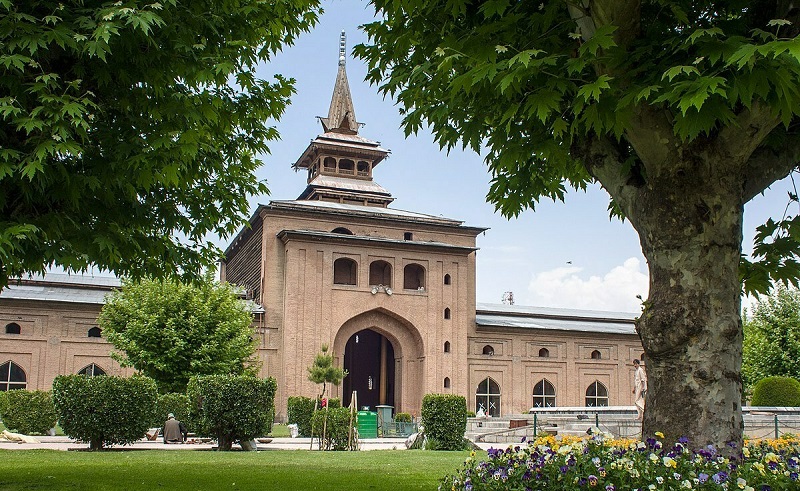
Understanding the Controversy Surrounding Mosque Documentation in Kashmir
Amidst concerns raised by various religious and political entities, the Jammu and Kashmir administration is clarifying the purpose behind the current initiative led by the police to gather institutional information regarding mosques, madrassas, and religious leaders across Kashmir. This exercise is being portrayed as a routine regulatory measure aimed at updating official records, ensuring transparency, and preventing misuse of religious spaces.
Officials have emphasized that the intention of this exercise is not to interfere in religious affairs. It is purely meant for record updating to enhance accountability and transparency, rather than regulating worship, imposing doctrinal control, or infringing upon the autonomy of religious institutions.
The controversy arose when the Mutahida Majlis-e-Ulema (MMU) and political parties questioned the motives behind the information being collected by the police in various regions of Kashmir. The MMU and the ruling National Conference (NC) have criticized the initiative, labeling it as intrusive and discriminatory towards mosques.
The MMU called for the withdrawal of what they termed as arbitrary surveillance, emphasizing the need to protect the autonomy of religious institutions and citing constitutional guarantees of religious freedom, privacy, and dignity. The NC also objected, with spokesperson Imran Nabi Dar stating that profiling mosques is intimidating and discriminatory.
Reports surfaced that police distributed a detailed form in different parts of Kashmir, requesting information about mosques, including their sect affiliation, sources of funding, and details about imams and managing committee members. This move has raised concerns about privacy and possible intimidation due to the personal information being sought.
Officials have clarified that the documentation exercise aims to fill gaps in official databases and enhance institutional mapping. It is necessary to have updated records for administrative clarity and accountability, especially as institutions evolve, change management structures, or develop new funding sources over time.
Global Precedents for Regulatory Oversight
Officials have pointed out global examples of regulatory oversight in Muslim-majority countries like Saudi Arabia, Turkey, the UAE, Qatar, and Indonesia. These countries have formal frameworks for mosque registration, staffing, and funding transparency to ensure accountability and prevent extremist activities.
For instance, Turkey’s Directorate of Religious Affairs oversees mosque administration and employs imams as state personnel to maintain uniformity in sermon guidance. In Saudi Arabia, mosques are regulated by the Ministry of Islamic Affairs to prevent extremist preaching and ensure public order.
In the UAE, mosques are licensed, inspected, and audited by federal religious bodies, with imams operating under state supervision. Similarly, in Qatar, the Ministry of Endowments supervises mosques and regulates funding streams to prevent misuse of religious platforms.
Even in Indonesia, where mosques are community-managed, the government intervenes in cases of suspected extremist activities. These examples highlight the importance of regulatory oversight in religious institutions to maintain transparency and prevent misuse.
Clarifying the Purpose of the Exercise
Officials have reiterated that the mosque documentation exercise in Kashmir is preventive and regulatory in nature, aimed at ensuring accountability and preventing unlawful activities within religious spaces. It is not about controlling religious institutions or dictating religious doctrine.
The focus is on proper documentation to avoid misuse of religious spaces and maintain transparency. It is crucial to understand that this initiative is not meant to interfere with religious practices but rather to uphold accountability and prevent any unlawful activities within religious institutions.
