
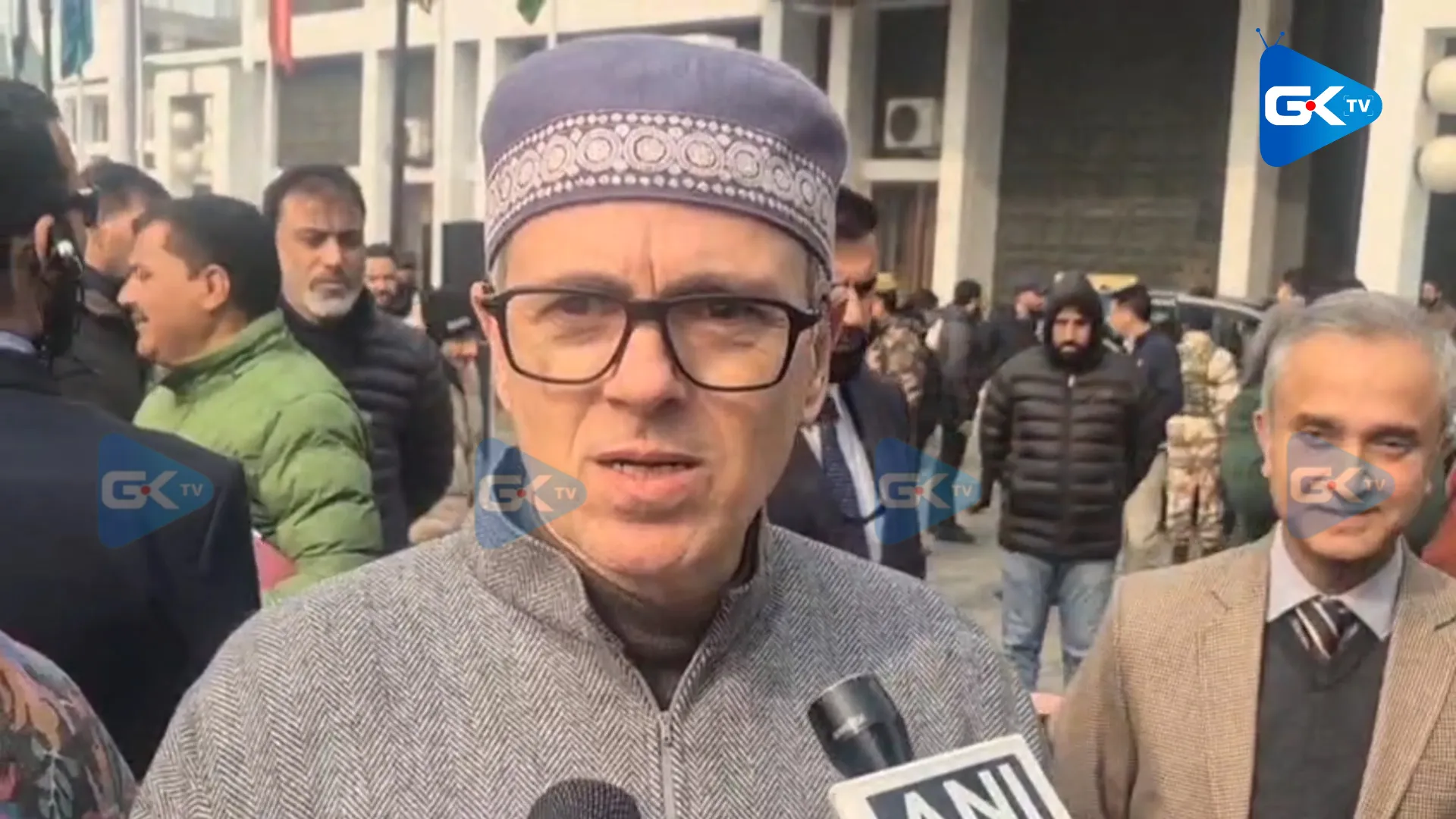
Jammu and Kashmir Chief Minister Accuses BJP of Initiating Move to Bifurcate State
On January 25, Srinagar, Jammu and Kashmir Chief Minister Omar Abdullah criticized the Bharatiya Janata Party (BJP) for allegedly starting the move to divide the erstwhile state. This response came after BJP national general secretary Tarun Chugh expressed support for a united Jammu and Kashmir, including Pakistan-occupied Kashmir (PoK).
Abdullah, in his statement to news agency Kashmir News Service (KNS), acknowledged Chugh’s remarks but pointed out that the idea of bifurcation was initially introduced by the BJP itself. He emphasized the desire for Jammu and Kashmir to remain a single entity and highlighted the BJP’s role in the separation of Ladakh. Abdullah expressed a wish for Ladakh to be reunited with Jammu and Kashmir.
Furthermore, Abdullah emphasized that the unity of Jammu and Kashmir has always been their goal, contrary to the BJP’s actions. He criticized the promotion of narratives that advocate for the separation of Jammu from Kashmir, attributing such ideas to the BJP and some of its allies in the region.
Chugh reiterated the BJP’s stance on a fully united Jammu and Kashmir, including the territories of PoK under Pakistan’s control. He emphasized the party’s commitment to the holistic development of the entire region and condemned divisive narratives propagated by other political parties.
It is evident from the statements made by both Abdullah and Chugh that the issue of Jammu and Kashmir’s unity remains a contentious topic, with differing perspectives on how to address the region’s political landscape. While Abdullah advocates for the reunification of Ladakh and stresses the importance of maintaining Jammu and Kashmir as a cohesive entity, Chugh asserts the BJP’s vision for a united Jammu and Kashmir, encompassing PoK.
As political discourse surrounding Jammu and Kashmir continues to evolve, it is essential for all stakeholders to engage in constructive dialogue and work towards solutions that prioritize the region’s stability and development. The contrasting views presented by Abdullah and Chugh underscore the complexity of the situation and the need for nuanced approaches to address the diverse aspirations of the people of Jammu and Kashmir.
