
Europe at a Turning Point: The Unraveling of Transatlantic Relations
In January 2026, the world witnessed a tense standoff as President Donald Trump threatened severe tariff hikes against eight European nations in a controversial bid to pressure Denmark into selling Greenland. This bold move sparked outrage among European allies, who swiftly condemned the action and retaliated with warnings of a “trade bazooka” response. The resulting escalation within NATO sent shockwaves across the continent, posing a threat to key industries and GDP.
Despite intense negotiations within NATO, President Trump eventually backed down from his tariff threats. However, the aftermath of this episode has left lasting scars on transatlantic relations.
The Shifting Dynamics of Transatlantic Relations
The tariff dispute served as a stark reminder of the evolving landscape of transatlantic relations. For decades, European nations relied on American support for security and prosperity. However, cracks have begun to appear in this foundation, prompting European capitals to reassess their strategic priorities.
European countries are now racing to adapt to this new reality by increasing defense spending, establishing intra-European security agreements, and questioning the future of NATO in its current form.
The Complex Tapestry of Europe
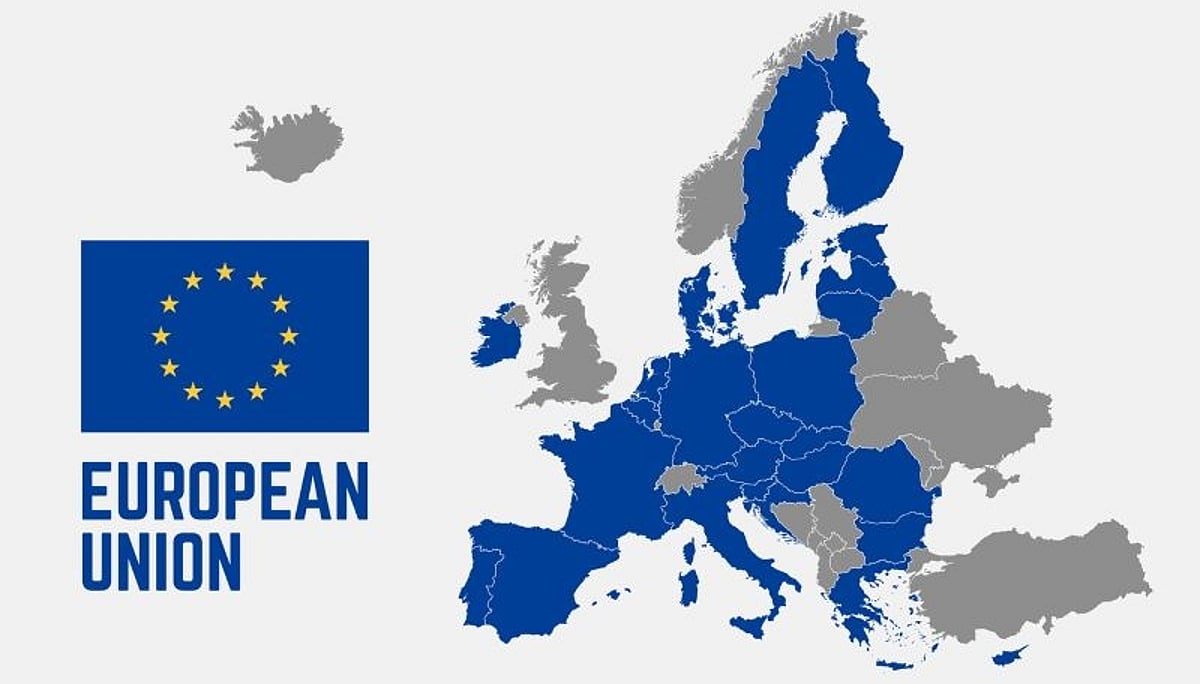
Europe is a diverse continent comprising approximately 50 political entities, ranging from major powers like Germany, France, and Russia to small microstates such as Vatican City and Monaco. The region has traditionally been held together by two pillars: economic integration through the European Union and security provided by NATO.
However, this framework is facing unprecedented challenges, exacerbated by factors such as China’s growing influence, the emergence of new intra-European alliances, and shifts in relations with South Asian powers like India, Pakistan, and Bangladesh.
The very concept of Europe remains a complex puzzle, with a mosaic of nations reflecting varying historical narratives, economic trajectories, and geopolitical ambitions.
- The Core EU & West: Germany, France, Italy, Netherlands, Belgium, Luxembourg, Austria, Ireland, Spain, Portugal, Greece, Denmark, Sweden, Finland, Poland, Czechia, Slovakia, Hungary, Slovenia, Croatia, Romania, Bulgaria, Estonia, Latvia, Lithuania, Malta, Cyprus.
- Non-EU West: United Kingdom (post-Brexit), Norway, Iceland, Switzerland, Liechtenstein.
- The Balkans & Southeast Europe: Albania, Serbia, Montenegro, Bosnia and Herzegovina, North Macedonia, Kosovo (partially recognized), Moldova.
- Eastern Europe & The Caucasus Zone: Ukraine, Belarus, Georgia, Armenia, Azerbaijan.
- The Transcontinental Giants: Russia, Turkey, Kazakhstan.
This intricate tapestry of nations is not merely a geographical map but a reflection of deep-seated differences in historical perspectives, economic development, and security concerns.
The recent conflict in Ukraine has further highlighted the divergent interests and security priorities across Europe, creating a gradient of apprehension that spans from Eastern Europe to the Western shores.
Embracing this diversity and navigating the strategic challenges it presents will be crucial for Europe’s future stability and prosperity.
