
The Significance of the Ramzan Crescent in Jammu, Kashmir, and Ladakh
By Vedicaa Manoj Sawal
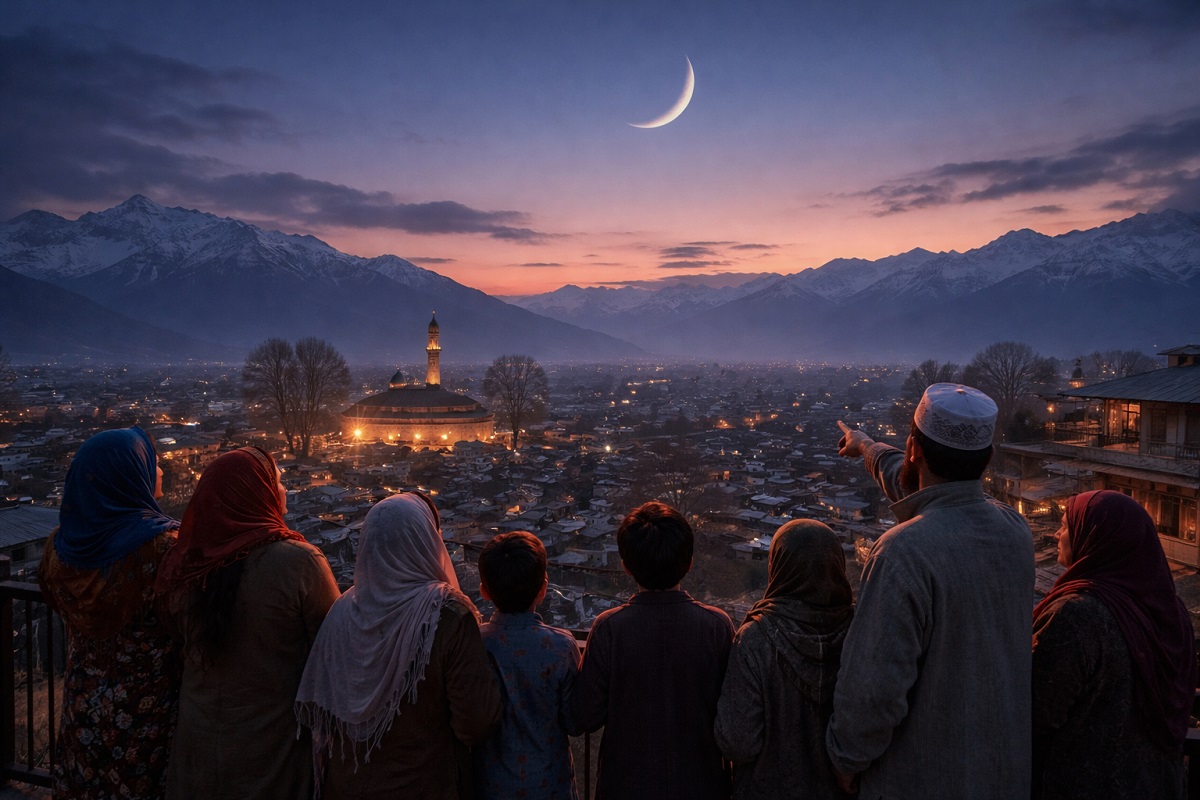
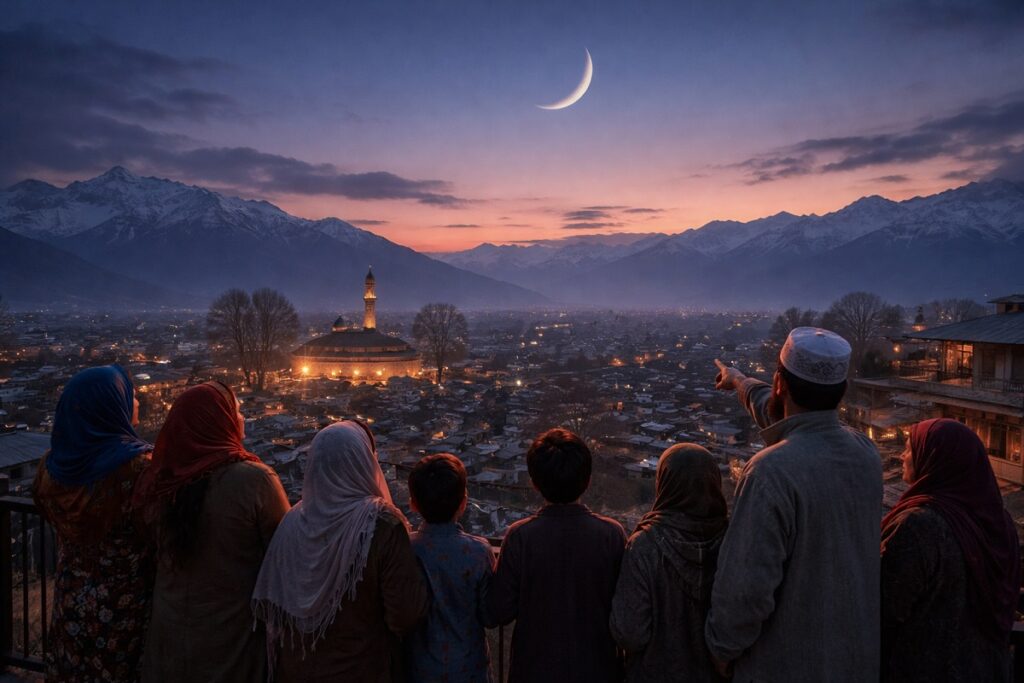
As the thin crescent rises above the mountains of Jammu, Kashmir, and Ladakh, it marks the beginning of a significant period in the region. This delicate arc of light signals the start of Ramzan, a time when daily life undergoes a profound transformation.
Technology predicts the moon’s appearance with precision, setting the date for February 17, 2026. However, in India, including Kashmir, confirmation typically comes on the evening of February 18, leading to the commencement of the first fast on February 19.
Despite technological advancements, communities await confirmation through human sightings, adding a sense of anticipation and shared expectation to the occasion.
Ramzan holds a central place in Islamic life, with approximately 1.8 billion Muslims worldwide observing this sacred month. Fasting from dawn till sunset for 29 or 30 days, adherents engage in prayer, reflection, and acts of generosity.
In Kashmir, the day begins with Sehri, where families gather before dawn to partake in a simple meal that sustains them throughout the day. The Fajr prayer follows, setting the tone for work, school, and other responsibilities carried out with renewed intention.
At sunset, the Maghrib call to prayer marks the start of Iftar, a time when families come together to break their fast with dates and water, followed by a meal shared with loved ones and neighbors.
During the nights, Taraweeh prayers extend late into the evening, fostering a sense of community and devotion among worshippers.
The final ten nights hold special significance, as believers honor Laylat-ul-Qadr, the Night of Power, by engaging in extended prayer and reflection.
Ramzan’s impact on public life in Jammu, Kashmir, and Ladakh is profound due to the region’s demographic makeup, with Muslims comprising a significant percentage of the population. Market hours, school schedules, and daily routines adjust to accommodate the observance of Ramzan.
In Srinagar, the transformation is vividly evident, with old city lanes bustling before dawn and streets around the historic Jama Masjid filled with vendors offering traditional delicacies for Iftar.
Despite the challenging winter conditions, worshippers in Kashmir and Ladakh continue their devotions, with mosques serving as beacons of light and warmth in the cold.
Community bonds strengthen during this time, as families gather for prayers and shared meals, embodying the spirit of unity and faith that defines Ramzan.
In Ladakh, a multi-faith setting adds a unique dimension to Ramzan, with mosques and monasteries coexisting harmoniously and daily interactions reflecting mutual respect and understanding.
Against the backdrop of political changes and public debates, Ramzan serves as a unifying force, reinforcing a sense of belonging and shared identity among the people of Jammu and Kashmir.
As the crescent rises over the valley and mountains, signaling the onset of Ramzan, it heralds a time of faith, warmth, and renewed purpose in the region.
- The author is currently pursuing an M.A. in New Media Communications at the Indian Institute of Mass Communication (IIMC), Jammu.
