
The Rise of Mule Accounts in Jammu and Kashmir: A Threat to National Security
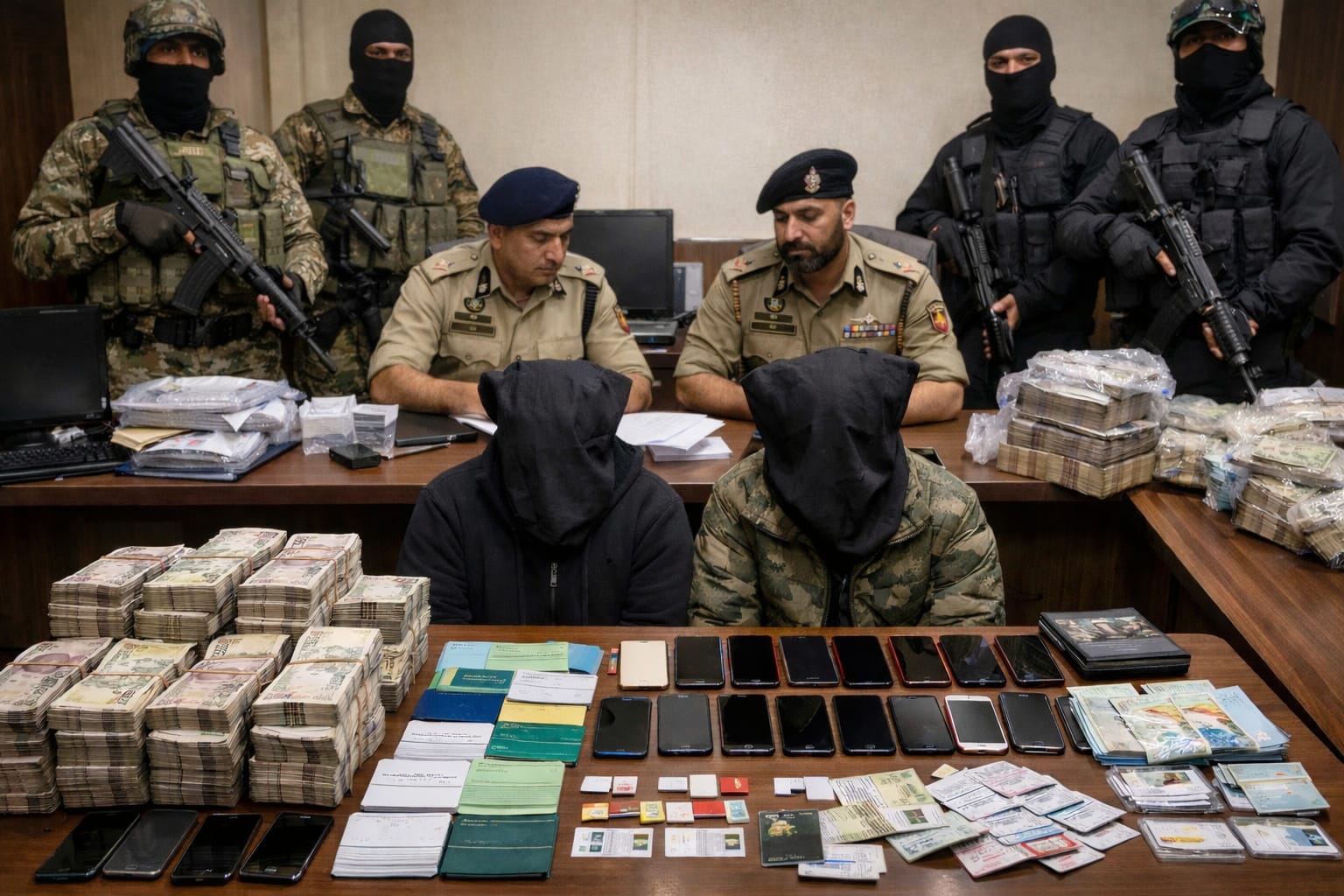
In a recent development, security agencies have uncovered a vast network of “mule accounts” in Jammu and Kashmir that are fueling global scam operations. These accounts, which serve as the financial backbone of various fraudulent activities, are now under intense scrutiny due to concerns that the funds channeled through them could be used to support separatist and anti-national agendas.
Over the course of three years, officials have identified and frozen more than 8,000 mule accounts in the region, shedding light on a sophisticated money laundering network. These accounts are described as the “weakest yet most crucial link” in the cybercrime chain, as they enable the conversion of stolen funds into untraceable cryptocurrency.
Central security agencies have urged the Jammu and Kashmir Police and other law enforcement bodies to collaborate with banks in curbing the proliferation of mule accounts. They are also working to identify and apprehend middlemen, known as “mulers,” who play a pivotal role in facilitating financial fraud schemes.
Following a crackdown by the National Investigation Agency in 2017, it is suspected that anti-national elements have adopted a new tactic known as “digital hawala” to evade detection. This method involves using commissions earned from mule accounts to fund activities against the country.
Unlike the individuals who initiate scams or engage with victims directly, mulers operate discreetly by managing a network of mule accounts. These accounts are often opened in the names of unsuspecting individuals who are enticed with promises of easy money and minimal risk.
Scammers typically have access to multiple mule accounts simultaneously, allowing them to conduct large transactions without raising suspicion. The convoluted money trail further complicates detection efforts, as funds are swiftly transferred through various accounts to avoid detection.
Law enforcement agencies emphasize that mule account holders, despite not being directly involved in the scams, play a critical role in enabling money laundering activities. By sharing their credentials and accepting commissions, they provide the necessary “financial infrastructure” for transnational crimes.
Recent investigations have revealed a cross-border network involving individuals in countries like China, Malaysia, Myanmar, and Cambodia directing locals in Jammu and Kashmir to create private crypto wallets. These wallets, often set up using VPNs to evade detection, require no KYC or identity verification.
In response to these developments, the Jammu and Kashmir Police has taken measures to suspend the use of VPNs in the region, as they are commonly used by terrorists and separatists to evade surveillance.
It is evident that mule accounts pose a significant threat to national security, and concerted efforts are required to dismantle these illicit networks. By addressing the root causes of financial fraud and enhancing cooperation between law enforcement agencies and financial institutions, we can work towards safeguarding the integrity of our financial systems.
