

Written by Imran Al-Mohammadi
Civilizations have long championed principles of truth, justice, and reason. However, history reveals a darker truth where these ideals often served the interests of power rather than the well-being of people.
European empires, for instance, cloaked their exploitative actions under the guise of “civilization” and “Christian charity,” all the while subjugating lands, enslaving populations, and eradicating indigenous cultures in the name of progress.
In the modern era, colonialism morphed into ideological warfare. Capitalist nations championed notions of freedom while imposing control and exploiting resources, while communist regimes touted equality while stifling dissent.
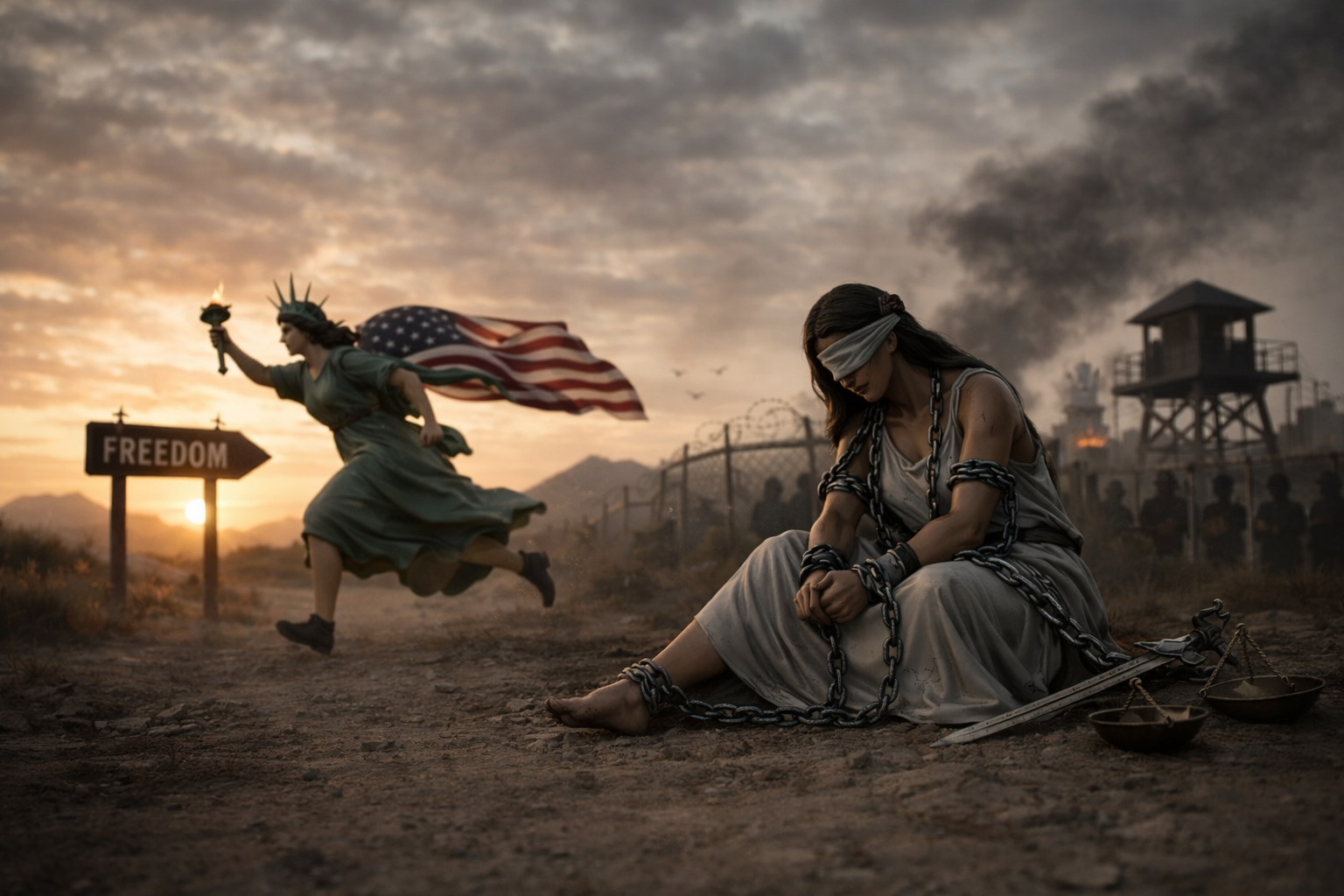
The United States, despite its rhetoric of equality and democracy, has a history marred by segregation, interventions in foreign lands, and wars that brought destruction instead of liberation.
Similarly, Europe’s shift towards secular humanism, while freeing individuals from religious dogma, ushered in a new era where human worth was often measured solely by productivity and pleasure.
Humanitarian interventions, more often than not, concealed ulterior political, ideological, or economic motives under the guise of benevolence.
Islam, with its emphasis on intellect and justice through the concept of Thaqalain, places reason at the core of human existence. It calls on individuals to align their intellect with fitrah, the innate sense of truth, balance, and fairness.
The Qur’an warns against the dangers of corruption and ignorance, highlighting humanity’s repeated failure to uphold reason and moral equality.
When Islam emerged, it sought to complete the revelations of previous faiths and implored followers of Judaism and Christianity to recognize the truth and justice embedded in their scriptures, personified in Prophet Muhammad (peace be upon him). However, many refused to heed this call.
This rejection, at its core, symbolizes a broader refusal to embrace intellect and fairness.
In contrast, modern Western systems often prioritize self-interest over moral conscience, building societies based on competition and domination where material gain eclipses any sense of moral purpose.
Rights and freedoms, while enshrined in law, often ring hollow in the face of systemic exploitation and inequality.
Global events, from military conflicts to consumer culture, underscore a civilization driven by insatiable desires rather than intellectual pursuits. As the Qur’an aptly puts it, such discourse is but a facade for deception.
While terms like “progress,” “freedom,” and “human rights” may sound noble, they can often cloak deeper injustices and spiritual decay.
Islam presents a counter-narrative, where knowledge, balance, and justice form the cornerstone of individual and societal life. It advocates for a harmonious integration of reason and revelation, where leaders govern with ethics, laws are grounded in justice, and unity defines social cohesion.
Current global crises, such as the ongoing occupation of Palestine and the prioritization of profits over human lives in conflicts, serve as stark reminders of a world where self-interest reigns supreme while solidarity takes a backseat.
Islam, in its essence, exposes the polished veneer of evil and deception that often masquerades as progress and development.
The clash between Islamic principles and Western ideologies represents a fundamental moral dichotomy. While Islam upholds intellect, justice, and alignment with human nature, Western thought tends to prioritize power, desire, and deceit.
Islam offers a holistic framework that restores societal equilibrium and individual morality. It advocates for the integration of intellect and justice into governance, social interactions, and personal conduct.
The vision of Islam provides clarity, moral certitude, and a roadmap for human flourishing based on fortitude and fairness.
- The author is currently pursuing a doctorate program in Islamic Philosophy at Al-Mustafa International University, Qom, I.R. Iran.
