
By Syed Eesar Mehdi
Pakistan was imagined as a homeland for Muslims of South Asia, a place where they could feel secure and have a political voice after years of colonial rule.
But from early on, the country struggled with a basic question about belonging.
Almost 80 years later, that question still hangs over the country, akin to what an erstwhile top general once called the “unfinished business” of Partition.
Who counts as a Muslim? Whose interpretation holds weight? And whose lives are considered worth protecting?
These debates continue to shape the state.
It is within this unresolved space that the situation of Shias in Pakistan must be understood.
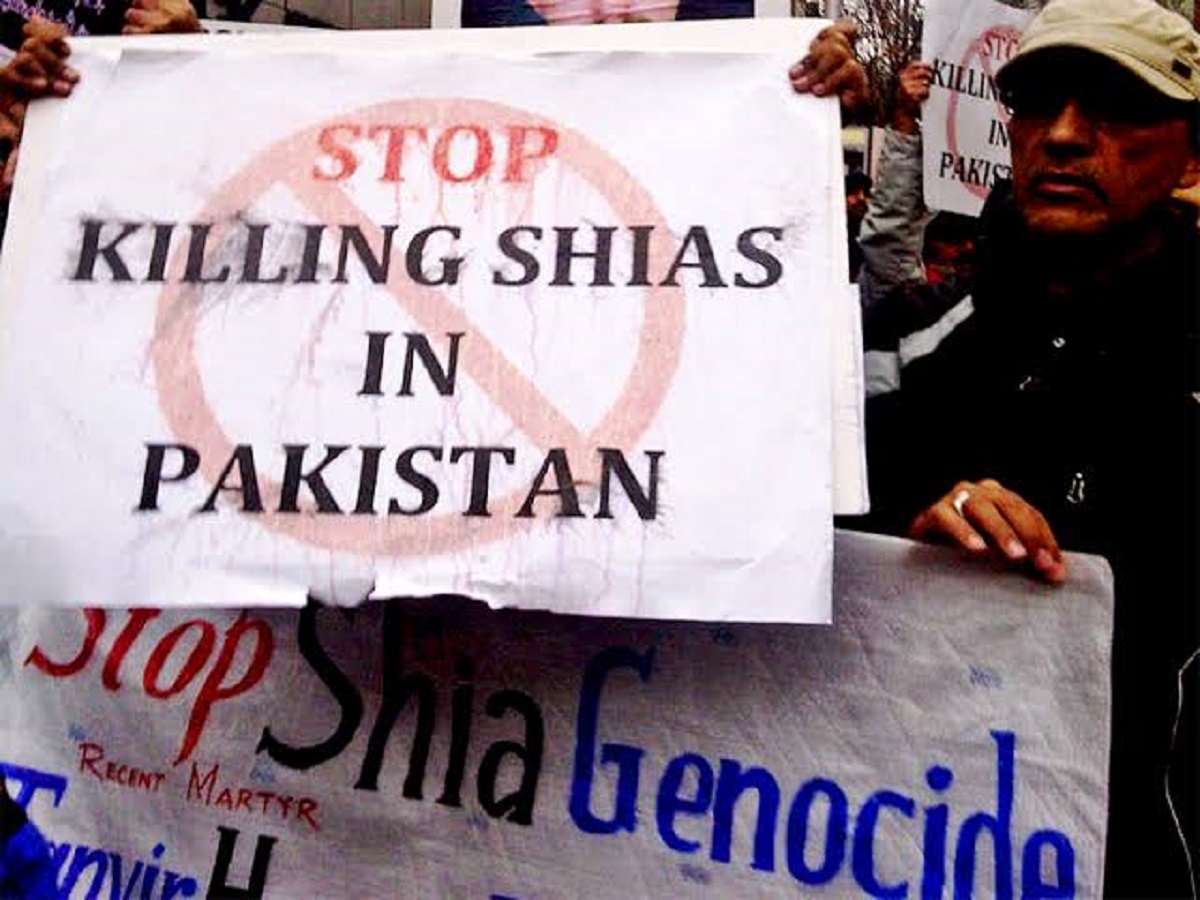
Their persecution follows a clear pattern. It grows out of deep structures and rigid ideas, and it continues because the state repeatedly chooses silence and inaction.
To grasp this reality, James C. Scott’s book Seeing Like a State offers a powerful theoretical entry point.
Scott argues that modern states simplify complex social worlds in order to govern them, elevating those groups that fit neatly into official visions of order while marginalizing those that complicate it.
Populations that do not serve the state’s dominant ideological or political project are rendered expendable, treated as noise, surplus, or, in Scott’s words, “weeds”.
Shias of “Mamlakat-e-Khudadad” increasingly inhabit this expendable category.
They exist within the state’s borders but outside its moral importance.
Before Scott’s framework becomes fully legible, however, Pakistan’s political logic must be situated within broader philosophical debates on power, exclusion, and violence.
Hannah Arendt’s contemplations on the banality of evil help explain how extraordinary violence becomes routinized when institutions normalize indifference.
Sectarian killings in Pakistan have become politically normal. They are handled as routine matters, reduced to paperwork, and folded into everyday governance.
Michel Foucault’s concept of biopolitics further illuminates how states decide which lives are worth protecting and which can be exposed to death.
Shias in Pakistan are not explicitly sentenced to death by the state, but they are persistently abandoned to it.
Giorgio Agamben’s notion of bare life sharpens this analysis: Shias are reduced to lives that can be killed without the act being recognized as a foundational political crime.
This theoretical debate becomes painfully real when we look at recent violence.
In February 2026, a suicide bombing at a Shia mosque in Islamabad killed 31 worshippers and injured 169 others. It was the deadliest attack in the capital since the 2008 Marriott Hotel bombing.
An attack of this scale, especially in Islamabad, the administrative and symbolic centre of the state, should have forced the country to pause and ponder. What came instead was ritual condolence.
Statements were issued, investigations were announced, and then life went back to normal.
With no real reforms, sectarian ideas stayed in place.
The capital bled, the state moved on, and the attack became just another part of a long and bloody pattern.
In 2025, Pakistan witnessed a renewed wave of militant violence, with Shias once again disproportionately targeted. Attacks in Parachinar, Quetta, and parts of Khyber Pakhtunkhwa collectively killed well over a hundred Shias that year, according to human rights monitors and security reports.
In 2026, before the year had even fully unfolded, sectarian attacks in Quetta, Parachinar, and Islamabad had already added dozens more to the death toll.
These numbers are consistent with a legacy stretching back decades.
Certain geographies have become synonymous with Shia death. Quetta’s Hazara community has been repeatedly massacred in markets, buses, and places of worship. Parachinar has endured years of siege-like conditions, ambushes, and bombings. Karachi has seen targeted killings of Shia doctors, lawyers, and traders. Gilgit-Baltistan has oscillated between deceptive calm and sectarian eruption. Jhang, the birthplace of organized anti-Shia militancy, remains emblematic of how sectarian ideology was allowed to take root and spread.
These sites differ in culture and politics, but the state’s response is strikingly uniform: containment rather than justice.
Farzana Shaikh’s brilliant book Making Sense of Pakistan is crucial for understanding why this violence persists.
Shaikh argues that Pakistan’s identity crisis, rooted in the attempt to define a singular Islamic nation, produced a hierarchy of belonging.
The state repeatedly intervened to define correct Islam, transforming theological difference into political exclusion.
Shias, while never constitutionally declared non-Muslim, were nonetheless positioned as doctrinally suspect.
This ambiguity proved lethal, allowing the state to claim inclusivity while tolerating exclusion in practice.
Another scholar Muhammad Qasim Zaman’s book Islam in Pakistan: A History further exposes how this hierarchy was institutionalized.
During the Zia-ul-Haq era, state patronage empowered Sunni clerical networks and sectarian organizations that framed Shias as heretics. Groups such as Sipah-e-Sahaba Pakistan and later Lashkar-e-Jhangvi flourished in an environment where the state weaponized religion for legitimacy and control.
Once unleashed, these forces could not be fully reined in, but they were selectively managed.
This scholarship was further deepened by Saba Mahmood’s work on religious difference, which added another layer to the critique.
She shows how states regulate minority life by imposing conditions on its visibility.
Shias of Pakistan are implicitly told that their safety depends on silence. Public rituals, processions, and theological assertion are framed as provocations rather than rights.
When violence follows, blame subtly shifts from perpetrators to victims.
This logic transforms citizenship into a conditional privilege rather than an inherent right.
Militant groups such as Lashkar-e-Jhangvi, Tehrik-e-Taliban Pakistan, and Islamic State-Khorasan have openly declared Shias to be legitimate targets. Their statements leave no ambiguity. And yet, these groups have demonstrated deadly defiance.
They are banned, renamed, resurfaced, and tolerated. Leaders are arrested and released, and networks regenerate. This resilience clearly reveals state choice.
Violence against Shias hardly threaten elite power, geopolitical strategy, or regime stability. As a result, it does not provoke sustained action.
Here, Scott’s theory returns with force.
The Pakistani state sees clearly when its core interests are at stake. It acts decisively when challenged by political rivals or external threats. Its blindness toward Shia suffering is therefore a selective narrowing of it.
Shias are visible as statistics and body bags, but not as citizens whose deaths demand structural change.
The human cost of this indifference is severe. Shia communities live with constant fear. Children learn escape routes. Worship happens under threat.
Grieving becomes a repetitive cycle until it becomes a familiar routine, and citizenship loses its meaning without adequate protection. What remains is the struggle for survival in a society that turns a blind eye.
Within Pakistan’s Islamic framework, there is a deep sense of abandonment towards the Shia population. While not officially declared non-Muslims, the state allows for narratives that undermine their faith to thrive. Extremist ideologies spread freely, unchallenged by religious or political authorities, leading to a culture of complicity through silence.
In this atmosphere, those who commit atrocities claim religious legitimacy, while the state offers mere condolences in response. The question arises whether Pakistan has become a graveyard for Shias, highlighting a harsh reality that cannot be ignored.
A government that repeatedly fails to protect its citizens from violence, allows for the promotion of hate speech, and treats each tragedy as an isolated incident has already relinquished its duty. True justice lies not just in apprehending perpetrators after the fact but in actively preventing violence from becoming normalized.
Until Pakistan addresses the root causes of sectarian discrimination, dismantles the networks that fuel anti-Shia violence, and unequivocally recognizes Shias as equal members of society and the Islamic faith, bloodshed will persist. Cities like Quetta, Parachinar, Karachi, and now Islamabad will continue to be symbols of sorrow and condemnation.
History will not only remember those who carry out these heinous acts but also the government that repeatedly chose to turn a blind eye. It is imperative to take action to prevent further bloodshed and promote inclusivity and justice for all citizens.
The author, a Research Fellow at the International Centre for Peace Studies in New Delhi, India, can be contacted at [email protected]
