
Jammu and Kashmir Government Prepares for Local Body Elections
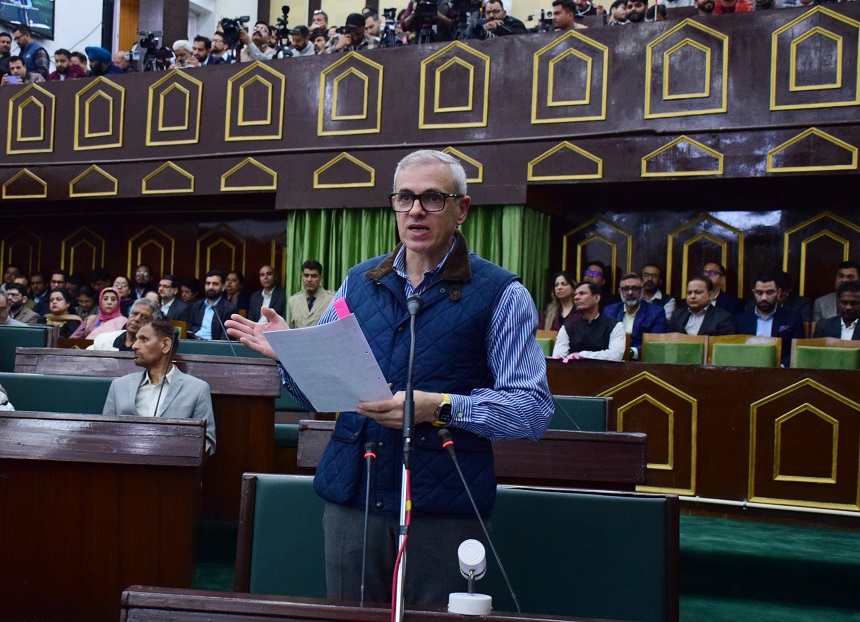
The Chief Minister of Jammu and Kashmir, Omar Abdullah, announced that the government is working on necessary arrangements to conduct elections for urban local bodies and panchayats in the Union territory as soon as possible. However, he highlighted the current vacancy in the position of the state election commissioner.
In response to a query from Congress MLA Tariq Hameed Karra in the Legislative Assembly, Abdullah mentioned that the State Election Commission (SEC) is responsible for overseeing the preparation of electoral rolls and the conduct of elections under various acts related to local governance in the region.
Abdullah stated that the SEC is actively preparing for the upcoming elections, but the absence of a state election commissioner is a challenge. He also mentioned that the commission is reviewing the report submitted by the Jammu and Kashmir Local Bodies Dedicated Backward Classes Commission to determine the quota of reserved seats.
The Chief Minister informed the Assembly that the terms of panchayats, block development councils, and district development councils have either expired or are soon to expire. He also highlighted the completion of delimitation processes for urban local bodies and the ongoing efforts in this regard.
Regarding the delimitation of panchayat halqas and municipal wards, Abdullah explained the current status based on the 2011 census data. He emphasized that fresh delimitation can only occur after the publication of updated population figures from a general census, which has not taken place since 2011.
Abdullah further elaborated on the preparations for the upcoming elections, including the revision of electoral rolls, procurement of election materials, and introduction of electronic voting machines for urban local body polls. He also highlighted the government’s focus on reforms in the panchayati raj system, with initiatives aimed at enhancing governance and transparency.
The Chief Minister emphasized the government’s commitment to promoting inclusivity through reserved seats for women, scheduled castes, scheduled tribes, and other backward classes. He also mentioned the introduction of digital platforms and schemes to improve transparency and accountability in rural governance.
