
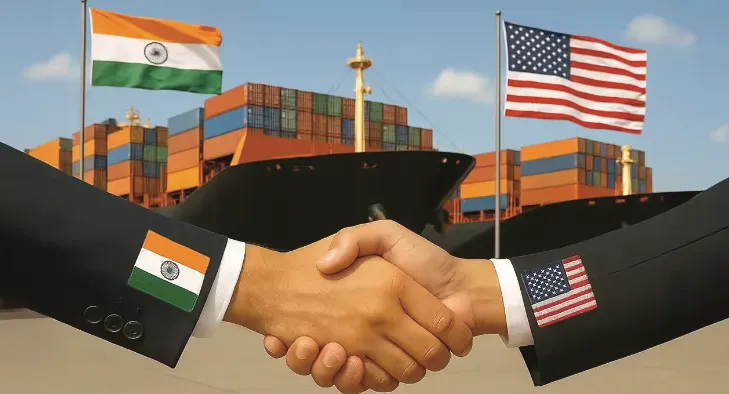
India and the United States have recently announced a significant framework for the first phase of their bilateral trade agreement, aimed at boosting two-way trade by reducing import duties on a wide range of goods. The announcement reaffirms the commitment of both countries to the broader US-India Bilateral Trade Agreement (BTA) negotiations, which were initiated by President Donald Trump and Prime Minister Narendra Modi on February 13, 2025.
Under the framework, the US has agreed to lower tariffs on Indian goods from 50 percent to 18 percent, while India will eliminate or reduce import duties on a variety of US industrial goods and agricultural products. These products include dried distillers’ grains, red sorghum for animal feed, tree nuts, fresh and processed fruit, soybean oil, wine, and spirits. The first phase of the agreement is expected to be signed by mid-March, leading to concessions and the elimination of duties on American goods by India.
Additionally, the US has eliminated the 25 percent tariffs on India for purchasing Russian oil, effective from February 7. This decision was made following India’s commitment to stop directly or indirectly importing oil from Moscow. The agreement includes provisions for monitoring India’s oil imports and the possibility of reimposing tariffs if the imports from Russia resume.
Furthermore, India has expressed its intention to purchase USD 500 billion worth of US energy products, aircraft, aircraft parts, precious metals, technology products, and coking coal over the next five years. This move is expected to strengthen trade relations between the two countries and create new opportunities for various sectors.
The interim trade pact has been lauded by Prime Minister Narendra Modi and Commerce and Industry Minister Piyush Goyal for its potential to benefit Indian exporters, especially MSMEs, farmers, and fishermen. The reduction in tariffs is expected to boost exports in labor-intensive sectors such as textiles, apparel, leather, footwear, plastic, rubber, organic chemicals, home decor, artisanal products, and machinery.
The agreement also includes provisions for zero tariffs on a range of goods, including generic pharmaceuticals, gems, diamonds, and aircraft parts, enhancing India’s export competitiveness and promoting the ‘Make in India’ initiative. However, sensitive agricultural and dairy products will be protected to safeguard farmers’ interests and rural livelihoods.
In conclusion, the interim trade agreement between India and the US is a significant step towards enhancing bilateral trade relations and creating new opportunities for economic growth. Both countries are committed to finalizing a mutually beneficial Bilateral Trade Agreement (BTA) and working towards further strengthening their trade ties in the future.
