
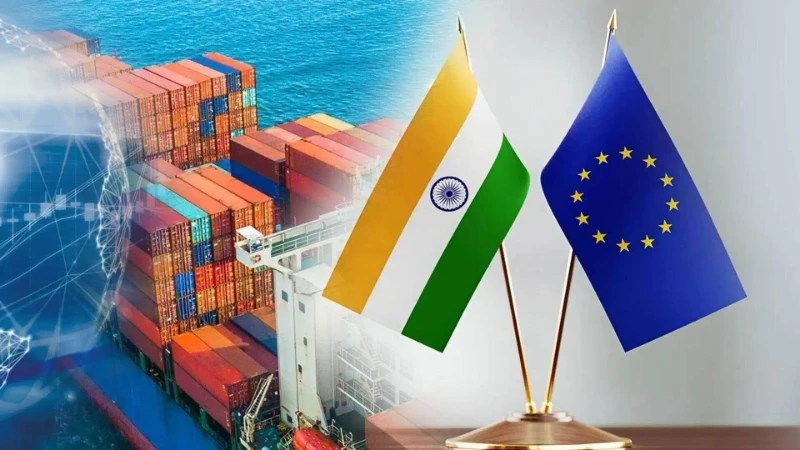
The Historic India-EU Free Trade Agreement: A New Chapter in Trade Relations
India and Europe have enjoyed a long-standing trading relationship that dates back to 250 BC, even before the Silk Road era. Over the next 2000 years, Indian muslins, cotton, handicrafts, spices, emeralds, and gems were highly sought after in international trade, with a significant portion finding its way to Europe. In return, India received gold and silver in exchange for these coveted commodities. The trade between India and Europe flourished, reaching great scale and proportions in its prime.
Efforts to solidify this relationship through a comprehensive free trade agreement began in 2007. However, negotiations faced challenges and were temporarily abandoned in 2013 due to differences on multiple issues. Renewed negotiations in 2022 eventually led to the successful conclusion of the agreement, showcasing the commitment and leadership of both sides. This agreement not only covers a wide range of topics and disciplines but also reinforces a rules-based trading relationship in a fragile global economic landscape.
The Significance of the India-EU Free Trade Agreement
Arguably one of the most consequential trade agreements in recent times, the India-EU FTA could establish one of the largest free trade areas globally, encompassing nearly 2 billion people and 28 countries representing 25% of the global GDP. This modern agreement addresses various issues and concerns, setting a new standard for trade relationships.
Market Openings and Trade Benefits
The agreement focuses on opening up markets for both parties, providing access to over 99% of India’s export trade, with immediate duty elimination for a substantial portion of exports. Sectors such as textiles, clothing, leather, gems, and marine products stand to benefit significantly. Industries like chemicals, electronics, agri-processing, and minerals will have the opportunity to diversify exports in the EU market. The agreement also facilitates market access for EU automobiles in a phased manner.
Services trade is a key aspect of the agreement, with commitments across 144 services sectors from the EU. The mobility chapter ensures smooth entry and stay for professionals, enhancing India’s service presence in the EU. The annex on Financial Services promotes cooperation in electronic payment systems, leveraging India’s expertise in digital payments.
Promoting Freer and Fairer Trade
The FTA aims to enhance a freer, fairer, and mutually beneficial trade relationship. The trade and sustainable development chapter integrates sustainability concerns, focusing on policy dialogue, technical assistance, and financial resources. Mechanisms like the rapid reaction mechanism address specific concerns regarding policy measures.
Addressing challenges in market opening while considering stakeholder concerns, especially in sectors like dairy and agriculture, was a key aspect of the negotiations. The agreement complements India’s FTA strategy, aligning with the country’s broader economic engagement goals.
Conclusion
The India-EU Free Trade Agreement marks a significant milestone in expanding market access, enhancing economic integration, and fostering strategic autonomy in a volatile global economy. By upholding fair and rule-based trade principles, this agreement sets a new standard for international trade relations.
(The author is the Secretary, Department of Commerce, Ministry of Commerce and Industry)
