
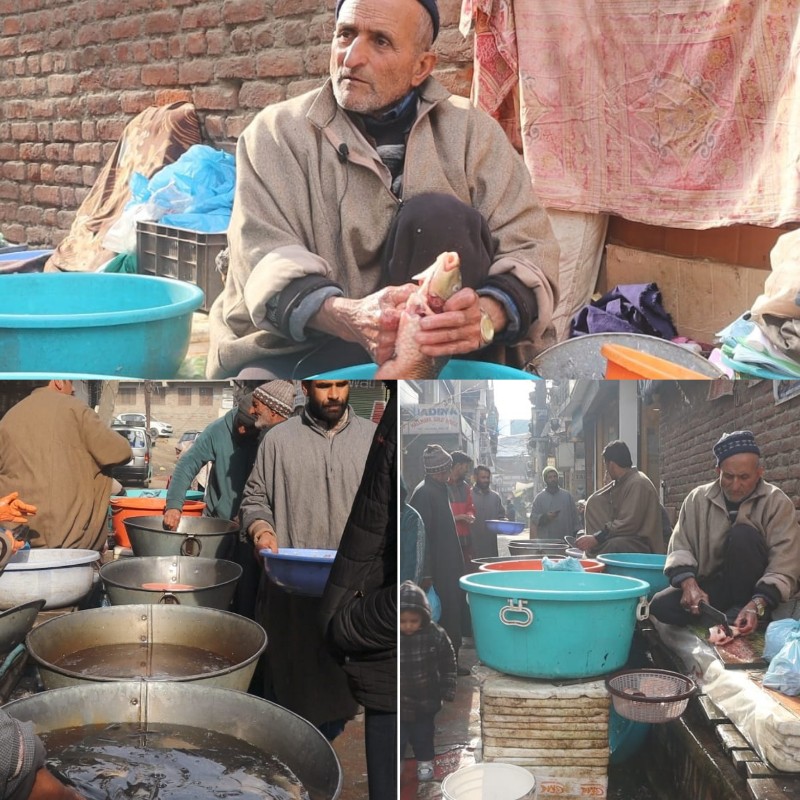
The Legacy of Sopore Fish Market: A Reflection of History and Tradition
Exploring the Sopore Fish Market requires delving into the historical backdrop of Sopore, a town deeply intertwined with the River Jhelum and rich cultural heritage. Understanding the origin, growth, and significance of this market necessitates a journey through time, geography, and the town’s evolution.
Origins of Sopore: A Tale of Resilience and Innovation
Sopore, tracing its roots back to the 9th century as Suyyapura, was founded by the renowned Kashmiri engineer Suyya during King Avantivarman’s reign. The town faced recurrent floods due to landslides obstructing the River Jhelum’s natural flow, leading to agricultural devastation and settlement challenges. Suyya’s pioneering river-management techniques restored the Jhelum’s flow, fostering agricultural revival and permanent settlements. This transformation laid the foundation for Sopore’s emergence as a vibrant hub of trade, markets, and urban life.
Sopore’s Evolution as a Trade Hub
Under Sultan Zain-ul-Abidin’s reign, Sopore flourished as a pivotal trade center, earning the moniker ‘Chhota London’ for its commercial prominence. The construction of a bridge over the River Jhelum elevated Sopore’s significance, facilitating trade routes and cultural exchanges. This historical trajectory set the stage for traditional markets like the Sopore Fish Market to thrive.
The Enigmatic Charm of Sopore Fish Market
Nestled near the River Jhelum in Chota Bazar, the Sopore Fish Market’s strategic location echoes the town’s geographical allure. Proximity to Wular Lake, Asia’s largest freshwater lake, and the Jhelum accentuates Sopore’s fishing legacy. Generations of families have relied on fishing, with the market evolving as a bustling hub for trading fresh catch.
Traditional Practices and Community Bonds
The market pulsates with activity as fishermen showcase their daily harvest from the Jhelum and Wular Lake, engaging traders and buyers in lively transactions. Gaad, Zob, and Bilose stand out as popular local fish varieties, enriching Kashmiri culinary traditions. Amidst bargaining and longstanding relationships, the market thrives on experiential wisdom and communal collaboration.
Economic and Societal Significance
Integral to Sopore’s economy, the Fish Market sustains livelihoods for fishermen, traders, and vendors, bridging rural fishing communities with urban consumers. Beyond economic contributions, the market serves as a social nexus where locals converge, fostering camaraderie and dialogue on community concerns.
Resilience Amidst Challenges
Despite modern-day hurdles like pollution, dwindling fish populations, and shifting consumer preferences, the Sopore Fish Market perseveres. Adaptations in transport, storage, and sourcing strategies ensure its enduring vibrancy amidst evolving landscapes.
Preserving Tradition in a Modern Era
As Sopore emerges as a commercial epicenter, epitomized by the renowned fruit market, the Fish Market retains its essence of traditional commerce. Coexisting with modern business practices, the market symbolizes the harmonious blend of heritage and progress in Sopore’s economic tapestry.
A Testimony to Resilience and Heritage
Embodying the town’s enduring spirit, the Sopore Fish Market transcends its role as a mere trading post. Rooted in the River Jhelum’s waters and Sopore’s cultural ethos, the market encapsulates the town’s legacy of adaptation, sustainability, and community cohesion. It stands as a timeless emblem of Sopore’s identity, embodying tradition in a rapidly evolving world.
Contact: shoaibhat2018@gmail.com
“`
