
The Origins of Kashmir: A Historical Perspective
Indigenous population
Historical accounts suggest that the first inhabitants of the Kashmir Valley trace their lineage back to Prophet Noah, with some sources dating their presence as early as 2900-3900 BCE. According to these narratives, Noah’s grandson Kush established an empire, and his descendants, known as the Kush race, dispersed across various regions in Asia.
The precise location of the Kush empire remains a topic of debate. While some theories place it along the southern Nile River in present-day Sudan and Egypt, others point to southern Iraq or Saudi Arabia based on Biblical references. Additional research proposes that the Kush tribe settled in the Middle East, founding settlements such as Kash near Baghdad and establishing communities like Kashan, Kashaf, and Kashi in Mesopotamia.
The Kush people honored their ancestor by naming cities, rivers, and mountains after Kush. Examples include the Kashan River in Mesopotamia and Kashmar in Nishapur, Iran. In Central Asia, settlements like Kashmohra in Merv, Kash village in Bokhara, and Kashgar in East Turkistan (Xinjiang, China) further reflect their influence.
As the Kush tribe migrated towards present-day Afghanistan, Pakistan, and Kashmir, they left a lasting mark on the region. The mountain range separating the Indian subcontinent from Afghanistan came to be known as the Hindu-Kush range, with settlements like Kashmor emerging in its vicinity.
Upon their arrival in Kashmir, the Kush people initially settled in Kishtwar before eventually relocating en masse to the main Valley. Historical texts, such as the Babarnama, mention the Kush people as inhabitants of the northern mountains beyond Kashmir, hinting at their widespread presence.
Various sites in the Hindu Kush mountains and the Zabarwan hills east of Srinagar, including the “Takht-i-Sulaiman” (Throne of Solomon), offer insights into potential migration patterns linked to Prophet Sulaiman in the 10th century BCE. These layers of migration, intertwined with cultural and religious influences, likely contributed to the diverse ancestry of the Kashmiri (Koshur) population.
Recorded history spanning 5,000 years and anthropological evidence dating back 7,000 years shed light on the ethnic composition of Kashmir’s inhabitants. Notably, the Gujjar and Pahari tribes, considered more recent settlers, have distinct migration narratives originating from Georgia, Russia, and the Pothohar region in Pakistan.
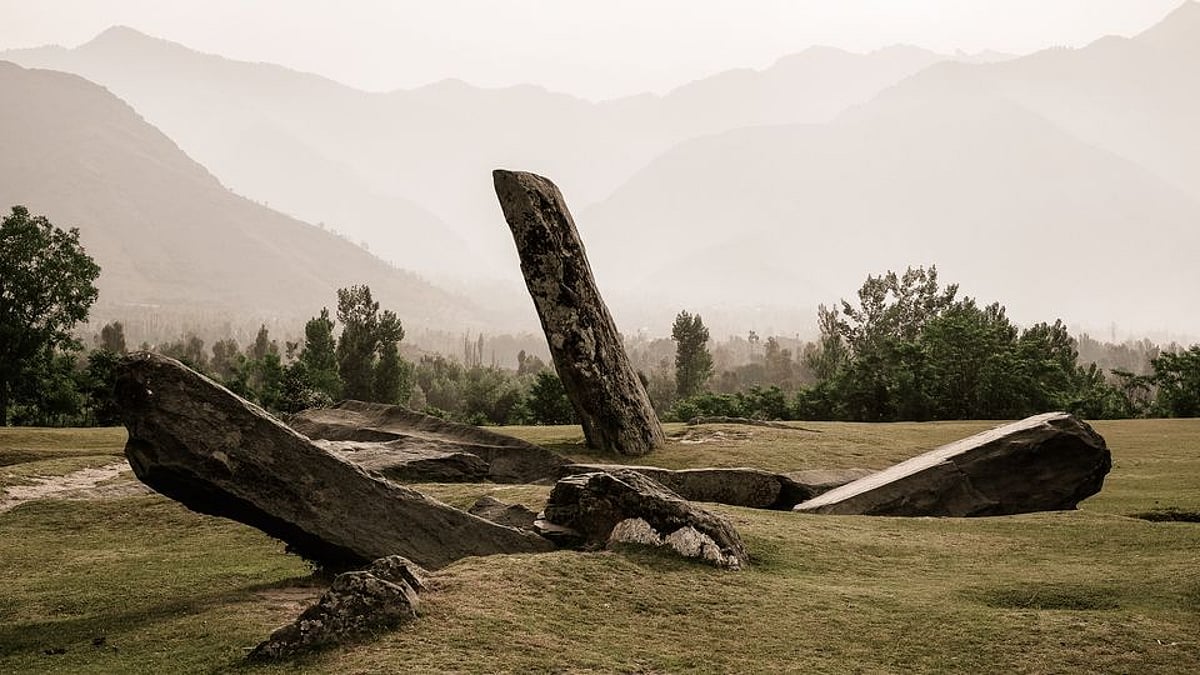
Renowned historian Dr. Abdul Ahad’s research highlights genetic connections between the Neolithic residents of Burzahom and the present-day population of the Valley, underscoring a sense of continuity over millennia.
Ongoing excavations at Neolithic sites in Kashmir hold the promise of uncovering further insights into the region’s ancient inhabitants, potentially shedding light on their origins and diverse heritage. Notably, the absence of Hindu deities’ representations at these sites challenges conventional narratives.
Travel accounts, such as Godfrey Thomas Vigne’s observations in the 19th century, draw intriguing parallels between Biblical figures like Kush, the Koshur people, and the geographical entity of Kashmir, adding layers to the region’s historical tapestry.
