
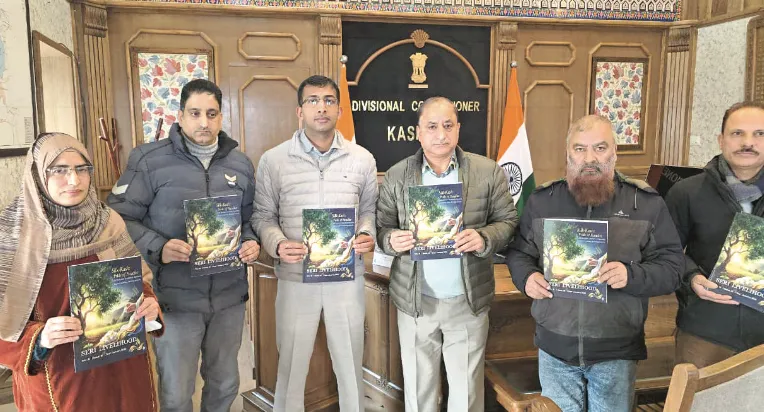
Unveiling of SILK KASH: A Milestone in Sericulture Development
On February 2, the Divisional Commissioner Kashmir, Anshul Garg, in collaboration with Director of Sericulture J&K, Ajaz Ahmad Bhat, introduced SILK KASH—the Quarterly Journal 2026 of the Sericulture Development Department, Jammu and Kashmir. This momentous occasion was graced by the presence of esteemed senior officers and officials.
During the event, the Divisional Commissioner emphasized the crucial role of the sericulture sector in the region’s economy, providing livelihood opportunities to a substantial population in the Union Territory. He commended the department for its comprehensive approach in raising awareness about various schemes, facilities, and activities aimed at maximizing the sector’s potential.
Furthermore, the Divisional Commissioner praised the launch of the quarterly journal as a significant step towards structured information dissemination. He highlighted the cost-effectiveness of silkworm rearing, stressing the importance of aggressive publicity campaigns across various media platforms to educate people about its economic benefits.
Commending the Director Sericulture for the successful publication of the journal, the Divisional Commissioner expressed optimism that this initiative would positively impact the economic well-being of individuals associated with the sector.
Empowering Stakeholders Through SILK KASH
In his address to the audience, the Director Sericulture announced that SILK KASH, marking its inaugural release, would become a regular quarterly feature. Designed as a dedicated platform, the journal aims to showcase best practices, success stories of progressive silkworm rearers, and raise awareness about Centrally Sponsored Schemes like Silk Samagra–2 and the Holistic Agriculture Development Programme (HADP).
The Director further emphasized that the publication would ensure that stakeholders, including silkworm rearers, farmers, silk reeling and weaving unit holders, educated youth, women, and tribal communities, are well-informed about available schemes, subsidies, training programs, facilities, and technical support. This knowledge will empower them to capitalize on emerging opportunities in the sector.
Additionally, the Director briefed the Divisional Commissioner on various departmental initiatives, such as capacity building through skill upgradation programs for field functionaries, exposure tours for silkworm rearers and farmers, and awareness camps for educated youth, women, and tribal communities.
