
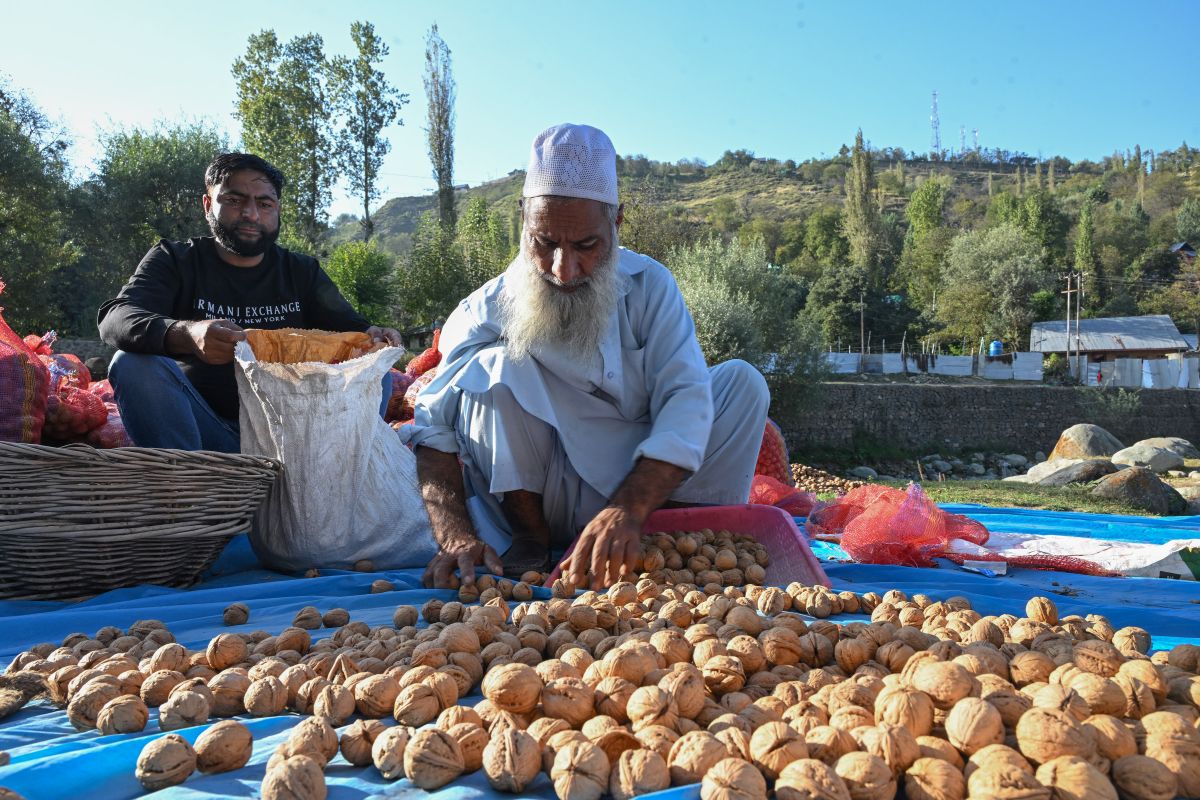
Budget 2026-27 Focus on Nut Crops Raises Hope for J&K Walnut Trade
Srinagar – The recent announcement by Union Finance Minister Nirmala Sitharaman during her budget speech has brought renewed hope for the walnut trade industry in Jammu and Kashmir. The focus on supporting high-value nut crops, including walnuts, has been welcomed by the nearly seven lakh people whose livelihoods depend on this sector.
For years, the walnut trade in the region has faced challenges, impacting both the harvest and the survival of those involved. The announcement has brought a sense of optimism, signaling a potential solution to the struggles faced by walnut growers in the valley.
Jammu and Kashmir’s walnut trade accounts for over 90 percent of the crop output, but farmers have been grappling with sustainability issues. The traditional methods of cultivation have become inefficient and risky, leading to concerns about the future of the industry.
With the introduction of high-density cultivation, there is hope for modernizing the walnut industry in the region. This shift in policy is seen as a lifeline for the 86,000 hectares of walnut groves in Jammu and Kashmir, allowing local growers to compete on a global scale.
The move towards high-density crops is expected to address the challenges faced by farmers, such as low yields and risks associated with traditional walnut trees. By adopting modern cultivation practices, local growers aim to enhance productivity and quality, enabling them to compete with international markets.
Jammu and Kashmir plays a significant role in India’s walnut industry, contributing over 90 percent of the country’s output. Despite its historical importance, the sector has been struggling due to inadequate infrastructure and outdated practices.
By embracing high-density cultivation methods, local growers are optimistic about the future of the walnut trade. The transition towards modern practices is expected to improve yield, quality, and competitiveness in the market.
According to data from the Agriculture and Processed Food Products Export Development Authority (APEDA), Jammu and Kashmir leads in walnut production, with other states like Uttarakhand, Himachal Pradesh, and Arunachal Pradesh also contributing to the industry. In 2024, these states collectively produced 3 to 6 percent of the total 3 lakh metric tonnes of walnuts.
Furthermore, Jammu and Kashmir exported over 2134 metric tonnes of walnuts worth 7.8 million dollars to various countries, including the UAE, Turkey, Iraq, and Singapore. The focus on high-value nut crops in the budget announcement is expected to boost the walnut trade and enhance the livelihoods of farmers in the region.
