
The Decline of Kashmir’s Cottage Industries: A Tale of Economic Shifts
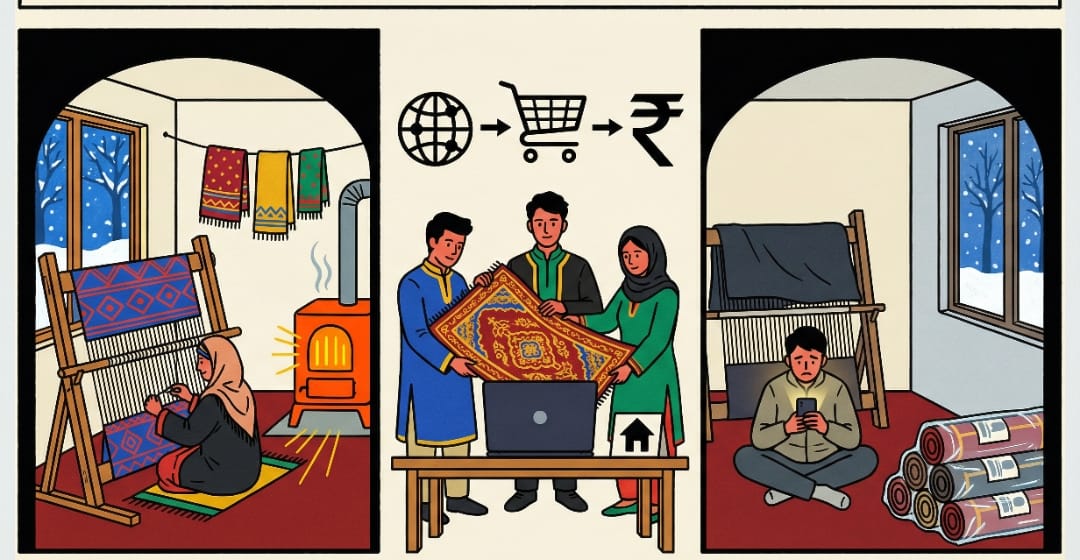
Kashmir’s traditional craft industries were once the backbone of communities, sustaining them through harsh winters when snow blanketed the region in layers. Families worked diligently inside their homes, passing down skills from generation to generation, ensuring stability during the challenging season.
In the 1980s and 1990s, rural households, particularly outside Srinagar, transformed their residences into production hubs where carpets were meticulously woven, shawls adorned with intricate embroidery, and handicrafts crafted with precision.
However, the landscape began to shift as machine-made products from other regions flooded the market, offering faster production at lower costs. This influx disrupted the traditional cottage industry, pushing skilled artisans to the margins.
With the younger generation lured by the promise of white-collar jobs, the artistry and craftsmanship of the older generation were gradually forgotten, leading to a disconnect between heritage skills and modern aspirations.
As a result, economic pressures mounted, leading to social challenges such as unemployment, substance abuse, and interpersonal conflicts. The once thriving cottage industries faced a bleak future as demand dwindled and traditional practices were overshadowed by mass-produced goods.
Despite these challenges, there is hope for a revival. By leveraging technology and incorporating modern marketing strategies, Kashmir’s cottage industries can reclaim their prominence in the global market.
Empowering youth with a blend of traditional skills and digital literacy, establishing cooperatives for collective bargaining, and fostering a culture of innovation can pave the way for a sustainable future for these time-honored crafts.
- The writer is a well-known financial advisor based in Srinagar.
