
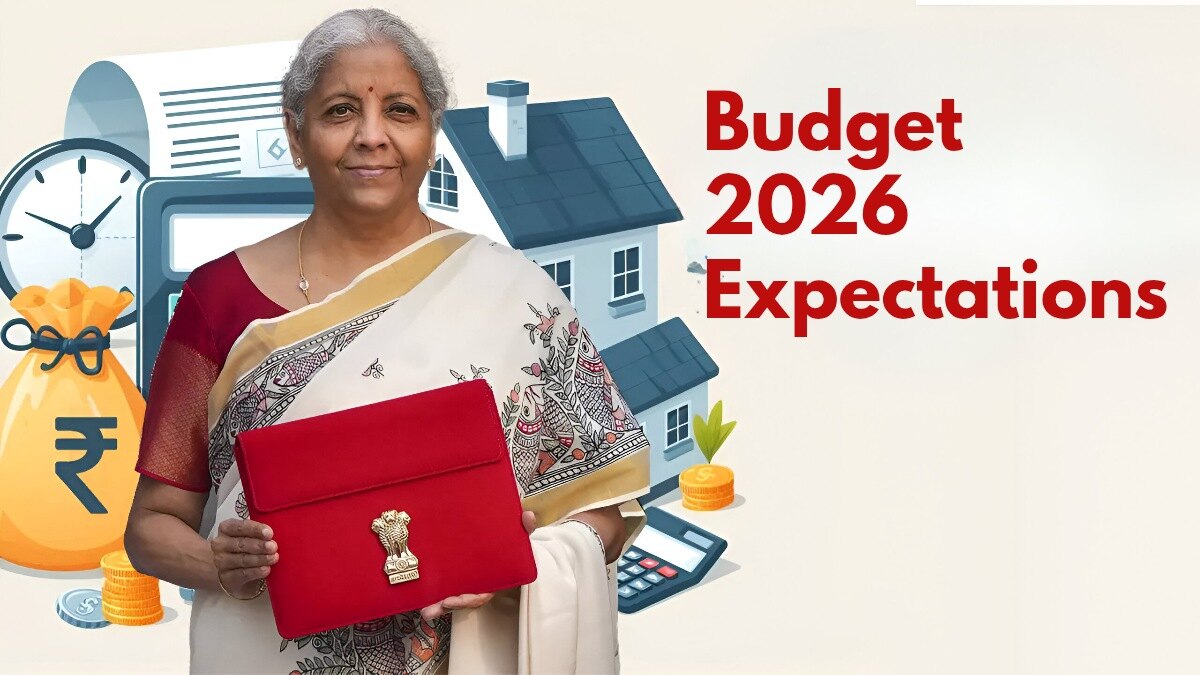
Union Budget 2026 Expectations: A Transformative Opportunity for Jammu & Kashmir
By Mohammad Hanief
The upcoming Union Budget 2026 presents a crucial opportunity for India to spur economic growth and address the specific needs of regions like Jammu & Kashmir.
Scheduled for release on February 1, this 88th fiscal plan arrives at a time when India stands as one of the world’s rapidly growing economies, expected to expand by 6.5-6.8 percent in 2025-26 following a 7 percent growth in the previous year.
This growth trajectory signifies a sustainable path supported by strong domestic demand, public investments, and structural reforms.
The Budget 2026 holds the potential to translate these macroeconomic advancements into tangible benefits on the ground, especially for Jammu & Kashmir.
Infrastructure development remains a key driver of economic progress. Investments in transportation, energy, and digital connectivity can unlock new opportunities in a region historically challenged by geographical barriers.
Enhanced transport networks and improved access can connect rural producers to markets, boost tourism, and attract private investments.
Agriculture and horticulture play a pivotal role in the economy of Jammu & Kashmir, employing a significant portion of the population.
While apples, walnuts, almonds, and saffron are prominent in local production, growth potential is hindered by storage and transportation constraints.
Targeted investments in infrastructure like cold storage facilities, modern markets, and agro-processing units can elevate incomes and expand market reach.
Improved irrigation systems and risk-mitigation strategies can assist farmers in adapting to climate changes and safeguarding yields.
Tourism emerges as another avenue for sustainable development, with the region’s landscapes and cultural heritage attracting a steady stream of visitors.
Allocating budgetary support for tourism infrastructure, hospitality services, and local skill enhancement can solidify these gains.
By focusing on environmentally sustainable practices, economic expansion can align with conservation efforts, preserving the ecological and cultural treasures of Jammu & Kashmir for long-term benefit.
Job creation and youth empowerment stand as crucial aspects of the Budget agenda.
Skilled youth in Jammu & Kashmir encounter persistent employment challenges. Expanding skill development programs, entrepreneurship initiatives, and incentives for local enterprises can harness this demographic dividend effectively.
Aligning training programs with regional economic priorities ensures that youth talent meets market demands, fostering inclusive growth.
Investments in education and healthcare lay the foundation for long-term prosperity. Enhancing educational institutions, digital learning platforms, and medical facilities in remote areas enhances human capital, productivity, and quality of life.
Accessible education and healthcare services promote social cohesion and ensure equitable growth benefits for all communities.
Central assistance remains pivotal for Jammu & Kashmir’s progress, considering its administrative and financial requirements.
The Budget 2026 must ensure that allocations translate into visible outcomes through efficient project execution and performance monitoring, bolstering public trust and speeding up development in infrastructure, agriculture, tourism, and social sectors.
Ensuring equitable resource distribution within the Union Territory is essential. Fair allocation of resources like roads, schools, and healthcare facilities fosters inclusive growth and diminishes regional disparities.
This approach also stabilizes social and political dynamics, enhancing Jammu & Kashmir’s contribution to national advancement.
Tax policy reforms in Budget 2026 can further these objectives. Simplified tax structures, rationalized rates, and enhanced compliance support consumption, private investments, and business ease.
A predictable tax environment boosts investor confidence and generates positive effects across regions, including Jammu & Kashmir.
India’s developmental strategy increasingly emphasizes sustainability. Funding renewable energy, water management, climate adaptation, and environmental conservation align economic growth with ecological preservation.
In a region like Jammu & Kashmir, where communities rely on natural resources, targeted budgetary support for climate-resilient projects balances economic activity with environmental preservation.
Budget 2026 holds the promise to translate projected growth into tangible progress. Investments in infrastructure, agriculture, tourism, employment, and social services can firmly embed Jammu & Kashmir in India’s economic journey.
Success will be gauged by improved livelihoods, enhanced connectivity, and broader economic participation across the Union Territory.
