
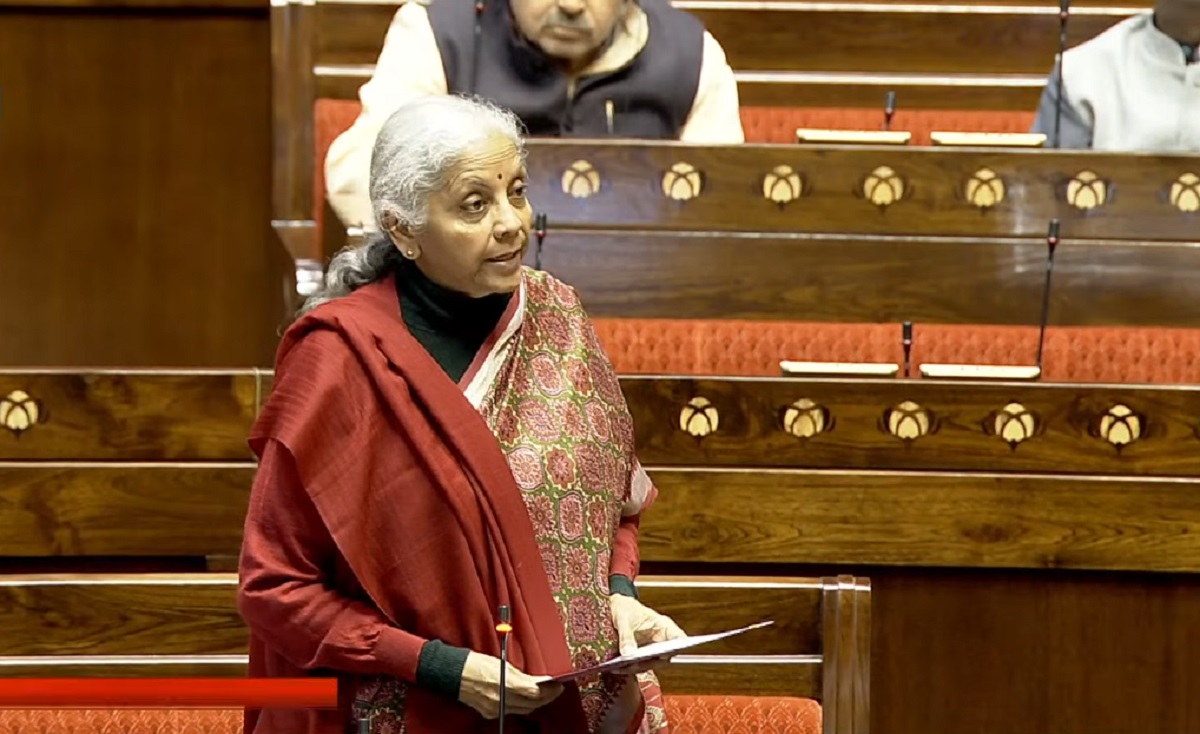
Finance Minister Nirmala Sitharaman Tables Economic Survey 2025-26 in Lok Sabha
India’s Finance Minister, Nirmala Sitharaman, presented the Economic Survey 2025–26 in Parliament, forecasting a GDP growth of 6.8 to 7.2 percent for the upcoming fiscal year amidst global uncertainties. Despite the challenges, the survey highlighted India’s steady economic expansion.
The survey indicated a medium-term growth potential of around 7 percent and emphasized the economy’s adaptation to structural reforms, including modifications in the Goods and Services Tax system. It anticipated FY27 to be a year of adjustment, with growth projections slightly lower than the current fiscal year’s estimated 7.4 percent expansion.
Prepared by the Economic Division of the Department of Economic Affairs under the guidance of the Chief Economic Adviser, the Economic Survey is an annual assessment conducted before the Union Budget to evaluate economic performance and outline short- to medium-term prospects. Originally initiated in 1950–51, the survey was separated from the Budget documents in the 1960s.
The survey emphasized the government’s commitment to achieving fiscal consolidation targets and aiming to meet the fiscal deficit goal of 4.4 percent of GDP in FY26. While predicting higher inflation in FY27 compared to the current year, the survey reassured that it should not pose a significant concern.
Amid global uncertainties, the survey advised caution but expressed optimism about India’s economic trajectory. It noted that the rupee’s valuation does not completely reflect the country’s robust economic fundamentals.
Addressing social and digital challenges, the survey recommended reducing reliance on online educational tools that proliferated during the Covid-19 pandemic and advocated for promoting offline engagement. It proposed age-based restrictions on social media platforms and emphasized companies’ responsibility in enforcing age verification and appropriate settings. Additionally, the survey suggested simpler devices for children, such as basic phones or education-specific tablets with content filters.
In terms of public health and nutrition, the survey proposed restrictions on marketing ultra-processed foods, including a potential ban on advertising these products between 6 am and 11 pm. It also suggested implementing a nutrient-based tax on such foods, with higher GST rates and surcharges on products exceeding specific thresholds for sugar, salt, or fat.
Furthermore, the survey advocated for reforms to enhance working conditions for gig workers and proposed a National Input Cost Reduction strategy to boost competitiveness. It highlighted the potential benefits of a free trade agreement with Europe in strengthening India’s manufacturing capacity, export resilience, and strategic positioning.
Regarding trade and industrial policy, the survey stressed the importance of a disciplined approach to Swadeshi in light of export control measures and technology denials by developed nations. It cautioned that not all import substitution strategies are feasible or desirable and recommended transitioning to “strategic indispensability,” positioning Indian products as a global default choice.
The survey also warned of potential financial contagion if the global artificial intelligence boom fails to deliver anticipated productivity gains, leading to corrections in asset valuations. It projected continued price increases for gold and silver due to sustained demand as safe-haven assets amidst global uncertainties.
US tariffs were highlighted as the ‘most disruptive’ factor, underscoring the need for India to focus on building lasting national capabilities and economic sovereignty amidst evolving global trade dynamics. The survey emphasized the importance of continuous learning as a crucial aspect of statecraft to navigate complex geopolitical scenarios.
With the upcoming Union Budget for 2026–27 to be presented by Sitharaman, the finance minister is set to mark her ninth consecutive budget presentation, a historic first for a female finance minister in India.
