
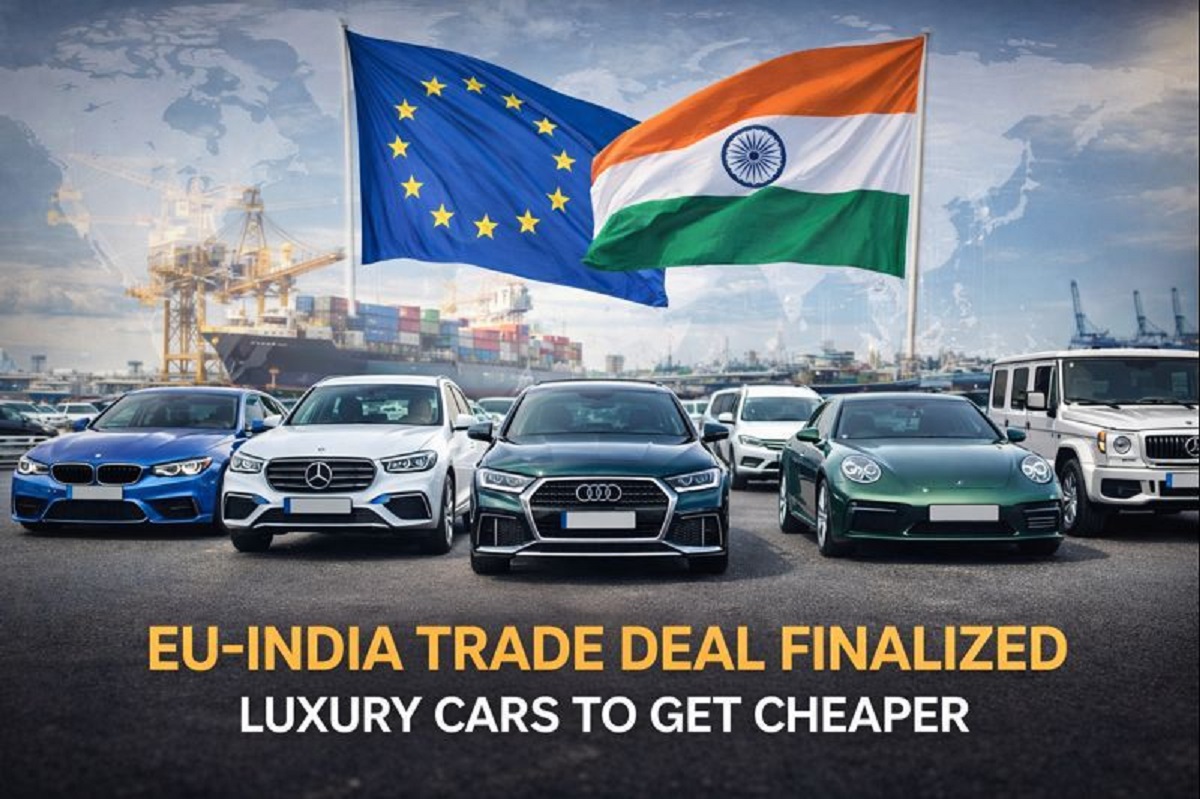
European Cars to Witness Price Drops Following India-EU Trade Deal
By Mohammed Mudassir
New Delhi / Srinagar – In a groundbreaking development in the global trade landscape, India and the European Union (EU) have successfully concluded a highly anticipated Free Trade Agreement (FTA). This agreement is poised to bring about a significant reduction in import tariffs on European-manufactured cars, a move that is expected to revolutionize the luxury and performance car market in India. The impact of this deal is particularly exciting for automotive enthusiasts in Srinagar and throughout Jammu & Kashmir.
Implications of the New Tariff Structure:
As per the terms of the agreement, import duties on fully built cars from EU nations will undergo a substantial phased reduction over the coming years. Presently, European cars face import duties of approximately 110% in India. However, under the FTA, this figure will initially drop to around 40% and eventually decrease to as low as 10%, with quota restrictions set at a maximum of 250,000 vehicles annually.
This drastic tariff reduction is anticipated to result in noteworthy cost savings for purchasers of high-end imported vehicles, potentially slashing prices by 30% to over 40% compared to current levels. This is especially significant for luxury and performance cars, where import duties have traditionally constituted a significant portion of the total cost.
Expected Price Reductions for European Cars:
While exact pricing post-duty reductions will be contingent on individual manufacturer decisions and local taxes, initial estimates suggest the following potential price changes:
- BMW 3 Series – Present ex-showroom price ~₹72.85 L – ₹73.95 L; anticipated savings could reach ₹15–25 L in the long run as duties decline.
- Mercedes-Benz E-Class (imported variants) – Typically priced around ₹70 L +; substantial reductions expected once duties approach 10%.
- Audi Q7 – Current ex-showroom price ~₹86 L +; tariff cuts may lead to savings of ₹20–35 L or more.
- Porsche 911 – Priced approximately ₹2 Cr; significant decrease likely with phased tariff reductions, potentially saving ₹60 L–₹80 L.
- BMW M4 Competition – Current price around ₹1.52 Cr; estimated savings could exceed ₹40 L–₹60 L.
- Audi RS Q8 – Previously priced at ~₹2.3 Cr; potential price reductions of ₹60 L–₹80 L based on tariff adjustments.
- Mercedes-Benz G63 AMG – Premium imported SUV, currently priced at ~₹2.9 Cr; expected savings well above ₹1 Cr as import duties diminish.
While the total savings will vary by model and implementation timeline, early assessments indicate that once the 10% tariff regime is fully implemented, buyers could save substantial amounts on high-end imported vehicles compared to current prices — provided manufacturers pass on the duty benefits to consumers.
Impact on the Indian Automotive Landscape:
This agreement is poised to foster competition and diversify the range of vehicles accessible to Indian buyers. With reduced import duties, European automakers may introduce more performance-oriented models, specialized variants, and flagship luxury cars in India, which were previously constrained by high costs.
For the Indian automotive industry, this development is expected to encourage deeper integration with global supply chains. European brands might explore enhanced local assembly (CKD) or increased investments, bringing advanced technologies and premium vehicle platforms to India. Domestic manufacturers stand to benefit from more affordable imports of automotive components, thereby reducing costs and bolstering manufacturing competitiveness.
Advantages for Car Enthusiasts in Srinagar:
For car aficionados in Srinagar and the broader Kashmir region, the implications of the FTA are particularly promising:
- Access to a Diverse Range of European Models: Premium European brands that previously faced challenges due to high tariffs may now offer coveted models at more competitive prices.
- Enhanced Affordability: With reduced duties, buyers could witness more competitive on-road prices for imported luxury cars, expanding choices for those seeking performance and prestige.
- Improved After-Sales Support and Service Network: Greater market penetration often translates to enhanced dealership networks, superior servicing options, and improved availability of parts.
- Technological Advancements: Newer, technologically advanced cars — featuring enhanced performance and driver-assistance capabilities — could become more accessible to buyers who previously found European imports out of reach.
Looking Towards the Future:
Although the tariff reductions will be phased in over several years, the India-EU FTA represents a significant milestone for the Indian automotive sector and luxury vehicle consumers. While full affordability for middle-class buyers may remain constrained by factors such as GST, state taxes, and overall import expenses, the agreement is poised to enhance choice and competition in the premium car segment.
Given the anticipated growth in India’s automobile market and the escalating demand for high-end vehicles, this trade pact is expected to redefine how European cars are priced, marketed, and sold in India. This bodes well for both consumers and the broader automotive ecosystem in the long run.
