
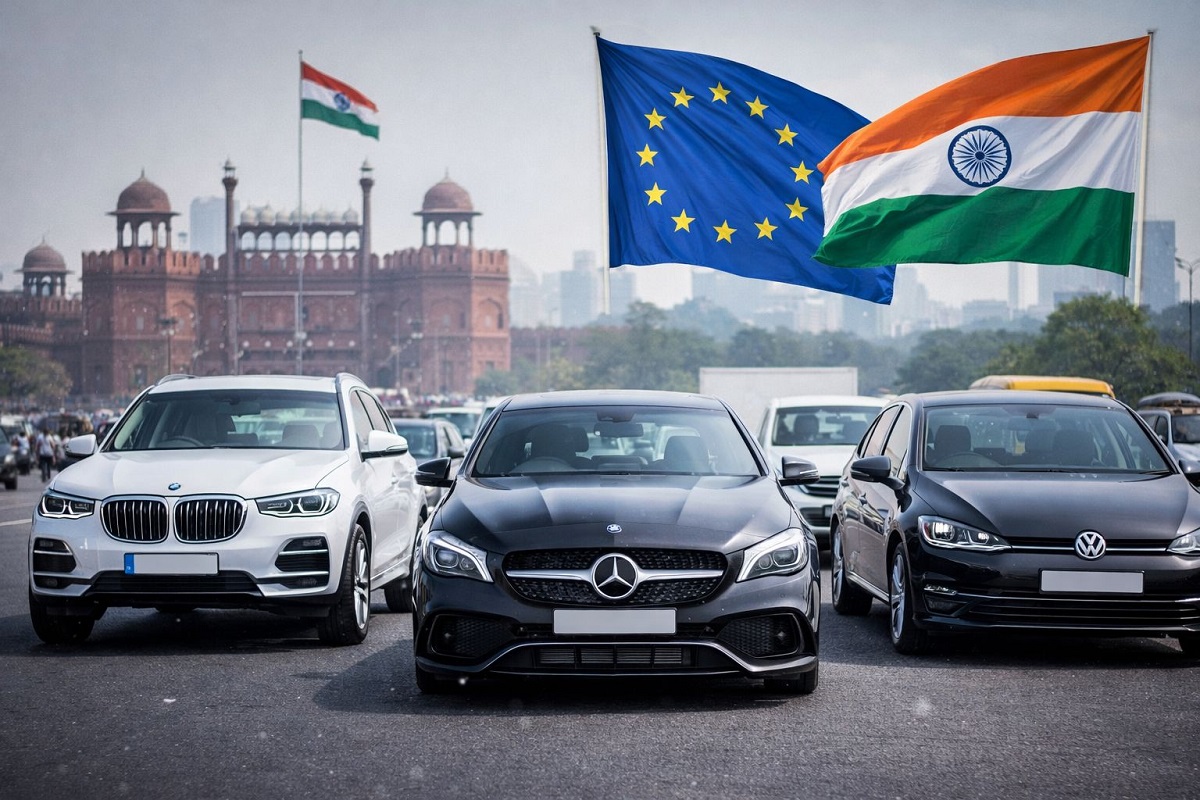
India to Reduce Car Tariffs to 40% in New EU Trade Deal
By Mohammed Mudassir
New Delhi / Srinagar- India is set to revolutionize its automotive industry by reducing import tariffs on cars from the European Union (EU) to 40%, down from the current levels as high as 110%. This move marks a significant policy change that will impact the market dynamics.
The proposed tariff reduction specifically targets imported cars valued above €15,000 (approximately ₹16.3 lakh). This shift is monumental as it signals a major opening in India’s traditionally protected auto market, which has historically imposed high duties to safeguard local manufacturers. Industry experts are calling this potential deal the “mother of all deals” for the automotive sector.
Impact on Indian Buyers
Lower tariff rates will make European vehicles more affordable in India, including popular brands like Volkswagen, Mercedes-Benz, BMW, and Renault. These brands have faced challenges in expanding their presence due to the high import taxes. Currently, imported cars face duties ranging from 70% to 110%, making India one of the countries with the highest import taxes. Reducing the tariffs to 40%, with the possibility of further phased cuts bringing it down to 10% in the future, could significantly reduce the overall costs for luxury and premium cars.
This change could present Indian consumers, especially in markets like Srinagar, with new opportunities to own high-end European vehicles at prices more competitive with locally manufactured models. With a growing middle class and increasing demand for premium vehicles, many buyers may find European cars more accessible, leading to a more diverse and competitive auto market.
Local Market Impact and Domestic Players
Despite the anticipated tariff cuts, battery electric vehicles (EVs) will initially be excluded from these reductions for up to five years to protect investments in domestic EV production by companies such as Tata Motors and Mahindra & Mahindra. Following this period, EVs are expected to follow similar tariff reduction timelines.
The Indian car market is currently dominated by Japanese and domestic brands, with Maruti Suzuki holding the largest market share, followed by local manufacturers like Tata Motors and Mahindra & Mahindra. European brands account for less than 4% of the market due to past tariff barriers.
The tariff reduction is likely to encourage more European manufacturers to introduce a wider range of models in India. While some brands already have local production through partnerships or assembly operations, a lower duty regime could stimulate new investments in local manufacturing or complete knocked-down (CKD) units, making more models cost-competitive.
Future Implications
Industry analysts believe that reducing tariffs will not only benefit buyers in terms of more choices and potentially lower prices but also position India as a more attractive market for global automakers. With the Indian car market expected to reach around 6 million units annually by 2030, the lowered duties could encourage long-term investments and expand consumer choices across different segments.
While the final details hinge on the formal ratification of the trade deal, the proposed tariff cut is already seen as a transformative step towards liberalizing India’s auto sector. This move could redefine industry dynamics and provide Indian consumers with access to a wider range of international automotive technology at more competitive prices.
