
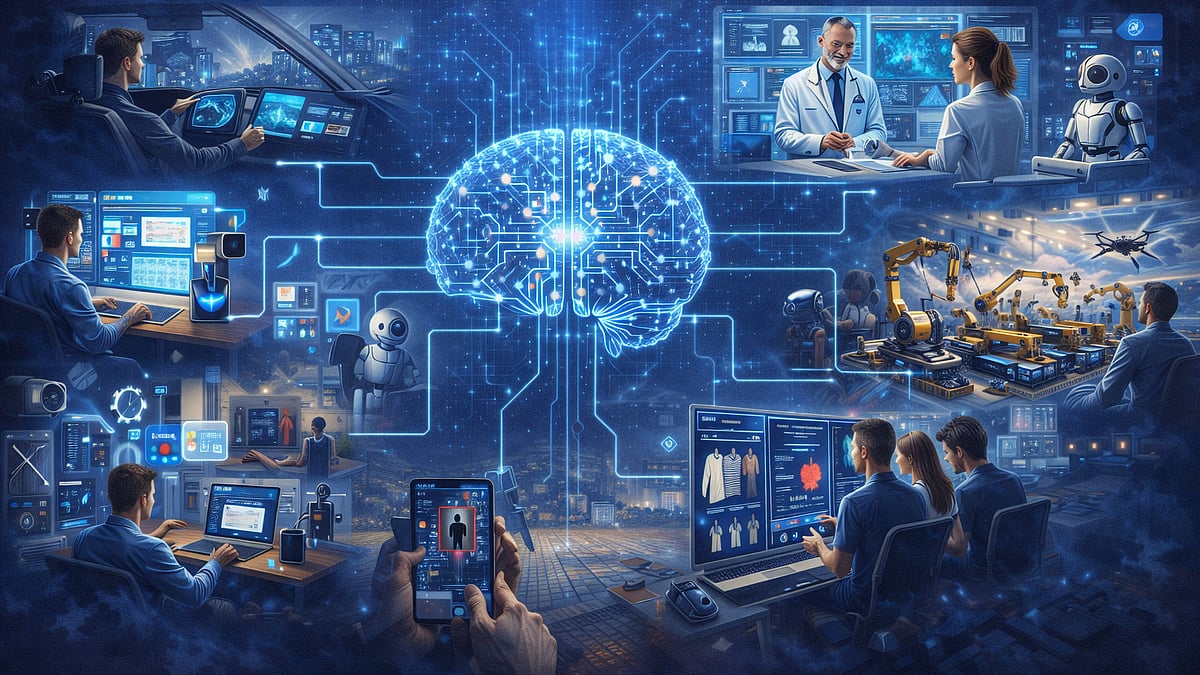
The Unstoppable Rise of Artificial Intelligence
In a thought-provoking exploration of the current technological landscape, the CEO of Microsoft sheds light on the inevitability of the advancement of artificial intelligence (AI). Drawing parallels to historical technological advancements such as the Gutenberg press and the space shuttle, the CEO emphasizes the unstoppable nature of technological proliferation.
While acknowledging rare exceptions like nuclear weaponry, the CEO highlights the general trend of technology proliferating rapidly. The exponential growth of AI in the past decade serves as a testament to this trend, with the technology evolving at an unprecedented pace.
From early models like AlphaGo and AlexNet to more recent advancements such as ChatGPT, the CEO delves into the transformative power of AI. The current wave of generative AI signifies a significant improvement driven by increasing demand, paving the way for more advanced AI models.
As AI progresses towards more general intelligence models, known as “Artificially Capable Intelligences” (ACIs), the CEO warns of the potential consequences of unchecked AI development. The four main capabilities of AI – global power redistribution, continuous improvement, pervasive use, and autonomy – pose a looming threat if left unchecked.
With the possibility of AI achieving full automation and surpassing human control, the CEO raises concerns about the potential catastrophic implications of such a scenario. The concept of an AI apocalypse or a drastic upheaval in the world order looms large in the discussion.
Quoting Stuart Russell’s “gorilla problem,” the CEO underscores the intelligence disparity between humans and AI, cautioning that humanity may someday find itself in a subordinate position to AI. The symbiotic relationship between AI and military technology further complicates the situation, with advances in one amplifying the fragility of the other.
As AI continues to proliferate, fueled by global rivalries like the Sino-American competition, the CEO paints a picture of a world where tech companies wield immense power over governments. The looming specter of “techno-feudalism” and the potential for authoritarian regimes to exploit AI for surveillance purposes adds another layer of complexity to the narrative.
Despite the bleak future painted by these developments, the CEO stresses the importance of containment to prevent a dystopian reality. The need for governments to adapt to the changing technological landscape and regulate AI becomes imperative to maintain control over the trajectory of society.
In conclusion, the relentless march of AI presents both unprecedented opportunities and challenges for humanity. As we navigate this uncertain future, the balance between innovation and regulation will determine whether AI becomes a force for good or a harbinger of dystopia.
