
Powerful Windstorm Causes Electricity Crisis in Kashmir Valley
Authorities in the Kashmir Valley are facing a severe electricity crisis following a powerful windstorm that has damaged the electricity distribution network. The active power load has plummeted to below 100 megawatts, significantly lower than the usual demand of around 1700 megawatts. This has resulted in outages on almost all 33 KV feeders, including those supplying essential emergency services.
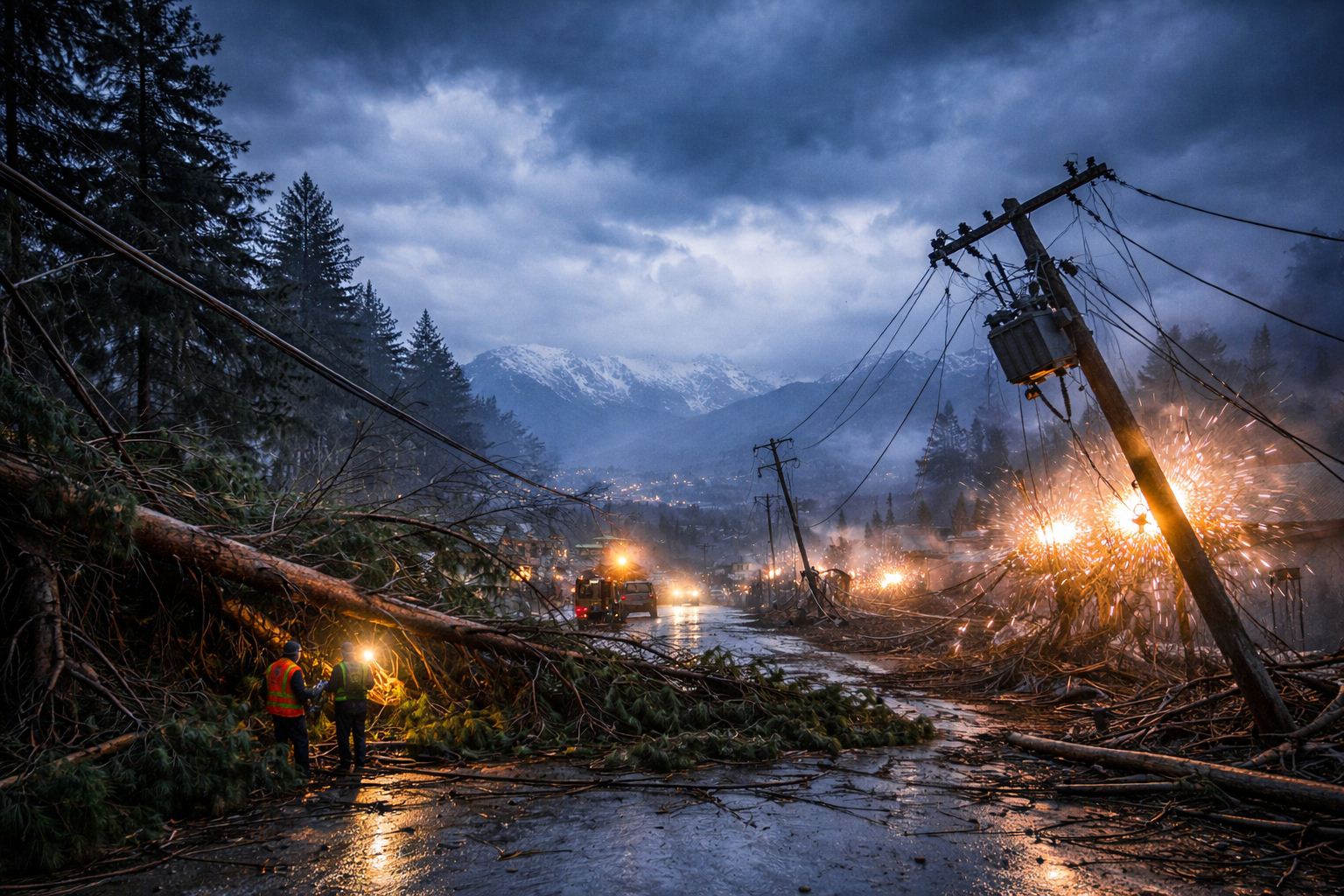
The Kashmir Power Distribution Corporation Limited (KPDCL) has reported that strong winds and widespread tree falls have led to the damage of overhead lines at multiple locations, causing extensive disruptions in both transmission and distribution. As a result, vast parts of the Valley are currently without electricity, affecting both domestic supply and critical services.
Efforts to restore power are underway on an emergency basis, but repair work is being hindered by continuous windy conditions and the presence of fallen trees obstructing access to affected areas. Field staff are facing challenges in reaching these areas due to blocked roads and unstable weather conditions.
KPDCL is conducting a detailed assessment of the infrastructure damage, but the process is expected to take time given the challenging circumstances. Authorities are urging patience from the public, emphasizing that all possible measures are being taken to expedite the restoration of electricity.
Chief Minister Omar Abdullah, quoting KPDCL, highlighted the significant decrease in the Valley’s active load due to the outage of almost all 33 KV feeders, including those serving emergency services. He reassured the public that repair teams are actively working to rectify the situation, despite facing obstacles such as extensive tree falls and adverse weather conditions.
The power crisis was triggered by gusty winds on Thursday evening, disrupting electricity supply in over 80 percent of the Valley. Initially, the department was supplying nearly 300 MW against the usual demand of approximately 1900 MW, with feeders being tripped as a precautionary measure in various areas.
Priority is being given to restoring power to hospitals and critical installations, with full restoration planned in phases once weather conditions improve and repair work can be carried out safely.
