
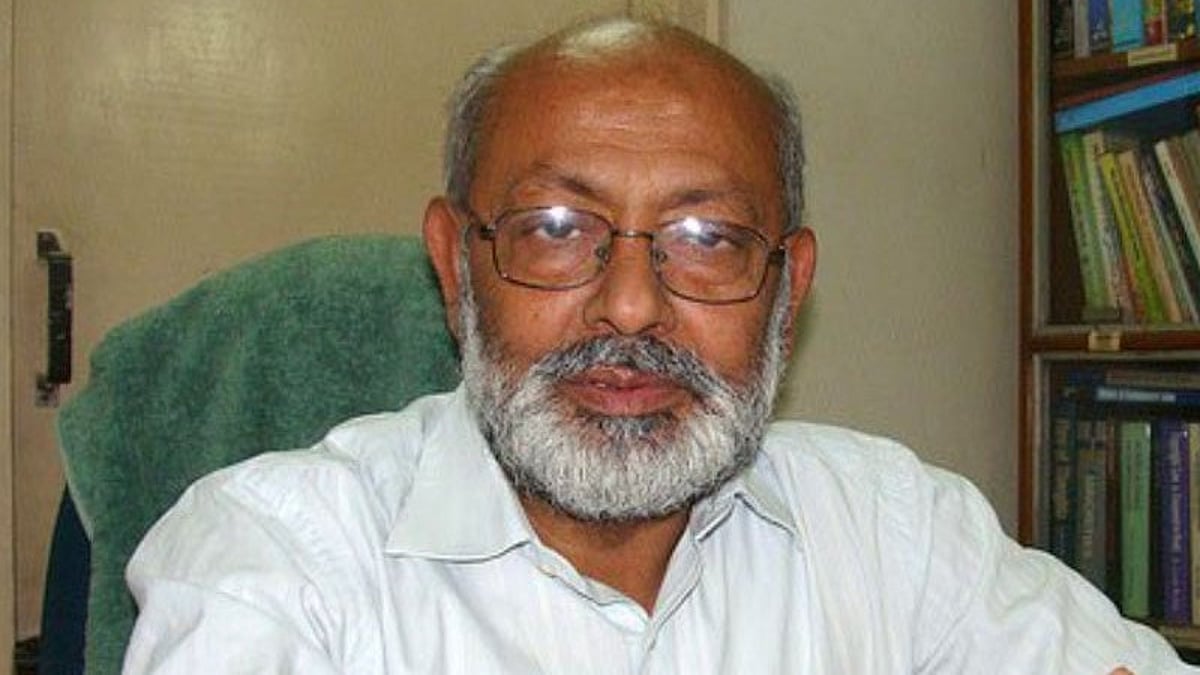
The Significance of Sachar Committee’s Documentation
Back in 2004, the Congress-led government established the Justice Rajinder Sachar Committee with the objective of examining the social and economic status of Muslims. During this study, the data compiled by the Institute of Objective Studies played a crucial role.
For Justice Sachar, the coexistence of tradition and modernity was not a contradiction but rather a harmonious blend. As highlighted in the biography by A.U. Asif, titled Dr. Manzoor Alam: An Untold Story of Justice, Inclusion, and Equality, this balanced approach positioned him as a visionary thinker who transcended both nostalgia and unchecked modernization.
Since its establishment in 1986, the Institute of Objective Studies has organized over 1,350 seminars and conferences, including notable international events. With 475 completed research projects, the institute has demonstrated exceptional dedication despite being a non-governmental entity.
These research endeavors were not simply academic exercises; they aimed to uncover tangible insights for policymaking in various sectors such as education, economics, sociology, psychology, law, politics, minority rights, and media.
Abdul Mannan, a former colleague at FANA and current editor of a government journal, once noted Dr. Alam’s ability to engage individuals from diverse backgrounds, from senior professionals to grassroots workers, in meaningful discussions.
Dr. Alam’s commitment to sustainability led to the establishment of resources like Bharat Offset Press in Old Delhi, which continues to support the institute’s publishing needs. Additionally, he founded Qazi Publishers and Distributors and Genuine Publications and Media Pvt. Ltd.
Central to the Institute of Objective Studies is its research and reference library, boasting a collection of 14,000 books in multiple languages. Managed meticulously by Saad Niazi, the library reflects a high standard of organization and professionalism.
One of Dr. Alam’s key initiatives was the formation of the All India Milli Council, serving as a platform for scholars, clerics, and experts to collaborate on community and political matters, fostering unity and avoiding unnecessary divisions.
Rejecting grievance politics, Dr. Alam advocated for intellectual growth, institution-building, and strategic planning as the means to progress. He believed that nations are constructed through knowledge, research, institutions, and sustained effort, not mere slogans.
Driven by this conviction, initiatives like the Islamic Fiqh Academy, UMMA, and various research projects were established, all interconnected in a unified effort to shift Muslims towards informed and organized collective action.
