
The Emergence of Paid Study Spaces in Srinagar
By Aamina Salaam
Srinagar- At 11 pm on a cold winter night in Rajbagh, Srinagar, the streets are quiet, with only sporadic passersby or distant vehicles disrupting the silence.
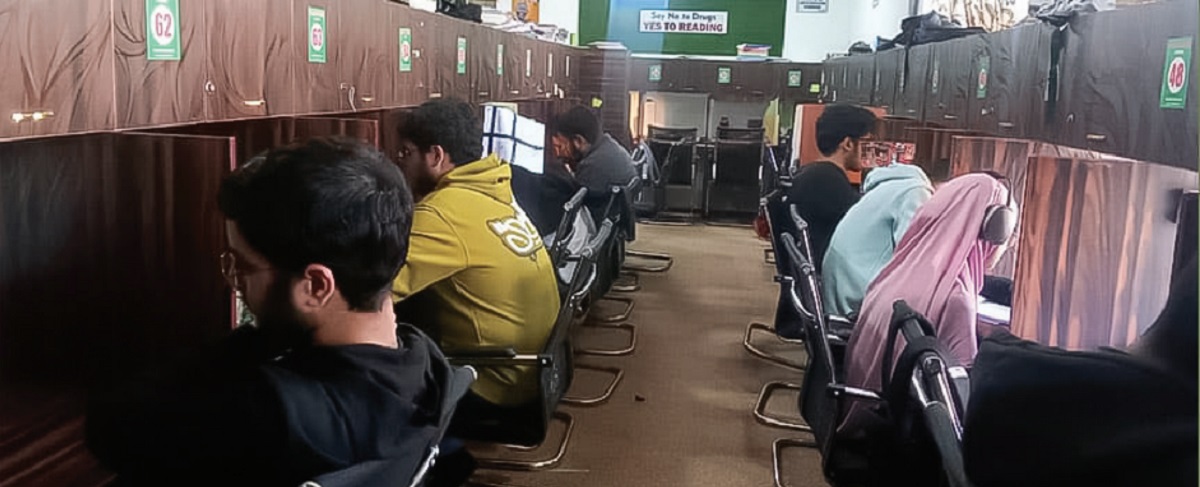
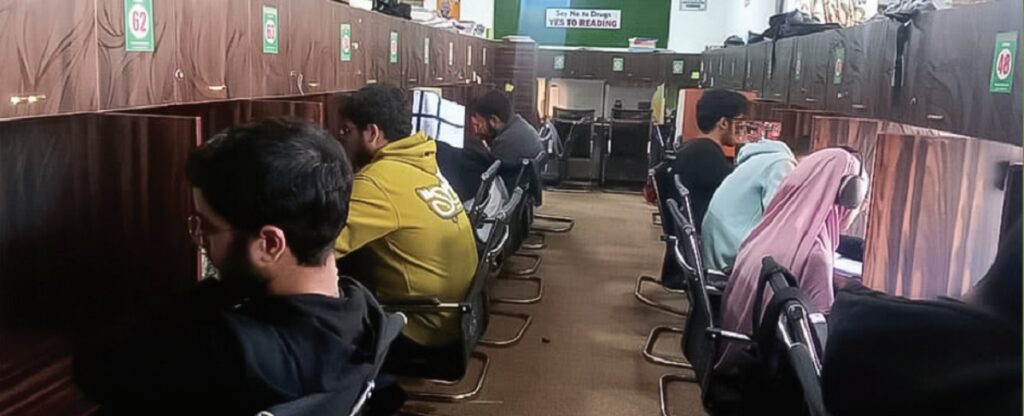
Located above a row of shops, a privately operated reading room is bustling with students. Some are listening to online medical lectures through headphones, while others are poring over civil services notes under the bright white lights. Paid study spaces, commonly known as reading rooms or study centers, have become a significant part of the academic landscape in Srinagar.
Operators indicate that over a dozen private reading rooms have cropped up across the city, concentrated in areas like Rajbagh, Hyderpora, Parraypora, and Bemina, which are already known for coaching institutes and student hostels.
While some of these spaces operate 24/7, others have specific operating hours or seasonal schedules based on demand and infrastructure costs such as heating and electricity. However, what remains consistent is the influx of students willing to pay for an increasingly rare commodity: uninterrupted time and peace.
Who Utilizes These Spaces?
The users of these spaces come from diverse backgrounds. College students, competitive exam aspirants, hostel dwellers, and out-of-town students all find solace in these study halls. Many of them claim that neither their homes nor campus libraries provide conducive study environments.
One student, Khalid, mentioned that the comfort of home often leads to procrastination, while the study environment of a reading room motivates him to focus on his work. Asif, a hostel resident, echoed this sentiment, stating that the hostel ambiance is not conducive to studying, unlike the dedicated environment of a reading room.
A postgraduate student from Srinagar highlighted that studying in a shared space helps her maintain a structured routine, providing a sense of discipline that is often lacking at home. The communal setting pushes her to stay focused, even on days when motivation is low.
Interestingly, the surge in physical study spaces coincides with the rapid growth of online learning. Many students attending reading rooms now participate in online coaching classes, a trend accelerated by post-pandemic study habits.
According to Junaid, who manages a 24/7 study center in Magarmal Bagh, the shift towards online education post-pandemic has led students to seek out disciplined study environments outside their homes. The combination of digital access and physical presence in these spaces addresses the need for time, focus, and planning, elements often lacking in online platforms.
Addressing Affordability and Accessibility
One of the primary concerns regarding these study spaces is affordability. Monthly fees in Srinagar’s reading rooms vary depending on factors like location, seating arrangements, heating facilities, power backup, and access hours. Charges typically range from Rs 800 to Rs 2,500 per month.
While operators acknowledge the financial burden on students, they often offer concessions to those from economically disadvantaged backgrounds. However, the cost of these spaces remains a significant consideration for many users.
Most reading rooms in Srinagar are gender-inclusive, although usage patterns may differ between male and female students. To address safety concerns, many centers have implemented security measures such as CCTV surveillance, caretakers on duty, and strict rules regarding behavior and mobile phone usage.
Implications for Public Infrastructure
The growing reliance on paid study spaces raises questions about the adequacy of public education infrastructure. Dr. Aadil Showket Bakhshi, an Assistant Professor at Kashmir University, warns that the necessity to pay for conducive study environments highlights institutional deficiencies.
He emphasizes that while online education offers convenience and accessibility, paid study spaces fulfill critical needs such as time, discipline, and focus, which traditional institutions and home environments often fail to provide.
Operators of these study spaces, like Shafat Ahmad Bhat and Nawaz, agree that enhanced public infrastructure, such as more public libraries or government support for study spaces, could alleviate the financial burden on students and promote equal access to educational resources.
Until such measures are implemented, the reading rooms of Srinagar continue to attract students seeking a quiet and conducive environment for learning, reshaping the educational landscape of the city one silent hour at a time.
