
Indian and Pakistani Leaders Call for Dialogue and Cooperation
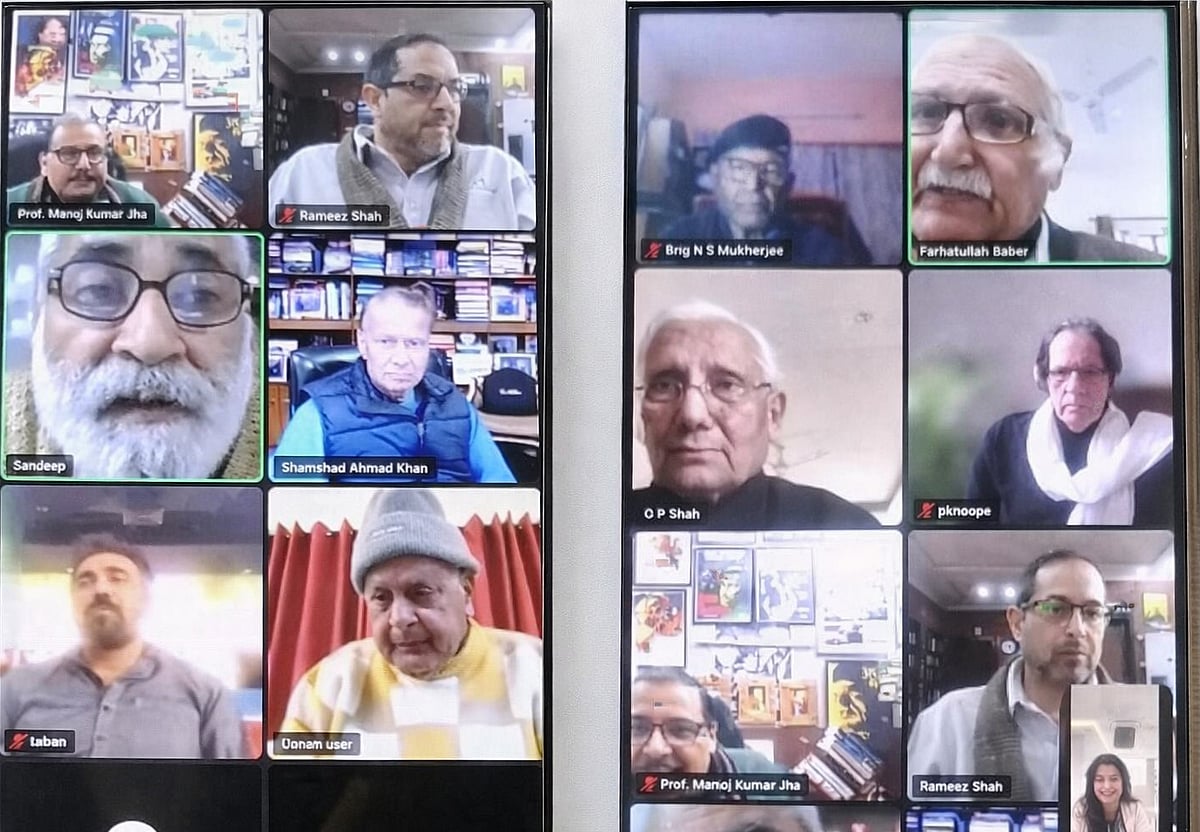
A recent online meeting organized by the Center for Peace and Progress brought together politicians and civil society members from India and Pakistan to discuss the need for restarting dialogue, reviving the South Asian Association for Regional Cooperation (SAARC), and easing travel restrictions to build trust across the border.
Participants included Dr. Farooq Abdullah from the Jammu and Kashmir National Conference, Farhatullah Babar from the Pakistan Peoples Party, and Manoj Jha, an Indian member of Parliament. They emphasized the importance of supplementing stalled official channels with sustained people-to-people engagement.
Dr. Abdullah highlighted the urgency of finding a way forward through talks, emphasizing that conflict is detrimental to both nations and that Kashmir remains a central point of contention. He stressed that dialogue should not be viewed as unpatriotic, citing global examples where adversaries continue negotiations even during times of conflict.
Several speakers echoed Dr. Abdullah’s call to revive SAARC as a platform for regular meetings among South Asian neighbors. They emphasized the need to address regional issues without letting hostilities between India and Pakistan hinder broader cooperation.
Mr. Babar identified the core problem as the existence of preconditions set by each side. He noted that one side demands an end to militancy before talks can resume, while the other insists on resolving the “core issue” first. He proposed keeping channels open through citizens’ initiatives, such as digital meetings, as a viable alternative to third-party mediation.
Mr. Babar also linked improved relations to democratic space and human rights, cautioning against using hostility as a pretext for shrinking civic space, suppressing dissent, and militarizing the state. He cited past diplomatic initiatives, including the 1999 Lahore peace initiative and the opening of the Kartarpur Corridor, as evidence that breakthroughs are possible even after setbacks.
Participants emphasized the importance of practical measures such as easing visa regulations, reopening trade, and facilitating religious and family visits. MNA Ramesh Kumar Vankwani, a Pakistani participant, suggested that while immediate love may not be feasible, borders should be opened for business and travel, and visa restrictions should be relaxed.
